
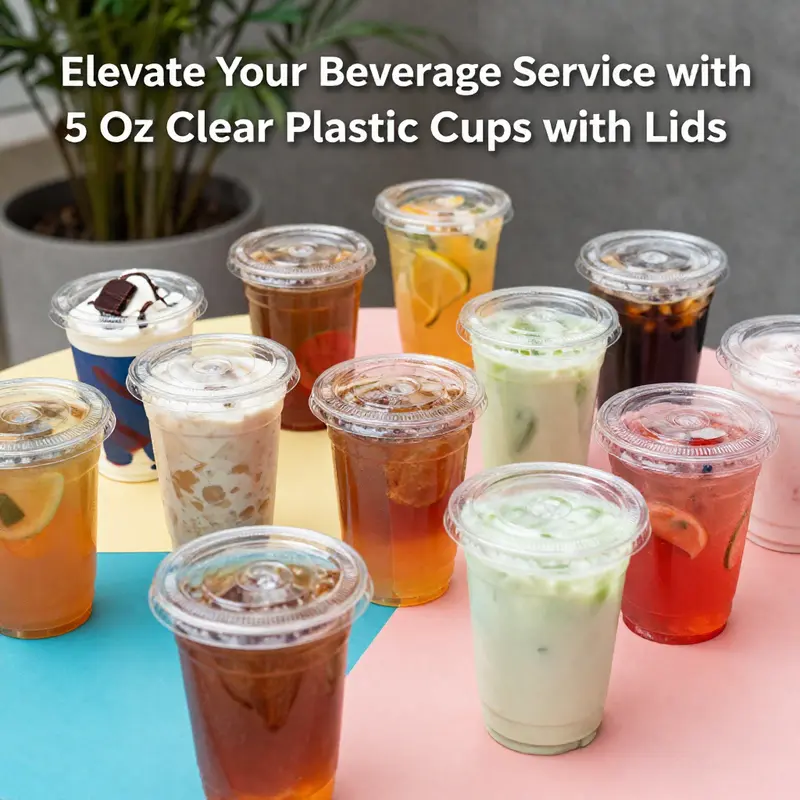
5 oz clear plastic cups with lids are a staple in various sectors, from bubble tea shops to catering services. Their lightweight, durable design paired with safety features makes them perfect for serving beverages and desserts alike. In this article, we explore the specific benefits and commercial applications of these versatile cups. The first chapter provides an overview of their uses and materials, leading to an examination of their key features and benefits. The final chapter discusses their commercial applications and important purchasing considerations for businesses needing reliable, cost-effective options.
Small, Clear, and Capable: The Quiet Backbone of 5-Ounce Clear Plastic Cups with Lids
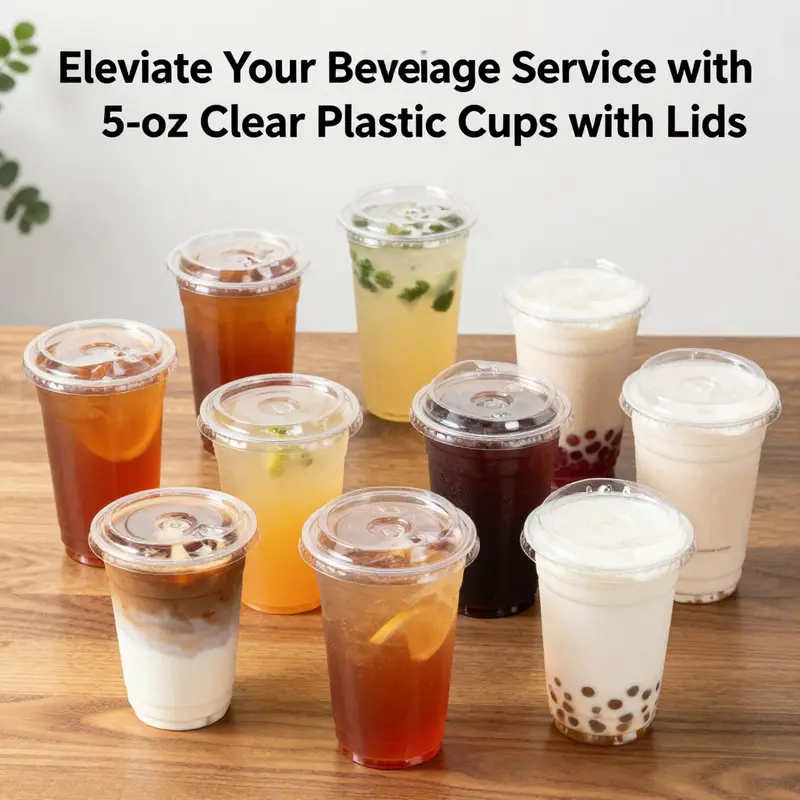
In the world of food service, the smallest containers often do the most heavy lifting. The 5 oz clear plastic cup with a lid sits at the intersection of practicality and presentation, quietly enabling a broad range of experiences from a dessert finish to a travel-friendly beverage. Its compact capacity—roughly 148 milliliters—fits neatly into the rhythm of modern catering, where portions are deliberately calibrated to be enticing without overwhelming a plate or a palate. The cups themselves are almost invisible in moments of service, yet their design and material choices shape every bite, sip, and memory of an event or a cafe visit. The appeal lies not in showy dimensions but in the reliable clarity and confident performance of the cup and lid combination. A well-chosen 5 oz cup becomes a stage for color, texture, and aroma, letting mousse sheen catch the light, jelly’s jewel-toned gloss shimmer, or a parfait’s layered artistry reveal itself to eyes before the first bite is taken. The simplicity of this cup—clear, lightweight, stackable—belies a sophisticated balance of safety, functionality, and presentation that many operators rely on daily.
Beyond the core material, the design of the cup and lid plays a pivotal role in shaping user experience. The cups are typically transparent, which is not merely aesthetic. Transparency invites trust by letting customers see what they are about to consume, a factor that has become increasingly important in dessert shops and beverage stations where visual appeal is part of the purchase decision. The lid is not an afterthought but a critical component of the overall function. A dome-shaped lid, with a raised center and a snug fit, can accommodate whipped toppings, fruit, or viscous liquids without risk of overflow. A flat or slightly domed lid with a tight seal is more utility-focused, designed to deliver a reliable barrier against leaks during transport and allow for stable stacking in a crowded service area.
The sealing property is not just about preventing spills in a bag but about maintaining the freshness of the contents, which is especially relevant for desserts and cold drinks where a lid helps preserve texture and aroma until consumption. The combination of cup and lid becomes a simple, portable solution that supports on-the-go consumption while preserving the dining experience for a customer who might be carrying multiple destinations in hand.
In practice, a typical operation negotiates the balance between cost, availability, and performance. The bulk nature of these components makes them highly amenable to wholesale procurement, with standard order quantities often expressed as sets of 50, 100, or 1000 pieces. For many cafés, dessert shops, or event planners, the economics of scale matter: the per-unit cost drops as the quantity increases, enabling price-conscious menus or promotional campaigns without sacrificing quality. The bulk approach also simplifies inventory management; these containers are stackable and space-efficient, meaning kitchens and event warehouses can store large volumes with minimal footprint.
From a procurement perspective, compatibility with branding and labeling is common. The capacity to add customization—whether for branding touches or event themes—can elevate a simple dessert or drink into a memorable moment. The practicality of 5 oz cups, paired with flexible lid options, supports a broad spectrum of design intents, from discreet to festive, making them a reliable platform for creative presentation without compromising functional reliability.
Storage and handling considerations continue to influence how teams plan their use of these cups. The cups are lightweight and designed to be stacked, which reduces shipping and storage space while improving efficiency on the floor. In transit, the lid’s seal becomes a crucial feature; it minimizes spillage and enables guests to carry multiple items without concern.
Environmental considerations form a parallel thread. The lightweight design and single-use nature of many 5 oz cups contribute to a broader conversation about waste and recycling. While these cups are recyclable in facilities that accept polypropylene or polystyrene, the reality remains that recycling infrastructure is not universal and disposal practices vary by region. Responsible use includes end-of-life planning, such as encouraging proper disposal or exploring reusable options where feasible.
Ultimately, the 5 oz clear cup with lid is a modular, scalable component that supports various service models. It invites the eye to linger on color and texture, preserves freshness during transport, and contributes to a smooth, predictable guest experience from first glance to last bite or sip.
Clarity in Form and Function: The Practical, Visual, and Sustainable Story of 5 oz Clear Plastic Cups with Lids
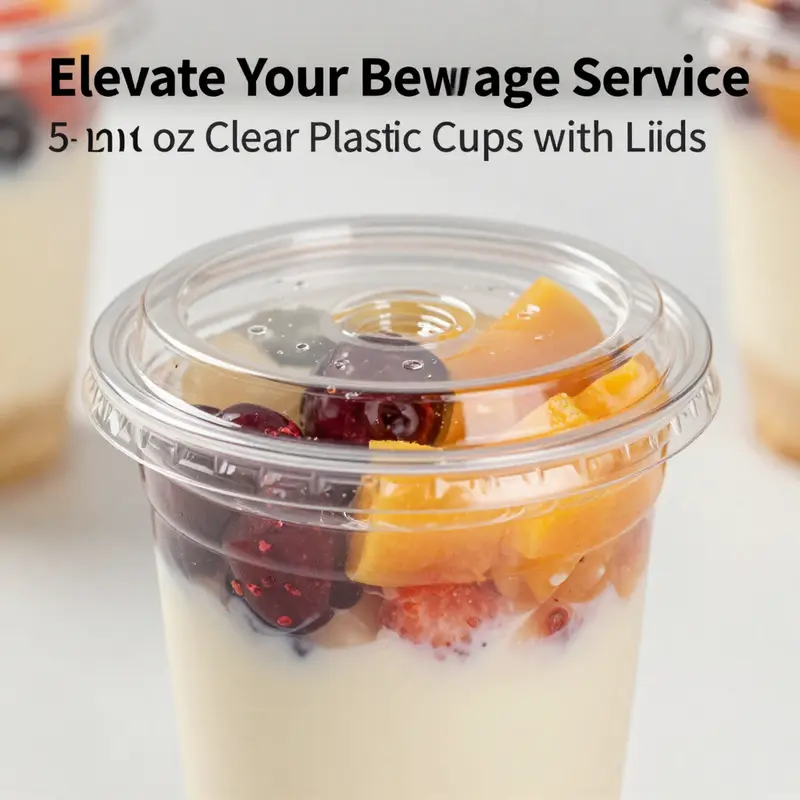
The 5 oz clear plastic cup with a lid sits at a quiet intersection of aesthetics, practicality, and logistics in the modern food service and events world. It is not the largest vessel in a lineup of serveware, nor the smallest, but its size—roughly 148 milliliters in metric terms—creates a precise canvas for portions, presentation, and portability. When a dessert, a mousse, a jelly, or a layered yogurt arrives at a table or a guest’s hand, the cup and its lid are more than a container. They are a compact stage that frames the dessert or drink, supports the customer experience, and aligns with the operational realities of busy kitchens, cafes, and catering services. In this size, the clear plastic becomes a narrative device. It offers no barriers to the eye, allowing the layers, colors, and textures to glow with a freshness that is especially powerful in cold or chilled presentations. The transparency is a quiet marketing tool, signaling purity and the absence of surprises in the product itself. A well-lit dessert or beverage through a 5 oz clear cup communicates portion control and meticulous care, two qualities that many customers subconsciously equate with quality and reliability.
Beneath the allure of visibility lies a set of design choices that governs how well these cups perform in daily use. The cups are usually crafted from food-grade plastics, often polypropylene, a material selected for its balance of rigidity, resilience, and light weight. The lid, typically a clear wrap or snap-on design, completes the package by offering a reliable seal that protects against spills during transport and handling. This combination of a transparent cup and a compatible lid is especially valuable for takeout and catered events where movement is a constant factor. The lid design is not purely cosmetic; it is engineered to resist leaks to a practical degree, enabling customers to sip or enjoy the contents on the go without the fear of uncontrolled drips. Yet it is important to recognize a practical caveat: while lids dramatically reduce the risk of spills, the cups are not universally leakproof if overturned or subjected to significant tilt angles. The strength of the seal is partly contingent on how securely the lid clicks into place and on the cup’s wall thickness, both of which influence user confidence during transport.
The material profile of these cups is central to both performance and posture in the supply chain. Polypropylene, the often cited option, is celebrated for its impact resistance and translucence. It maintains its shape under cold conditions and tends to resist cracking when stacked, transported, or pressed into boxes for long trips. This is particularly important for dessert service, where cups may be filled with delicate mousses or layered compositions that require a stable yet elegant presentation. Another common material in the same family is polystyrene, used in some cups for the same transparent aesthetic but with different mechanical properties. The trade-offs between these plastics translate into decisions about temperature tolerance, rigidity, and recyclability. A plastics choice that is BPA-free and food-safe speaks directly to consumer confidence and regulatory expectations. In the current landscape, the emphasis on BPA-free labeling is more than a marketing cue; it signals a commitment to minimizing potential health concerns while still delivering a high clarity product that showcases the contents without distortion.
Portion control remains one of the most practical benefits of the 5 oz size. In an era of precise menu planning and consistent service, a standardized 5 oz portion helps chefs and café staff maintain uniformity across multiple service points. It reduces guesswork for front-of-house staff serving desserts or small beverages and simplifies inventory management for bakers, pastry chefs, and beverage teams. The standardized size supports marketing narratives as well. A succinct, repeatable serving size can be paired with a set of dessert or beverage options that are designed around a fixed portion, enabling easier menu design, cost control, and kitchen operations. For guests, it offers a predictable experience that can be built into event planning, wedding receptions, or corporate functions where consistency matters as much as aesthetics.
Transportability and storage are natural outcomes of the 5 oz cup’s design. The cups are light enough to be carried by hand in bulk, yet sturdy enough to withstand the jostling of a crowded service environment. They are typically stackable, a feature that improves warehouse efficiency and lowers storage costs. With the right palletization and packaging, a large number of cups can be shelved in a compact footprint, freeing up valuable space for other essentials in a bustling kitchen or event venue. The lid adds to this convenience by enabling quick assembly during service without compromising the stability of the cup’s contents. For caterers and delivery services, the combination of a seal and a light, stackable form factor means fewer breakages and easier logistics, which translates into smoother operations and improved customer satisfaction. In many settings, the ability to pre-fill, cover, and transport becomes a practical enabler of menu creativity, enabling operators to offer a broader range of quick-service desserts and cold beverages with composure.
Sustainability considerations also accompany the use of any disposable or semi-disposable serving ware. These cups are often marketed as recyclable with appropriate facilities, and they commonly employ materials that are suitable for direct food contact and are free of BPA. The environmental story is more nuanced than a single label, however. The recycling reality depends heavily on local waste streams and processing capabilities. In areas with robust polypropylene recycling infrastructure, these cups can reenter the circular economy after a proper rinse and separation from other waste streams. Patrons who care about environmental impact benefit from clear guidance about recycling pathways, and operators can communicate responsible disposal practices as part of their service vocabulary. It is worth noting that while recyclability is a core selling point, it is not a universal guarantee in all curbside programs, so institutions should align expectations with local recycling options and guidelines. This nuance matters in long-range planning, especially for venues with high daily turnover or large event footprints where disposal costs and waste management logistics can shape the sustainability profile of a given service.
Clear presentation is complemented by design variants that aim to meet a spectrum of occasions and themes while preserving the foundational advantages of the 5 oz cup. Beyond the classic round shape, there are variations that address specific use cases. A high-stem design can elevate a dessert presentation, adding a touch of elegance for upscale events or premium dessert bars. Trapezoidal or square configurations provide a bold, modern aesthetic that can help a product stand out on social feeds or in a display case. Decorative touches, such as colored rims or subtle embossing, give an opportunity for branding or event-specific styling without compromising the cup’s clarity. Crucially, these design choices come with practical considerations. They must preserve the core function of containment and ease of handling while not introducing materials that compromise the lid’s fit or the cup’s stability during transport. In commercial settings, the choice between a classic round cup and a more decorative variant often maps to the specific event context and the brand’s positioning. The aim is to preserve function while enabling a moment of visual delight that can elevate the consumer experience without creating additional complexity in manufacturing or supply chains.
For those planning to source these cups at scale, the economics of bulk purchasing is a central consideration. Units commonly appear in bulk offerings, with standard pack sizes ranging from tens to thousands of pieces. The per-unit cost typically drops as the quantity increases, a factor that makes these cups attractive to bakeries, dessert shops, catering outfits, and hotels that maintain regular service or frequent events. The bulk pricing story is not only about the raw cost per cup; it also encompasses logistics and storage. A lower unit price can be offset by higher freight or handling costs if the supplier’s packaging is inadequate or if the items cannot be efficiently stacked and shipped. Therefore, efficient bulk purchasing often involves balancing unit price with packaging efficiency and the reliability of supply. Regulated business buyers frequently seek documentation such as food safety certifications and evidence of BPA-free composition to ensure that what is delivered meets health and safety expectations as well as regulatory requirements. These assurances help protect both consumers and operators, reducing the risk of issues that could disrupt service or damage a brand’s reputation.
The practical boundaries of use also deserve attention. The 5 oz cup is optimized for cold or cooler preparations. Hot liquids pose a challenge for this format because elevated temperatures can lead to warping or deformation of the plastic and lid, potentially compromising the cup’s integrity and guest safety. This limitation is not unique to a given supplier; it reflects the material properties of common food-grade plastics used in this size range. Managers and culinary teams who plan a dual-use program—serving both hot beverages and cold desserts in the same line—often adopt a clear policy that hot drinks will be served in a different vessel designed for higher temperature tolerance. This separation helps manage customer expectations and preserves the functional lifetime of the cups, reducing waste and the likelihood of service disruptions during peak periods. Similarly, the question of leakproof performance requires realistic framing. While lids dramatically reduce spill risk, they do not make the system fully leakproof in all scenarios. If a cup is tipped aggressively or subjected to a rough ride, some leakage may occur. Understanding these limitations allows operators to set proper handling protocols for staff and to choose lid designs that best align with their logistics—whether it means tighter lids, snap-in closures, or complementary packaging for transport.
From a sourcing perspective, the landscape offers a spectrum of options. For commercial-scale procurement, factories and distributors in major manufacturing regions can provide consistent quality and long-term supply. When time is of the essence for a short-term event or small business trial, retailers and online marketplaces offer convenience and immediate availability. In both cases, verification of food-grade certification, such as compliance with FDA or LFGB standards, remains a critical checkpoint. This assurance helps ensure consumer health, aligns with regulatory expectations, and allows operators to present a credible safety narrative to customers.
In the broader ecosystem of packaging and serving ware, the choice of a 5 oz clear plastic cup with a lid aligns with a particular set of operational and aesthetic goals. It supports a disciplined approach to portion control, enabling consistent desserts and beverages that align with menu prices and cost controls. It offers a quick, predictable path to a visually compelling presentation that can be customized with decorative rims, color accents, or simple branding through label or lid design. It also supports the practicalities of service in a world where takeout, delivery, and event catering are routine. The cup becomes a conduit for the customer’s experience—a small, unobtrusive vessel that allows the dessert’s color, texture, and aroma to shine through, while the lid provides a sense of security and portability that customers value highly in contemporary dining and entertaining contexts.
To provide a sense of how operators navigate this space, consider the practical workflow of a dessert shop or a catering team preparing bulk orders for an event. The team fills the cups with mousse or layered yogurts, then applies the lids, sealing the cups for transport. The transparent walls enable staff to verify fill levels at a glance, a small but meaningful productivity boost during high-volume periods. When the cups are arranged for service, the display benefits from the uniform geometry and clear presentation, which helps attract attention and encourage impulse purchases. For staff, the stable and predictable format reduces the cognitive load associated with different vessel shapes or capacities, allowing more consistent speed and accuracy in fulfillment. Guests respond to this reliability with a sense of trust in the product and the brand offering, reinforcing positive experiences that can translate into repeat visits and recommendations.
In terms of communication and education for customers, the labeling and presentation of these cups should reinforce the product’s safety and quality. Clear labeling about BPA-free status, food-grade materials, and temperature considerations can reassure customers who care about health and safety. Operators can also use this opportunity to guide proper disposal and recycling, linking the practical benefits of the design to responsible consumer behavior. A thoughtful approach to packaging communication reduces confusion and demonstrates a commitment to sustainability and consumer well-being, which can be a differentiator in competitive markets.
For those interested in exploring a broader set of packaging options and logistical considerations, it can be helpful to look beyond the 5 oz cup itself and consider how this format fits within a larger suite of serving ware. The compatibility of lids, the availability of alternative shapes such as square or trapezoidal cups, and the potential for branding through embossing or rim color all contribute to a cohesive product presentation strategy. When a business aligns its cup choice with its branding and service model, the result is a more consistent customer experience, from the moment a dessert is chosen to the final sip or bite.
As a practical takeaway, the 5 oz clear plastic cup with a lid embodies a set of core strengths: unobtrusive elegance that showcases the product, reliable containment for transport, lightweight and stackable form for efficient handling, and a design flexibility that enables creative presentation while remaining faithful to essential safety and regulatory considerations. It is a vessel that does not overshadow the dessert or beverage but rather supports it, ensuring that the quality of the content speaks for itself and that the service process remains smooth and scalable. When these cups are sourced with awareness—verifying food-grade status, understanding the limits around hot liquids and complete leakproofing, and considering local recycling capabilities—the result is a practical, reliable, and visually appealing component of modern serving ware.
For those who want to explore a similar packaging category that retains an emphasis on clarity, safety, and ease of use, there is a pathway to broaden the assortment with other lid-friendly, low-risk packaging options. This can support businesses seeking to diversify their presentation while maintaining consistent operational metrics. If you are curious about complementary packaging formats that share a commitment to clean design and responsible disposal, a relevant resource offering broader packaging insights is available here: eco-friendly custom paper coffee cups with lid. eco-friendly custom paper coffee cups with lid
External resource for further sourcing guidance: https://www.alibaba.com
Smart Sizing: How 5 oz Clear Cups with Lids Drive Efficiency and Presentation
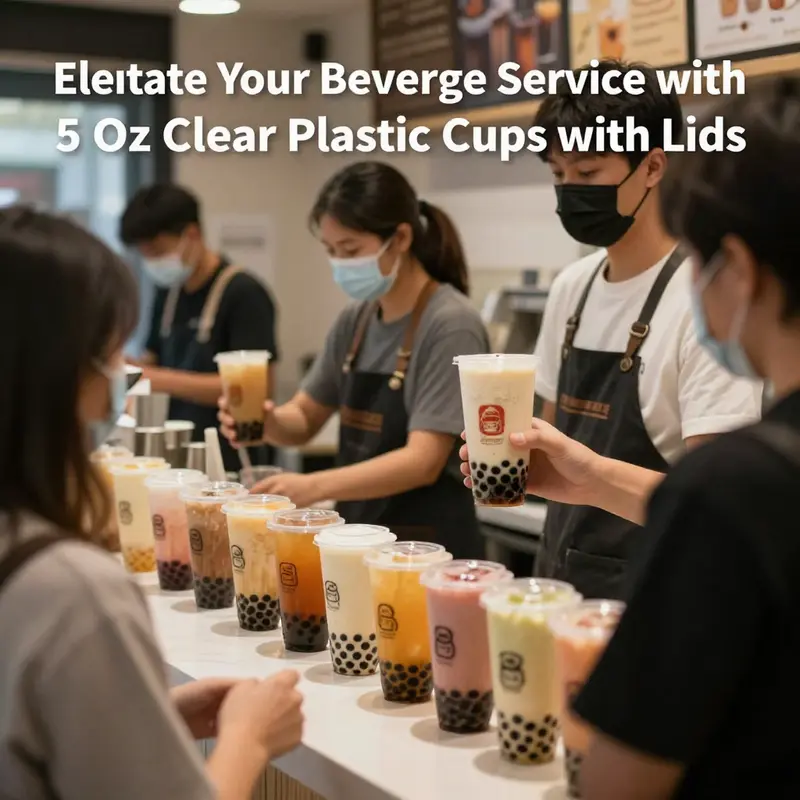
Five-ounce clear cups with lids sit at a practical crossroads of speed, portion control, and presentation in modern foodservice. Their compact size supports fast service, reduces waste, and enables portability for grab-and-go orders. In cafes, bakeries, smoothie shops, dessert boutiques, and catering, they serve as workhorses for single-serve portions and transparent product visibility. The clear walls invite customers to see the contents, from layered desserts to fruit cups, while the lid secures the package for on-the-go consumption. In high-volume settings, a reliable cup-and-lid pairing helps maintain consistency and reduces the need for returns due to leakage or misfills.
The materials chosen for these cups are typically food-grade polypropylene or PET, with BPA-free variants common across many suppliers. This emphasis on safety is more important than ever as customers scrutinize packaging materials and regulators tighten guidelines around food contact. The transparency of the material doubles as a signal of freshness and quality, letting staff verify fill levels at a glance and giving customers confidence in the product they are about to receive. In fast-paced environments, clarity of content translates into smoother service and fewer handling errors, supporting both speed and reliability.
Lid design is a critical factor in the success of the cup in real-world use. A secure snap-on lid resists loosening during bagging, transit, and stacking, while a well-engineered seal minimizes leaks and spills. For drinks and desserts that require straws, compatibility with straw options adds convenience for customers and reduces friction at the point of purchase. The lid also contributes to hygiene by limiting exposure to airborne particles and helping keep contents secure during transport and storage. For operators, consistent lid fit across units minimizes returns and simplifies inventory management, especially when orders are large or custom branding is involved.
Beyond simple containment, these cups support a wide range of applications. They are well-suited for espresso shots, mousse cups, parfaits, yogurt-based desserts, and small fruit portions where the visual appeal plays a key role in the sale. The visibility of the product can be a marketing advantage, reinforcing brand personality through the clean, uncluttered presentation of the cup itself. The combination of a clear cup and a secure lid creates a portable, presentation-ready unit that aligns with grab-and-go culture, drive-thru service, and event catering where speed and reliability are essential.
From a purchasing perspective, buyers balance safety, performance, and cost. Regulatory compliance and material safety are foundational, with emphasis on BPA-free formulations and certifications where applicable. Practical considerations include ensuring the cup and lid meet performance targets for leakage resistance, temperature tolerance, and cross-batch compatibility. When dealing with bulk orders, long lead times and supplier reliability become as important as unit price, since stockouts or delays can disrupt menus and events. A robust procurement approach also considers branding opportunities, evaluating the trade-off between customization and lead times or minimum order quantities.
Branding and customization offer additional leverage for operators who want to reinforce brand identity without compromising product clarity. Subtle branding, such as a small logo or a color accent, can be integrated without overwhelming the product inside. However, customization should be planned with supplier capabilities in mind, including proofs, color matching, and the impact on lead times. Customization can add a marketing edge for promotions and seasonal campaigns, but it should be weighed against added complexity and inventory considerations.
As part of a broader packaging ecosystem, cups with lids are most effective when viewed as part of a coordinated set that may include sleeves, napkins, and branding elements across the to-go experience. For businesses scaling up, direct sourcing from manufacturers can offer cost advantages, customization flexibility, and better alignment with supply-chain schedules. Establishing a due-diligence routine that includes material safety verification, lid-fit testing, and cross-batch compatibility helps ensure consistent performance across large orders and changing menus. In short, five-ounce clear cups with lids are not just containers; they are a strategic component of efficient, brand-consistent, and customer-friendly take-away service.
Final thoughts
The versatility and practicality of 5 oz clear plastic cups with lids make them an essential choice for many businesses in the food and beverage industry. Their secure design and variety of applications—from serving delightful desserts to beverages—ensure they meet the needs of both businesses and consumers alike. By considering the highlighted features and commercial advantages, your establishment can enhance service efficiency and customer satisfaction, all while maintaining budget-friendly purchasing practices.