
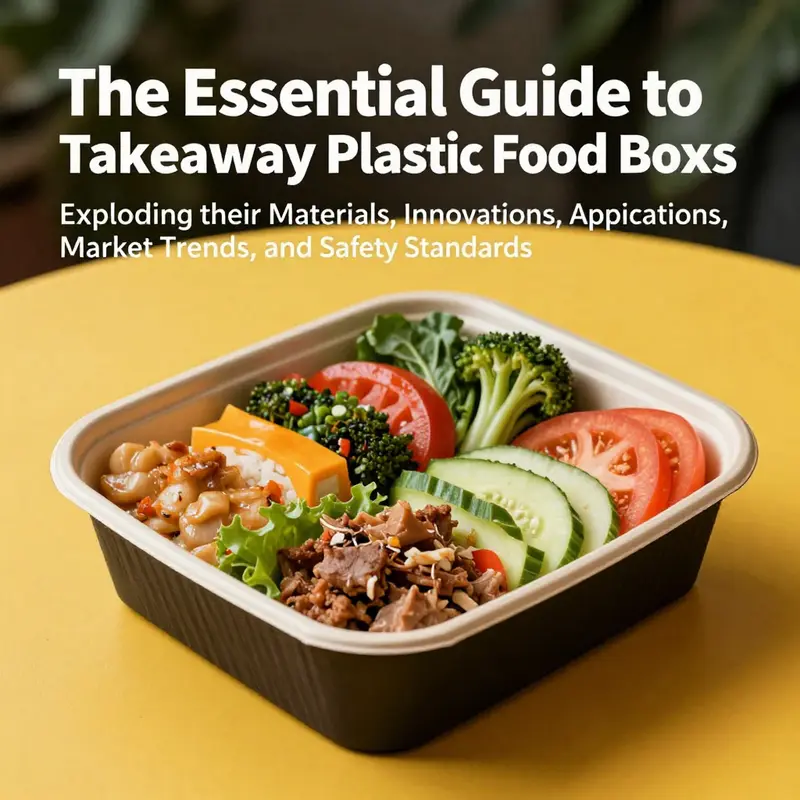
Takeaway plastic food boxes are revolutionizing the way food is served and transported, especially within bustling industries like beverage chains, restaurants, food trucks, and catering services. These versatile containers not only enhance the efficiency of meal delivery but also play a significant role in ensuring food safety and quality. This article delves into the various facets of takeaway plastic food boxes, starting with their material composition and innovative designs that cater to modern needs. We will explore the practical applications in the food industry, the current market trends shaping these solutions, and the safety standards that ensure their reliability. Together, these insights will provide a holistic understanding of takeaway plastic food boxes and their significance in today’s food service landscape.
Under the Hood: The Material DNA of Takeaway Plastic Food Boxes and Its Implications for Safety, Performance, and Sustainability
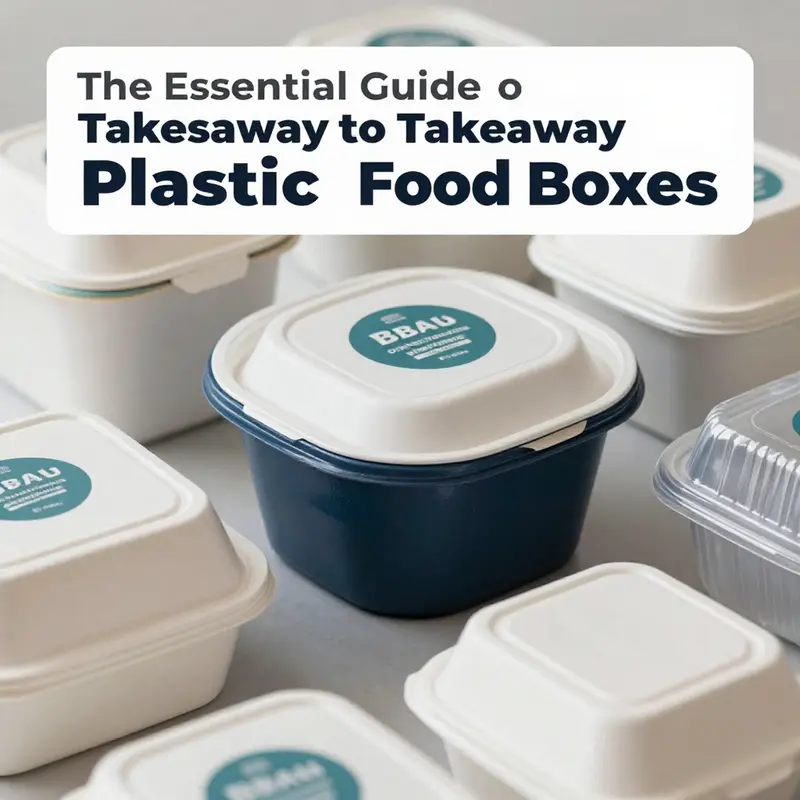
The takeaway plastic food box is more than a vessel. It is a carefully engineered interface between food and transport, a silent guardian of temperature, aroma, and safety. Its material composition governs how well it performs when a hot curry steams inside, when ghee liberates its scent, when a cold salad chills during a long ride, and when it finally lands on a diner’s desk or a customer’s door. At the core of most takeaway boxes are thermoplastic polymers, and among them, polypropylene, or PP, stands as the workhorse.
PP is a robust, food-grade plastic. It carries the recycling code #5, a simple tag that signals its potential to re-enter the circular economy. It withstands heat unusually well for a plastic, tolerating temperatures up to about 160°C (320°F). This heat resistance makes it suitable for hot meals and short bursts of microwave reheating. It does not shatter easily when dropped, and it resists bending under a heavy-packed lunch. In daily operation, this translates into fewer leaks, stronger seals, and a container that can accompany a steam of steam and a splash of sauce without losing its shape. For food service operators, PP’s mix of safety and durability reduces the risk of damage in transit and minimizes waste from container failures.
Yet the family of plastics used for takeout is not made of one material alone. Polystyrene, often known to consumers as foam, is used to make lightweight boxes, trays, and soup cups. It appears in the form of containers that trap heat effectively, helping a hot broth stay warm as it travels. However, the environmental footprint of PS is a serious concern. Its persistence in ecosystems means it can linger for decades in landfills or waterways. Many jurisdictions have restricted or banned its foam forms, citing pollution and wildlife risks. That shift has pushed some operators toward PP or away from foam altogether, even as the cost calculus and performance attributes of PS remain appealing in certain niches.
Beyond PP and PS, other common plastics show up in various guises. PET, or polyethylene terephthalate, is widely recognized for beverage bottles, but it also appears in rigid containers that can survive cold and room temperatures well. HDPE, the high-density variety, offers rigidity and strength, making it suitable for larger takeout boxes and containers that demand sturdiness without a lot of weight. LDPE, the low-density cousin, appears in flexible packaging and liners that need a gentler touch, helping to seal in moisture while allowing some flexibility under pressure. Each of these polymers carries its own recycling code—PET #1, HDPE #2, LDPE #4—signaling a different route in the recycling stream and different considerations for safety, reuse, and disposal.
With these materials, safety is not just about food contact. It also concerns migration of substances under heating or prolonged contact, especially with higher-fat or higher-sugar foods. The term “food-grade” is not a vague label; it indicates compliance with regulatory standards that limit potentially harmful migrants. In practice, this means choosing containers certified for food contact by authorities such as FDA standards in some markets, and maintaining awareness of coatings, colorants, and additives that could migrate when subjected to heat. BPA-free products are a baseline expectation for many buyers, and the landscape continues to improve as manufacturers reformulate and test materials. The risk, though, is not entirely eliminated. If a container is used for a purpose outside its design—heating fat-laden foods in a container not rated for it, for instance—some migration risk can rise. The simple rule remains: respect the intended use and follow labeling instructions.
The layers of design inside a takeaway box reveal how science translates into daily practice. A common feature is the folding or collapsible design. It might seem like a small convenience, but collapsing containers after use saves significant storage space for kitchens and delivery fleets. A minimal structural detail—the tolerance between stacked containers, often around 1.0 mm—makes a difference in transport efficiency. That tiny clearance allows boxes to nest without sticking, reduces the chance of damage during stacking, and minimizes wasted space in trucks and shelving. Multi-compartment layouts have grown in popularity. They help keep components of a meal apart—from rice and protein to vegetables or sauces—while also supporting portion control. The lid is more than a cover; it is a seal that prevents leakage and preserves temperature. Heat-resistant materials used in the lid and body ensure that reheating in microwaves is possible without compromising form or safety. All these features weave together to create a box that is not just a container but a partner in the cooking-to-delivery journey.
As packaging designers push for sustainability, polypropylene remains a favored base due to its balance of recyclability and performance. Yet there is a living conversation about alternatives. Biodegradable options based on plant polymers, such as PLA derived from cornstarch or sugarcane, have entered the market. These compostable variants aim to reduce long-term waste, but their effectiveness depends on the availability of industrial composting facilities, the presence of certified labels, and consumer awareness. The promise is attractive: a box that serves meals with a lighter footprint. The caveat is that compostability is a system property. Without the right waste streams, even the best compostable plastic may not break down as intended. Certifications and standards, and clear consumer guidance, become essential to ensuring these options deliver the hoped-for environmental benefits. Industry observers point to certified eco-friendly products that meet stringent food safety standards as evidence that sustainable packaging can coexist with rigorous safety and practicality.
In this evolving landscape, the economics of packaging cannot be ignored. The price of takeaway boxes reflects volumes, material choice, and customization. Basic PP three-compartment boxes can be remarkably affordable in bulk, with unit costs as low as a few hundredths of a dollar, depending on volume—figures around 0.032 USD per unit for bulk orders of 100,000 or more pieces are cited in recent industry data. Customization, branding, and eco-friendly options can add to the bill, but many operators see value in brand enhancement, improved consumer perception, and alignment with sustainability goals. The market is cautious but optimistic: a robust demand for affordable, high-quality containers continues to grow as delivery and takeout become permanent features of service models. The purchasing decision becomes a triage of cost, performance, and environmental responsibility.
Branding and customization form a visible bridge between packaging and business identity. Modern takeout boxes are not mere vessels; they are canvases. Offset printing, silkscreen, UV spot coatings, embossing, and hot stamping enable brands to present themselves consistently in the hands of customers. A well-executed design can reinforce freshness and quality, communicate dietary information through labeling areas, and contribute to brand recall. This is particularly valuable for operators who use packaging as a marketing tool, transforming a simple box into a conversation starter about values, whether that means simplicity, premium quality, or a commitment to sustainability. It is a reminder that packaging is part of the consumer experience, not a separate add-on.
Of course, the broader packaging ecosystem continues to evolve. Governments and regulators drive changes in acceptable materials, labeling, and end-of-life pathways. The push toward safer, more sustainable packaging increases demand for reliable, tested materials and transparent supply chains. In this climate, the choice between PP, PS, PET, or even biodegradable options is rarely a question of one utility over another; it is a balanced decision shaped by the intended use, the environmental goals of the brand, and the infrastructure available to process waste. For readers seeking practical alternatives in paper-based or hybrid systems, a specific example to explore is biodegradable eco-friendly take-away odm OEM round Kraft paper bowl, which illustrates how sustainable packaging can be deployed in parallel to traditional plastics. This option demonstrates how brands articulate their values while still delivering dependable meal experiences. biodegradable-eco-friendly-take-away-odm-oem-round-kraft-paper-bowl
As the chapter closes on material composition, a broader sense of responsibility crystallizes. The packaging choice speaks to the expectations of safety, the realities of waste management, and the chances to shape brand narratives. The recurring thread is clarity: containers must be food-safe, heat-tolerant enough to protect meals in transit, and aligned with the producer’s sustainability commitments. The smallest detail—the resin family, the colorant, the adhesives, the lid—collectively determines the user experience from kitchen to doorstep. In this sense, takeaway plastic food boxes are not just disposable tools; they are artifacts of modern food culture, revealing how products, processes, and policies come together to support reliable meals on the move. They reflect a world that values performance and practicality, yet also acknowledges the responsibilities that come with convenience. The future may hold further innovations that blend the best of PP reliability with new materials that offer even lower environmental footprints, along with smarter design that reduces waste without compromising safety or enjoyment.
External resource: https://www.alibaba.com/product-detail/OEM-ODM-L500-Plastic-Food-Container16oz-capacity1647239812447.html
Design Innovations Shaping the Future of Takeaway Plastic Food Boxes
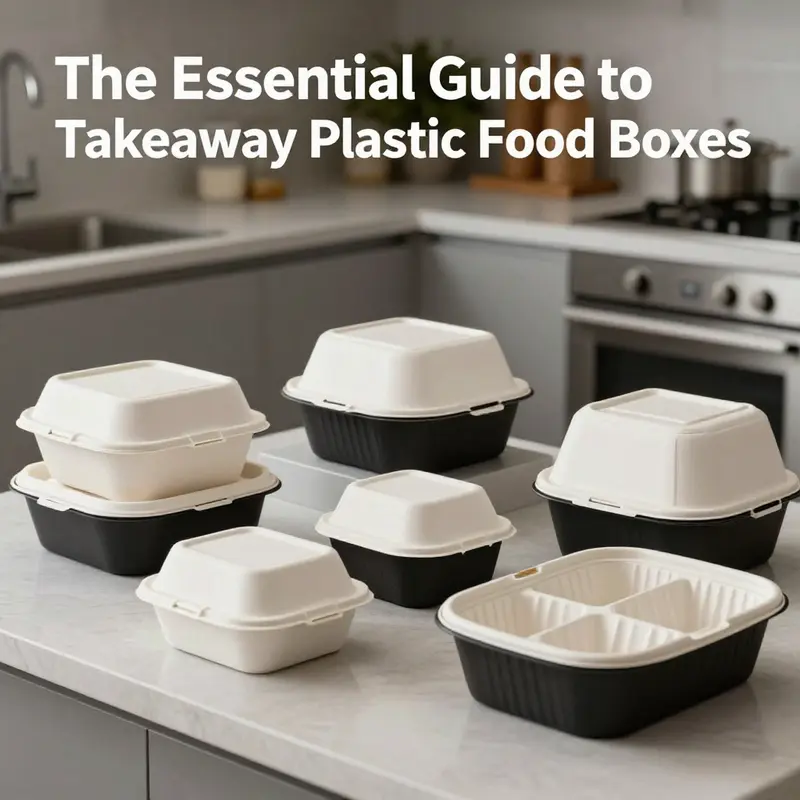
Takeaway plastic food boxes have evolved from utilitarian receptacles into smart, responsive platforms that carry not just meals but brands, signals of safety, and promises of convenience. The design conversation now begins with performance and ends with perception. In the kitchens and fleets that drive modern meals to doors and desks, boxes must withstand heat, oil, and motion, while also presenting food in a way that is appetizing, clean, and easy to manage. Designers, engineers, and food-service partners are increasingly aligned around a central idea: packaging can improve the entire experience without compromising safety or sustainability. This shift is visible in the way compartments are organized, how materials behave under stress, and how forms adapt to the realities of delivery and consumption. Compartmentalization, for instance, has moved beyond a simple convenience to become a core principle of meal integrity. Tables of multi-component meals—rice beside proteins, sauces kept separate, vegetables protected from moisture—now rely on internal partitions that minimize cross-flavor contamination and support precise portion control. Yet even as partitions improve practicality, they pose a tension. If the lids are not securely sealed, the contents can shift during transit, threatening both presentation and temperature. Designers address this with refined lid geometry, tighter tolerances, and mating surfaces that grip without overtly cramping the user experience. The result is a box that feels reliable in a rider’s hand and calm on the eater’s table, a small but essential reassurance in the logistics chain.
High-performance materials sit at the core of these innovations, balancing heat resistance, safety, and environmental considerations. Polypropylene continues to be favored for hot meals, soups, and reheating in microwaves, thanks to its robust resistance to oils and moisture and its compatibility with widely used cleaning cycles. Yet the material story has grown richer. PET offers clarity and impact resistance, making it an attractive option when a container must showcase a colorful salad or a layered meal through a transparent window. Its barrier properties help preserve moisture and gas transmission, which translates into longer freshness in transit. PLA, a plant-based bioplastic, has found a niche for brands seeking a reduced footprint. It brings compostability into the conversation, aligning packaging choices with broader sustainability goals. However, PLA’s heat resistance is typically more limited than PP, which means it is best suited for cold or room-temperature applications or for short-delivery windows. The trade-offs among these materials are not mere technical footnotes. They shape how far a brand can push its packaging into the realm of convenience—whether a container can go from fridge to microwave without a second thought, or whether it must be retired from the lineup after a single use. Brands that navigate these choices with transparency can convey a clear message: safety, reliability, and environmental mindfulness can coexist. In practice, this means selecting materials with recognized food-grade safety certifications, such as BPA-free formulations, and aligning them with end-of-life options that matter to customers and regulators alike. The conversation soon widens to how a box looks while it performs. Innovative structural designs now emphasize lightweight silhouettes that still feel sturdy when lifted. The transparency trend, particularly for salads and beverages, leverages clear materials to entice the consumer and to allow a quick visual check of contents, which reduces the likelihood of mismatches between customer expectations and orders. These designs also consider the sense of occasion—the moment a hot curry or a delicate noodle dish is opened. A well-engineered container can cradle steam and aroma, guiding the eater from the first whiff to the final bite. Beyond appearance, there is a practical shift toward multi-functionality. Some containers incorporate integrated cutlery holders, which simplify the delivery experience for customers who might otherwise hunt for utensils in a bag. Resealable lids and stackable bases add further value for take-home meals and bulk orders, enabling better reusability of space in both kitchens and delivery fleets. This reflects a broader principle: packaging must be usable in the real world, where drivers juggle space, weather, and timing, and where customers reprint their own routines around food in motion. The most thoughtful designs marry form with a clear, pragmatic logic. A box that stacks neatly in transit reduces the risk of a toppled package and wasted meals, while a lid that resists accidental opening preserves the meal’s initial appeal. The industry’s interest in sustainability has shifted packaging toward materials that can be recycled or composted without compromising performance. Recyclability is not just a checkbox; it is a design constraint that influences everything from the thickness of walls to the choice of closures. Compostable options, often plant-based, respond to a consumer base that is increasingly curious about end-of-life outcomes. They are not universally suitable for all food types or all temperatures, which means the design must communicate appropriate usage at the point of sale and through clear labeling. The modern takeaway box, then, becomes a small, portable ambassador for a brand’s environmental stance, a chance to tell a story through color, texture, finish, and even subtle branding touches like embossing or foil accents that catch the eye without overwhelming the food. In the realm of branding, customization has surged beyond colors and logos. Suppliers now offer a wide spectrum of finishes—offset printing, silkscreen, UV spot coating, embossing, and hot stamping—that can transform a simple container into a memorable impression. This capacity for branding is more than decorative; it reinforces quality perception and can influence a buyer’s choice at the point of sale. A carefully crafted container communicates reliability—an assurance that the meal inside will arrive intact, hot, and ready to enjoy.
A more forward-looking strand of design focuses on information and traceability, what some describe as smart packaging. QR codes or machine-readable marks printed directly on the box enable quick access to allergen information, preparation details, and even digital receipts. This reduces friction for customers who care about safety and provenance and enhances the ability of restaurants to respond rapidly to inquiries about ingredients or cross-contact concerns. The packaging thus becomes an interface, guiding a consumer from purchase to plate with minimal effort while still carrying essential data in a traceable form. Such features also support operational efficiency. For delivery teams, codes can verify that the right meal has reached the right customer, and for manufacturers, they can feed back into quality-control loops to monitor temperature histories and shelf-life expectations. The net effect is a packaging ecosystem that is not only safer and more reliable but increasingly intelligent about the needs it serves. Design innovations are inseparable from regulatory and safety frameworks. Reputable suppliers emphasize compliance with international food-grade standards, ensuring that the chosen materials meet FDA, LFGB, or ISO benchmarks. In a market where perceptions of safety can be as influential as performance, visibility into certification processes reassures customers and helps restaurants avoid missteps that could undermine trust. The most successful containers reflect a disciplined, holistic approach: they perform under pressure, align with sustainability goals, communicate clearly, and honor the consumer’s desire for convenience without sacrificing safety or quality. To illustrate how design and branding can coexist with material choices, consider how diverse packaging solutions can align with a restaurant’s overall aesthetic while still preserving the integrity of the food. A box with a bold, geometric form can pair with a high-contrast interior finish to create a striking presentation, yet it must keep the food protected and easy to open. Some brands explore bold shapes and finishes, similar in spirit to other packaging innovations, such as those found in related packaging formats. For an example of how packaging can merge function with branding on a different material, see disposable-octagonal-box-restaurant-food-kraft-paper-packaging. This reference highlights how shape and surface treatment can amplify a brand’s identity, even when the material differs, and it anchors the broader idea that packaging design is a storytelling tool as much as a protective shell.
As the industry marches forward, the overarching arc is clear: takeaway plastic food boxes are no longer one-size-fits-all. They are adaptive canvases that must balance safety, usability, and environmental responsibility with the desire for a distinctive brand voice. The most enduring designs emerge from a rigorous understanding of how a meal is packed, transported, and finally enjoyed. They anticipate the contingencies of real-world delivery—shifts in temperature, jolts in transit, and the casual carelessness of a hectic day—while remaining faithful to a customer’s need for simplicity and reliability. In this sense, design innovations in takeaway boxes are not merely about making better containers; they are about enabling companies to deliver better experiences—consistent, measurable, and scalable across diverse markets. And as the sector continues to expand, these innovations will only deepen, weaving together material science, usability, and storytelling into packaging that functions as a true partner to the meal it protects. For readers who want to see concrete examples of how packaging choices intersect with sustainability and performance, one can explore related packaging content that showcases a range of materials and formats, including recyclable and compostable options.
External resource for deeper technical insight: https://www.plasticpackaginginsights.com/transparent-takeaway-box-standards-composition-industrial-use
null
null
Shaping the Future of Takeaway Packaging: Trends, Materials, and the Path Forward
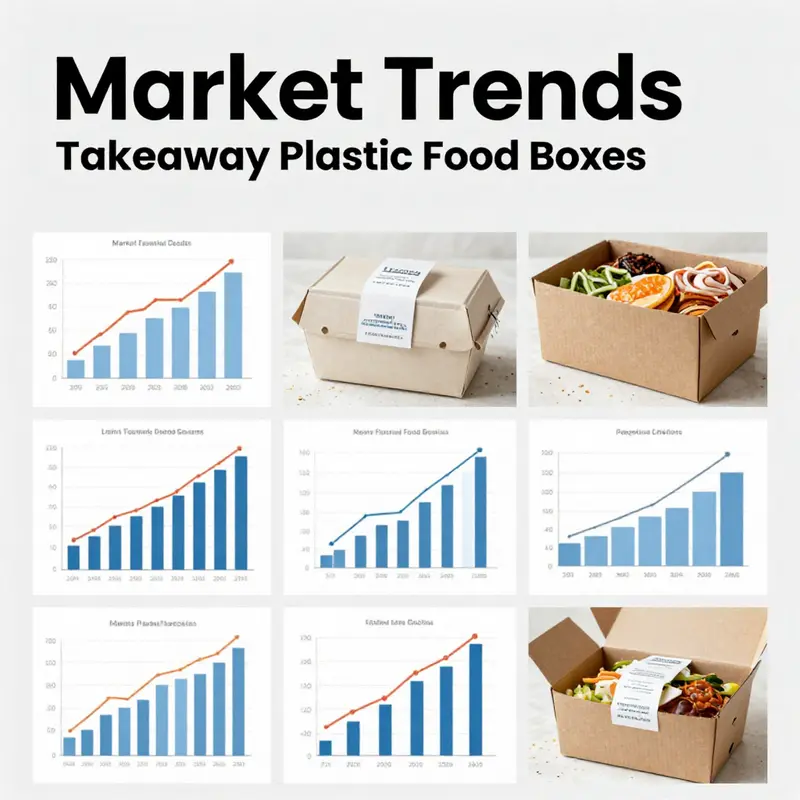
Takeaway plastic boxes stand at a crossroads between convenience, safety, and responsibility. They power modern delivery and in store dining, enabling safe transport, portion control, and consistent branding across kitchens and fleets. Yet they are under pressure from regulators, retailers, and mindful consumers who want lower waste and clearer end of life options. The market is moving from a single material, cost centric mindset toward a smarter ecosystem where material science, policy, and consumer insight converge to redefine takeout packaging. The result is not the disappearance of plastic, but a reimagining of its role in a circular economy.
Regulatory pressure on single use plastics is accelerating this shift. Governments are tightening bans and restrictions on traditional non biodegradable formats, including polystyrene and some polyolefins. The trend is global: stricter rules in major markets push brands toward packaging that is more recyclable, compostable, or easier to recycle in credible systems. For manufacturers and operators, this means investing in materials and designs that meet waste management benchmarks while preserving safety, performance, and cost parity.
Against this backdrop, material shifts are gaining momentum. Biodegradable and compostable alternatives based on PLA and other plant derived polymers offer lower fossil footprints and often better end-of-life options where composting is accessible. Suppliers now emphasize certified food safety and end-of-life claims to help brands align with sustainability promises without sacrificing performance. Trade-offs exist—cost, supply resilience, and compatibility with existing processes—but the incentives to innovate are strong.
Consumer behavior is the driver. Surveys show growing willingness to pay for greener packaging, with consumers linking environmental responsibility to brand trust and loyalty. This demand pushes retailers and delivery platforms to feature greener options, highlight recyclability, and design packaging that supports recycling or composting. Brands that can demonstrate lower waste, clear labeling, and a credible lifecycle story can convert awareness into loyalty and incremental revenue.
Technological advances are closing the loop. Chemical recycling, mechanical recycling improvements, and design-for-recyclability are reshaping economics and sustainability. Brands pursue tighter supply chains through vertical integration and responsible sourcing, aiming to reduce emissions and improve waste handling. Taken together, these trends enable takeaway boxes to deliver both performance and improved end-of-life outcomes, reducing trade-offs between convenience and environmental impact.
Projections suggest plastic will remain central in the near term, but with a smarter, more circular path. The market is likely to grow with a focus on bio-based materials, recyclability, and packaging design that supports reuse where feasible. The future depends on continued innovation in materials, processing, and system-level thinking that aligns brand value with environmental stewardship.
null
null
Final thoughts
In summary, takeaway plastic food boxes are crucial in the food service sector for their convenience, safety, and adaptability. Businesses in beverage chains, restaurants, and catering services benefit from innovative designs that not only meet consumer needs but also align with overarching market trends emphasizing sustainability. Understanding the material composition, design innovations, application styles, and adherence to safety standards helps stakeholders make informed decisions that enhance service delivery and brand perception. Ultimately, the right takeaway solution can contribute significantly to operational efficiency and customer satisfaction.