
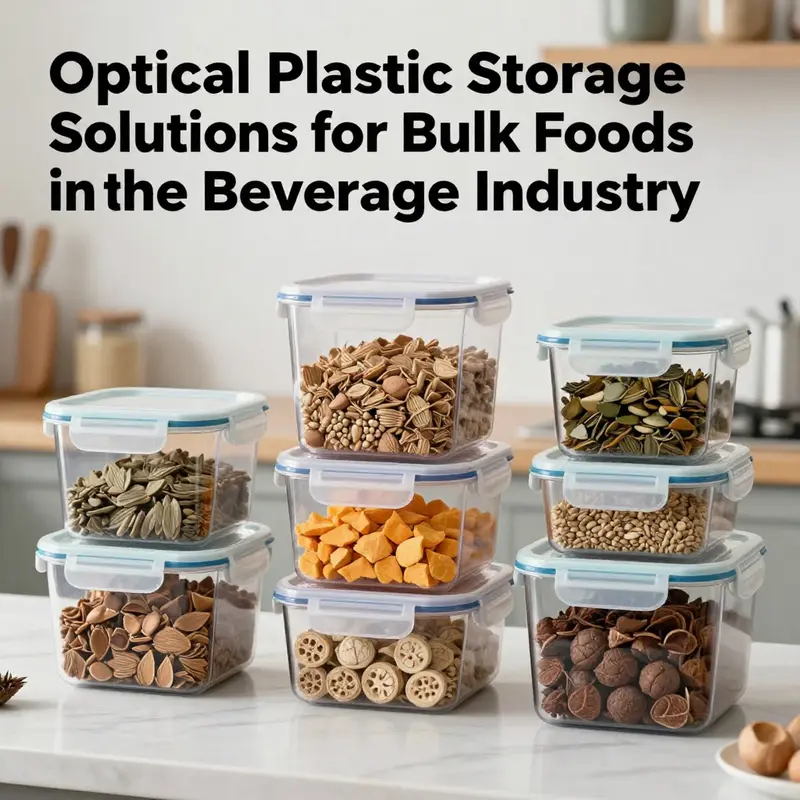
Selecting the right plastic storage containers for dry bulk foods is crucial for is essential for beverage shops, restaurants, catering services, and corporate procurement teams. These containers not only preserve the freshness and quality of ingredients but also enhance operational efficiency. In this guide, we highlight the top options available, categorized by their specific strengths. From premium choices suited for high-capacity needs to versatile options perfect for pantry organization, each section aims to offer insights for businesses committed to quality service. Whether you’re aiming to streamline your supply chain, ensure food safety, or simply maintain an organized workspace, we’ve got the best solutions for your needs.
Smart Bulk Storage, Clear Freshness: Why a Single Plastic Container Leads for Dry Bulk Foods
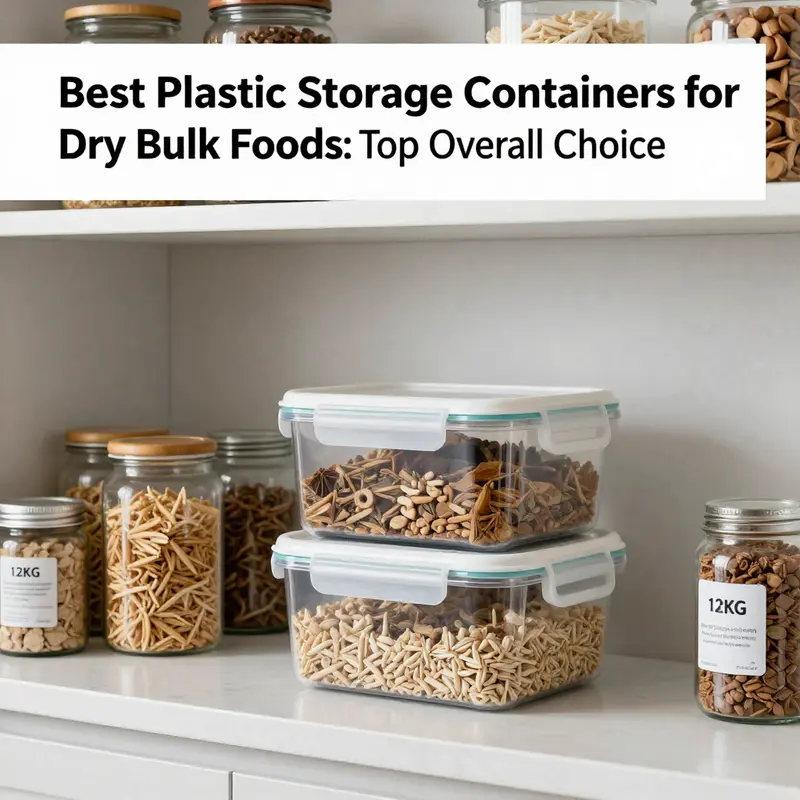
In the world of dry bulk foods, the storage container is more than a simple receptacle. It is a gatekeeper for freshness, a facilitator of efficient living, and a bridge between domestic pantry habits and professional display standards. The modern consumer who buys in bulk faces a trio of practical challenges: protecting grains, cereals, flours, and legumes from air, moisture, and pests; maximizing space without sacrificing accessibility; and maintaining an appearance that communicates cleanliness and order. The top option described in recent market insights rises to meet these needs with a rare synthesis of capacity, dispensary control, and sustainable materials. It is a container that does not merely hold dry goods; it actively supports responsible stewardship of food, reduces waste, and makes routine handling feel almost effortless. To understand why this model stands out, it helps to trace how its features intertwine with real-world use in both home kitchens and busy retail spaces.
Capacity matters in bulk storage because size influences both the frequency of restocking and the likelihood of product spoilage during long shelves. A 10–20 liter capacity is more than a numerical metric; it represents a design philosophy that prioritizes scalable storage without demanding constant reorganization. In households, this space translates to fewer trips to the market, less frequent packaging transfers, and a calmer pantry where bags and boxes do not form a precarious tower at the edge of the shelf. In commercial settings, the same capacity allows for more stable shelf planning, reduced handling during restocking, and the ability to consolidate multiple stock lines into a single, clearly organized display unit. The capability to hold a substantial quantity—up to about twenty liters—also aligns with the practical realities of bulk-buying patterns, where consumers and retailers alike want a single, reliable vessel that can accommodate larger purchases while remaining easy to manage.
Yet capacity alone does not determine success. The designing engineers behind the leading model have introduced an adjustable dispenser that addresses a perennial trouble: spillage. The dispenser is not a static feature; it is a thoughtfully engineered interface that accommodates a range of dry goods—from flour and rice to cereals and grain blends—without forcing the user to adopt sterile pouring habits or to fear overflow. Precision pouring matters for both everyday use and precise portioning in a retail setting, where even small drips can create a messy display or a cleanup task that disrupts customer flow. An adjustable spout that offers about twenty percent less spill potential than rigid, fixed designs changes the arithmetic of day-to-day dispensing. It translates into cleaner countertops, more predictable measurement, and less wasted product. In a store setting, this control reduces the likelihood of customers creating spills that require staff intervention, which in turn enhances perceived efficiency and reliability of the display.
The choice also leans on material science that values safety, sustainability, and practicality. The container’s shell is crafted from eco-friendly polypropylene and acrylic, a combination that balances durability with visibility. The transparent components enable quick visual checks of contents without opening the lid, a feature that is particularly valuable when managing a bulk display or a pantry that must rotate items to uphold freshness. The plastics are designed to resist chemical interactions with common dry goods, ensuring that flavors and aromas remain true to life. Importantly, the materials are lighter than glass alternatives by a meaningful margin. This weight advantage matters in multiple contexts: it makes frequent handling less fatiguing for home users, supports easier lifting and rearrangement in busy kitchens, and lowers the energy footprint involved in daily use and transportation of multiple containers in commercial spaces. The eco-conscious angle extends beyond weight; the choice of materials is part of a broader design intention to minimize environmental impact while preserving long service life and cleanability.
A further design thrust centers on durability and structural integrity. The container is engineered with stringent dimensional tolerance—about 5 millimeters in key dimensions—an attribute that matters when stacking or aligning containers on shelves. Tighter tolerances lead to more predictable nesting and stacking, which translates to steadier displays and less wobble under load. In practical terms, this means you can line up several units along a pantry wall or grocery display with confidence that they will sit true and not tilt when the shelf is bumped or re-stocked. The stability is not merely a matter of aesthetics; it is a functional advantage that supports routine cleaning, orderly rotation, and reliable use in environments where equipment fatigue and mishandling can otherwise erode performance over time. When a container can be stacked without surrendering ease of access, the vertical footprint of a pantry or back room is used to its fullest potential, a benefit especially valued by small businesses operating in space-constrained settings.
A truly versatile design is one that can wear multiple roles. The leading model signals its dual-use intent by presenting a smart blend of everyday pantry practicality and professional display appeal. For home use, it acts as a tidy, transparent organizer that simplifies daily meal planning and meal-prep routines. The clear body invites at-a-glance content checks during a busy morning, helping families maintain order even when mornings rush. For commercial use, the same unit doubles as a display-ready vessel that can sit on shelves in a rustic or modern store ambiance. It works with wooden shelves to achieve a warm, timeless aesthetic, while its clean lines and professional finish maintain a sense of reliability and hygiene that customers expect from a bulk display. This dual-use flexibility reduces the need for a retailer or household to invest in separate solutions for different contexts, allowing a single container to serve multiple purposes without sacrificing performance.
To compare this top option with other respectable contenders helps illuminate its balanced advantages. A heavy-duty rolling container with a built-in handle excels at mobility, enabling heavy bulk storage to be moved around a kitchen or back room with ease. The practicality of mobility is immense in spaces where layout changes are frequent or where personnel need to rearrange products for seasonal promotions. However, while mobility is valuable, it can come at the cost of space efficiency and dispensing precision. The rolling model may not offer the same combination of large-capacity storage and spill-resistant dispensing that the top option provides. Then there are airtight bins designed specifically for households that emphasize leak-proof seals and straightforward operation. These units deliver excellent freshness retention for shorter-term storage and daily pantry use but may lack the scalable capacity or the refined dispensing mechanism that bulk buyers and retailers rely on. The candy-bin style options bring visual appeal and a hygienic dispensing solution to specialty settings, such as cafés or gift shops, yet their capacity often remains more modest and their dispensing mechanisms tied to fragile components that can require frequent maintenance in high-traffic environments. Taken together, the broader landscape shows how the standout model secures a unique intersection of high capacity, controlled dispensing, durable construction, and sustainability—factors that align with contemporary consumer and retailer expectations alike.
Beyond the mechanical and material advantages, the top container embodies a philosophy of accessible organization. The transparent design maximizes content visibility, reducing the mental load required to manage pantry stocks. When the lid seals tightly, the risk of moisture intrusion diminishes, a crucial factor for grains, cereals, and flours that can degrade quickly when exposed to humidity. Airtight performance complements visibility by ensuring that users can monitor freshness without sacrificing speed and convenience. In many households, that means fewer chances to reach for a stale package, which translates into less food waste over time. In a retail setting, the same principles translate into more consistent product quality, clearer labeling opportunities, and a shopping experience that feels both trustworthy and efficient for different customer segments. The combination of these design choices—capacity, dispensing, visibility, and seal quality—sums up to a container that not only stores dry bulk foods well but also supports the habits of modern living and modern retailing.
The conversation about sustainability also factors into how this container performs over the long term. Lightweight yet sturdy, it is easier to transport from warehouse to store or from store to customer without the environmental cost of heavier materials or more energy-intensive handling. The materials themselves are chosen for their resistance to chemical interaction with common dry goods, which helps to maintain product integrity and reduce waste from spoilage or contamination. Cleanability is another practical sustainability consideration; smooth surfaces and accessible corners make frequent cleaning routine tasks faster and more thorough. When maintenance is straightforward, the container remains in good condition longer, delaying the replacement cycle and contributing to a lower environmental footprint across the product’s life.
From a practical operations perspective, the top option is designed with user experience in mind. The container invites routine use without requiring specialized equipment or training. A pantry system built around such units benefits from predictable interactions: easy retrieval of contents, quick replenishment, and a straightforward rotation strategy. For households, this translates to more consistent meal planning and fewer last-minute trips to the store for missing staples. For retailers and cafés, it yields smoother service, faster stock checks, and a cleaner, more appealing visual presentation that can positively influence customer perception and sales performance. In short, the container functions as a reliable tool that supports disciplined inventory management and everyday culinary workflow alike.
In evaluating the larger ecosystem of bulk storage solutions, two themes emerge as hallmarks of enduring value. First, the capacity to handle a broad range of dry goods without demanding specialized accessories or additional steps. Second, the certainty that quality will endure under regular use—from the kitchen counter to a busy retail shelf. The leading model combines these qualities in a way that makes it a natural centerpiece for any system designed to manage dry bulk foods. It is not merely a container; it is a practical instrument of organization, designed to reduce waste, streamline operations, and preserve freshness with minimal friction. When this alignment of form and function is achieved, the everyday act of filling a container becomes a small but powerful act of stewardship—one that quietly improves the efficiency of a pantry or a display, and, by extension, the overall experience of buying and using bulk foods.
For those who want to explore the full scope of options described in market research, the top model offers a compelling reference point. Its capacity range, dispensing technology, and material choices reflect a thoughtful synthesis of consumer needs, operator demands, and sustainability priorities. While other designs may excel in single aspects—such as mobility, decorative display, or ultra-tight seals—the integrated balance of capacity, controlled dispensing, visibility, and durability makes it a standout choice for both home and professional environments. The result is a storage solution that remains practical and relevant as trends in bulk shopping and pantry organization continue to evolve. In a market that increasingly values efficiency without sacrificing freshness, this container demonstrates how careful engineering, disciplined material selection, and attention to everyday use can converge in a product that feels almost inevitable in its usefulness.
To close the loop on why this particular container earns its top designation, consider how its features translate into tangible benefits over time. The generous volume reduces the frequency of restocking, freeing up labor and reducing interruptions in busy service areas. The adjustable spout improves portion control, which helps manage inventory and preserves product quality through careful handling. The 5 mm tolerance supports reliable stacking and durable performance in the face of repeated loading and unloading. The eco-friendly materials align with growing consumer demand for products with lower environmental impact, while still ensuring safety and longevity. The combination of transparency and airtight sealing delivers ongoing freshness and clarity for content checks. In households and retailers alike, these attributes come together to create a storage solution that not only preserves dry bulk foods but also makes the everyday work of storing, displaying, and using them more efficient, predictable, and satisfying.
External resource for deeper technical details on the top choice can be consulted for a more granular product profile and specifications: https://www.alibaba.com/product-detail/Ecobox-SB-008-Bulk-Dry-Food-Storage1600589773478.html?spm=a2700.productlist.search_result.0.0.3b3d5e1cNjHtIg&urlPrev=search
Bulk Brilliance: Durable, Airtight Plastic Storage for Retail and Commercial Dry Bulk Foods
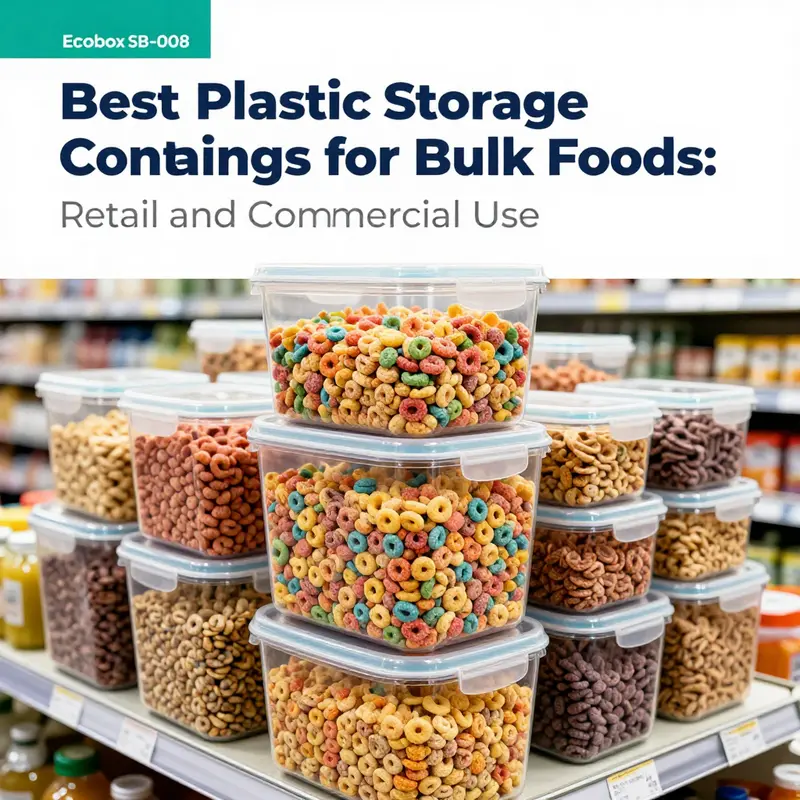
Retail counters and commercial backrooms share a single demand: they must move product quickly while preserving quality. In the world of dry bulk foods, the container is more than a bin; it is a partner in inventory control, a frontline defense against moisture, pests, and waste, and a tool for shaping customer experience. When buyers reach for rice, flour, or pasta, they carry with them expectations not just about price and flavor, but about freshness and cleanliness. The best plastic storage solutions for these settings balance several design principles at once: they must be sturdy enough to withstand daily handling, safe for food contact, airtight enough to protect against humidity, transparent enough for fast visual checks, and easy to dispense or scoop without making a mess. For retailers and commercial kitchens, these containers also need to maximize space, enable smooth restocking, and support clean, compliant operations under the pressures of peak hours and busy shelves. This is not merely about buying a larger bin; it is about choosing a system that remains reliable through repeated use, cleaning cycles, and the inevitable tangling of labels, stock rotations, and shifting demand.
A core foundation of any robust bulk-storage system is the material itself. Food-grade plastics, particularly those made from polypropylene, offer a reliable blend of chemical resistance, toughness, and safety. They resist many of the common cleaners used in commercial kitchens and storage rooms, which means faster sanitation routines and fewer worries about residual odors or taste transfer. In a retail setting, where products are constantly brought into contact with countless hands and display surfaces, the material choice also communicates professionalism. Consumers notice when a display looks pristine and is easy to interpret at a glance. Clear, food-safe plastic bodies make this possible. They let staff verify contents without reopening lids, and they enable managers to spot inventory gaps immediately during shelf audits. In practical terms, this translates to fewer mistakes, faster restocks, and a smoother shopping experience for customers who rely on quick, accurate identification of staples such as rice, quinoa, or cereal blends.
Equally important is the sealing system. Airtightness matters because moisture is a silent thief. In storage rooms and on display, humidity can creep in from ambient air, product handling, or imperfect closures, gradually degrading texture and flavor. A reliable seal often hinges on a gasket-driven lid with a robust locking mechanism. A silicone or elastomer gasket creates a true barrier against air and moisture, while a snug lid keeps out pests and reduces oxidation that can dull aromas and accelerate staling. The best designs combine these sealing features with ergonomic lids that are easy to open for quick dispensing but resistant to accidental spills during transport. In busy environments—cafes, convenience stores, and bakery supply rooms—a well-sealed lid means fewer compromised batches, less waste, and more consistent product quality across shifts.
Transparency is another critical attribute. In a fast-paced retail display, staff must identify contents at a glance to guide customers, manage inventory, and execute accurate restocking. A clear container minimizes the need for opening containers to verify what is inside, which lowers contamination risk and speeds service. The combination of visibility with a secure seal ensures that contents stay fresher for longer and that staff can maintain a tidy, organized display. From a merchandising perspective, transparent containers also support a modern, clean aesthetic that can elevate the perceived quality of bulk aisles. When a shopper reaches for a bag of beans or a jar of pasta, the transparent container confirms the product’s presence and helps them make confident, informed choices.
Dispensing design rounds out the trifecta of safety, usability, and efficiency. In retail, where throughput matters, a controlled dispensing mechanism reduces waste and mess. Whether a store uses scales, scoops, or pour spouts, the container should accommodate precise portioning without introducing cross-contact or spills. An integrated dispensing feature—such as an attached scoop or an adjustable spout—can streamline operations in cafes, cafés-with-pantry, and bulk displays alike. It also supports portion control for customers who want consistent serving sizes, which is especially valuable for cereals, flours, nuts, or trail mix. Even in backroom storage, a dispensing-ready design saves staff time during restocking and reduces the frequency of open containers, a factor that can influence sanitation standards and product integrity.
Beyond these functional elements, space efficiency and ergonomics play a decisive role in choosing the right containers for commercial environments. The realities of storage rooms and sales floors mean every inch matters. Precision-engineered dimensions with tight tolerances enable reliable stacking, so vertical space can be leveraged without sacrificing stability. A common, practical benchmark is a 1.0 millimeter tolerance that ensures containers nest cleanly under weight and align neatly on shelves. For heavier loads, rolling bases and ergonomic handles can dramatically ease movement, protecting staff from strain during restocking and rearrangement. The ability to relocate large quantities without exertion is not a luxury; it is a safety and productivity imperative in busy bakeries, food retailers, and multi-outlet kitchens.
Sustainability also informs the selection process. Eco-conscious buyers favor containers that use durable, recyclable plastics and that align with broader environmental goals. Polypropylene, chosen for its longevity and chemical resistance, often carries favorable life-cycle considerations compared with some alternatives. In the commercial context, a material choice that minimizes waste and supports recycling streams can enhance supplier ethics and appeal to customers who value responsible sourcing. This is not just about reducing a footprint; it is about building trust with staff, suppliers, and shoppers who experience the care put into product stewardship every time they reach for a bulk staple.
The practical implications of these features unfold across diverse use-case environments. In supermarkets, bulk displays demand containers that combine high visibility with precise dispensing and clean containment. The ability to maintain consistent product quality at high turnover rates translates into fewer product withdrawals with compromised freshness and fewer returns due to moisture-related spoilage. In cafes and bakeries, the emphasis shifts toward portion control and speed. Staff must be able to scoop or pour accurately with minimal downtime, while the display remains visually appealing and orderly. In backroom storage areas, the focus is on safety, mobility, and inventory control. Shelves must accommodate a mix of sizes, with containers that can be moved easily for rotation, cleaning, or seasonal reorganization. Pet-food storage adds another layer of consideration, where odor containment, pest deterrence, and easy cleaning become essential.
To navigate these realities, buyers should approach the selection with a clear decision framework. Begin by assessing capacity needs in relation to shelf space and turnover. Bulk grains and nuts may require larger containers for front-of-house displays, while staples kept in a backroom might benefit from standardized, stackable units that fit neatly into existing shelving arrangements. Consider the typical weight of contents and whether a rolling base would reduce strain during restocking from one location to another. It is prudent to test a few units for balance when filled to their stated capacities and to confirm that lids close securely with a tactile, reassuring snap. Sanitation protocols should be evaluated as part of the purchasing decision: can lids detach for thorough cleaning, and are the containers compatible with the cleaners used in the facility? These checks help ensure that the system remains compliant with hygiene standards while delivering long-term value.
In terms of display strategy, transparency and ease of labeling deserve attention. Staff should be able to update product information quickly without leaving the display area or removing the lid. A labeling-friendly surface and a lid that does not obstruct visibility support efficient inventory management and price-per-unit clarity for customers. When these containers are used across multiple locations, standardization becomes a strategic advantage. Consistent sizing, sealing mechanisms, and dispensing features simplify training, reduce variance in customer experience, and streamline procurement and replacements. The most successful bulk-storage systems in retail and commercial settings are those that integrate seamlessly with existing shelving, point-of-sale workflows, and sanitation schedules while offering room to scale as demand grows.
The chapter’s core message is practical rather than theoretical. The best plastic storage containers for dry bulk foods in retail and commercial contexts are those that harmonize durable build quality, airtight protection, transparent visibility, and user-centered dispensing with efficient space use. They support quick, clean restocking, accurate portioning, and clear product identification. They also align with sustainability goals and safety requirements that govern modern food operations. In that light, the emphasis moves away from chasing a single “best” model and toward crafting a cohesive system of containers that collectively meet the needs of customers, staff, and the operation as a whole. When a store or kitchen chooses this integrated approach, it experiences smoother daily workflows, less waste, and a stronger impression of quality—an impression that begins the moment a shopper surveys the bulk display and continues through the moment the box is opened and the scooped portion lands in a bag.
For retailers and facilities evaluating options, a key takeaway is to prioritize the combination of airtight performance and user-friendly dispensing, wrapped in a durable, transparent shell that makes product identification effortless. Pair this with stackable, ergonomic design and a sustainability-forward material choice, and the bulk-storage system becomes a proven driver of efficiency and freshness. The end result is not just better storage; it is a better shopping experience and a more reliable operation that can adapt to seasonal peaks, changing product mixes, and evolving consumer expectations. As retailers refine their bulk strategies, the containers themselves serve as a quiet, dependable backbone—one that quietly holds, protects, and presents the everyday staples that customers rely on.
External resource: https://www.alibaba.com/product-detail/Wholesale-Bulk-Dry-Food-Container-Candy_1600748119436.html
Bulk, Barrels, and Bright Pantries: The Art and Science of Plastic Pantry Storage for Dry Bulk Foods at Home
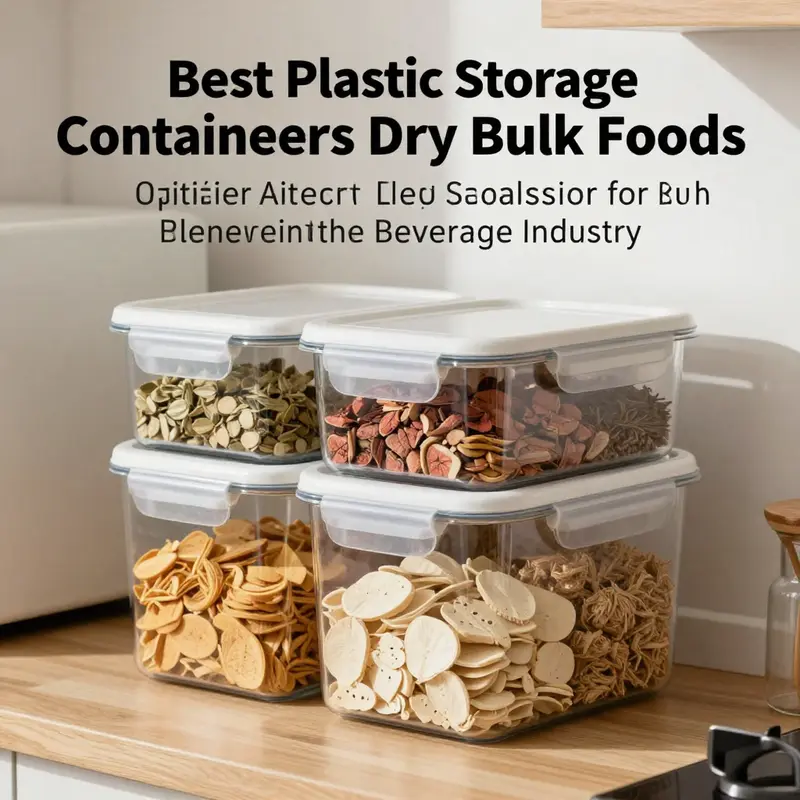
In a kitchen, order breeds efficiency, and efficiency, in turn, shapes every decision from a quiet morning coffee to a late-night dinner rush. When we talk about storing dry bulk foods at home, the containers we choose do more than hold flour and rice. They set the tempo of our daily routines, influence how much we buy, and determine how easily we can keep our pantry fresh, visible, and accessible. The best plastic storage solutions for bulk dry goods strike a careful balance among safety, durability, usability, and space efficiency. They protect against moisture, air, and pests, but they also invite a level of organization that makes cooking less stressful and more enjoyable. These containers are less about fashion and more about functional design that harmonizes with the rhythms of a busy household, where every meal often hinges on having the right ingredient on hand in the right amount at the right moment.
A central consideration is the material itself. Food-grade plastics composed of polypropylene or high-density polyethylene provide a practical combination of safety and resilience. These materials resist the chemical challenges of pantry life—lipids from nuts, starches from grains, and occasional oils that can linger on surfaces—without imparting flavors or odors to the contents. The best designs give you reassurance at a glance: a clear body that lets you see quantity and condition, and a lid that forms a tight seal against air and humidity. The seal is not merely a nuisance-preventer; it’s a guardian against the subtle processes that erode freshness, from the slow oxidation of fats to the subtle rehydration of dried ingredients that invites clumping and quality loss. In homes where fresh flavors matter, an airtight lid becomes less an accessory and more a standard bearer for quality.
Visibility matters as much as protection. The transparent or semi-transparent walls mean you don’t have to guess what’s inside. This visual access reduces the habit of over-purchasing or letting items drift toward the back of a shelf where they may eventually go overlooked. When you can tell at a glance whether you’re low on rice or beans, you can plan a trip to the store more precisely and avoid unnecessary trips that waste time and fuel. The design language here is not about showing off a modern aesthetic; it’s about a practical, calm pantry where contents are easy to identify, counts are easy to track, and inventory can be maintained with minimal effort. The transparent body invites a subtle, almost instinctive habit of rotation: first-in, first-out becomes a natural rhythm rather than a chore.
A thoughtful container also stabilizes the physical space it occupies. Many households benefit from solutions that can be stacked securely, allowing shelves to run neat and high without sacrificing accessibility. The best stacks are not just about cramming more onto a shelf; they are about predictable stability under weight. A precise 1.0 mm dimensional tolerance, referenced in many high-performance designs, ensures that when you lay one container atop another, the alignment remains true. This precision translates to real-world gains: fewer toppled stacks, easier retrieval, and more predictable shelf planning. In homes where pantries double as laundry- or mudroom-adjacent storage, the ability to safely stack and maneuver containers matters just as much as the contents themselves.
Mobility is another frequently overlooked benefit, especially in compact kitchens. Heavy loads can become unwieldy if there is no option to move them smoothly. A rolling base or an ergonomic handle turns what might feel like a chore into a simple glide. Heavy bags of rice or bulk grains, once a barrier to efficient organization, can become manageable tasks that you perform with minimal effort. The rolling feature shines in small spaces where you must reconfigure shelves for seasonal storage or when you need to pull a container clear for a quick reorganization after a shopping trip. Mobility supports a pantry that adapts to life as it changes—from a growing family to seasonal cooking bursts—without compromising stability or cleanliness.
In the realm of home storage, customization is a quiet but powerful force. A container with label-friendly surfaces and the option to apply content-specific identifiers makes content management far easier. Labels reduce the cognitive load required to locate ingredients, especially when you juggle multiple substitutions or dietary plans. The combination of a transparent body and a customizable labeling system turns a single container into a flexible module that can adapt to different foods over time. This modular approach to organization helps keep a pantry from turning into a single, sprawling heap and instead transforms it into a coherent system where categories—rice, pasta, legumes, nuts, dried fruit—sit in clearly defined places. A well-designed system reduces waste by encouraging frequent checks of what’s on hand and what needs replenishment, a simple but powerful form of culinary stewardship.
When households want to move beyond basic storage, some containers bring dispensing features that fit real kitchen routines. A subset of designs includes precise measurement markings on the exterior, enabling portion control and accurate scooping. This is especially helpful for families that cook in bulk and rely on predictable ratios—think turning a bag of oats into measured breakfast bowls or scaling out beans for a week’s worth of soups. A separate, interiorly integrated scoop and hinged lid can further streamline everyday use. The lid keeps food secure between uses, while the scoop helps reduce waste by ensuring each scoop is clean and consistent. For daily cooks who prize speed and accuracy, such features are not luxuries but practical aids that keep the workflow smooth and predictable.
Of course, a pantry is a place for daily life, not a museum exhibit. Cleanliness is a practical concern that affects food safety and ease of use. Plastic containers designed for frequent handling should be straightforward to clean, with smooth interiors and minimal crevices where flour dust and sugar grains can cling. A wipe-down-friendly surface, combined with a design that resists staining from oils and spices, keeps the pantry looking orderly without requiring labor-intensive scrubbing. Durable construction matters here as well: a well-built container resists cracking or warping from the occasional misstep in a busy kitchen and retains its seal over time.
The environmental dimension of storage decisions also features prominently in modern home pantries. Eco-conscious materials, durability, and reusability reduce waste and extend the life of each container. By choosing designs that emphasize resilience and repairability, households can avoid the recurring expense and environmental impact of frequent replacements. This alignment with sustainability is not merely a trend; it is a practical commitment to lowering the environmental footprint of daily cooking. The right container blends robust materials with thoughtful design so it can endure years of use, reshaped and repurposed as pantry needs evolve.
To illustrate how these ideas translate into real-world choices, consider the practical arrangement of a typical home pantry. Start by grouping foods by storage needs: airtight, moisture-sensitive items such as flours, rice, and grains deserve truly airtight seals and clear bodies; pantry staples like pasta and beans benefit from uniform shapes that stack neatly; nuts and dried fruits, while requiring airtight protection, often benefit from a slightly narrower profile to maximize shelf space. Place containers in sightlines that match your cooking habits. The most frequently used items should sit at eye level or within easy reach, while less-used foods can descend to higher shelves. A rolling container makes it easy to swap positions when you reimagine the layout, while a modular set supports future growth. In smaller kitchens, this modularity becomes particularly important, as it lets you reconfigure storage without moving every box or bag.
The single, practical urge behind these choices is this: simplicity. When your pantry is simple to navigate, you cook with less hesitation and less waste. A well-chosen plastic storage system reduces the friction that so often accompanies bulk buying—overbuying, misplacing, or reopening bags to check contents becomes a rare event rather than a weekly pattern. This is not merely about preserving freshness; it is about preserving peace of mind. When you know where everything sits, you are more deliberate about what you purchase, and you are more deliberate about what you cook. The result is a kitchen that feels calm even on the busiest days.
If you want to see a concrete example of the design principles described here, you can explore a dedicated product page that showcases a rolling, handle-equipped container designed for heavy dry-goods storage. The page highlights eco-friendly materials, rolling bases for mobility, precise stacking, airtight sealing, and the option to customize labels for easy content tracking. 12KG plastic storage containers with handle page illustrates how a single design can bring together the critical facets of safety, usability, and space efficiency in a way that translates well to home pantries. It is not a prescription for any one home, but a demonstration of how the core ideas—durability, airtight protection, visibility, and modularity—can cohere into everyday practice.
As you move through your own pantry, you may notice how these elements interact with your cooking rhythms. A family that bakes weekly will appreciate a set of containers with airtight lids and easy-to-grab handles, so measuring and portioning become a seamless part of prep. A busy household that relies on quick meals may favor clear walls and measurement marks for rapid assessment of stock levels. A meticulous cook who plans meals around weekly menus might prefer containers with modular dimensions that fit within a fixed shelf width and align with labels that correspond to their recipe cards. The beauty of a well-chosen plastic storage system is its adaptability: it supports a wide range of culinary styles and household routines without forcing you into a single method.
In short, the best containers for bulk dry foods in a home pantry are not defined by a single feature but by how several core attributes work together. They protect contents with airtight seals and chemical resilience. They display contents clearly so inventory can be managed at a glance. They stack securely and move easily so space can be optimized without sacrificing convenience. They provide thoughtful touches like built-in measurements or integrated scoops to streamline everyday use. They enable labeling and customization to support consistent organization across seasons and dietary changes. And they do all this with an eye toward durability and environmental responsibility that makes bulk storage a sustainable choice for families and home cooks alike.
The next chapters will build on these foundations, extending the idea of organized plastic storage into other contexts—how retailers balance display with practicality, how modular systems scale in larger kitchens and small shops, and how ongoing maintenance and rotation practices keep bulk dry foods at their best. Yet the shared thread remains consistent: the clever use of plastic storage containers can transform a cluttered pantry into a dependable, efficient, and even enjoyable workspace. It is the quiet discipline of choosing the right vessel for the right purpose, repeatedly, that yields the most visible rewards in everyday cooking. And when you carry that discipline across your groceries, your recipes, and your routine, you begin to experience a pantry that functions as a true partner in your kitchen life.
For readers seeking a concrete example of a contemporary design that aligns with these principles, you can consult the product page mentioned earlier as a practical reference. Its emphasis on materials, mobility, precise dimensioning, airtight seals, and labeling reflects the core criteria discussed here and can illuminate how to apply these ideas in your own home. Such references are not endorsements of a single solution, but demonstrations of how well-considered design translates into everyday usefulness and peace of mind in the home pantry.
External resource for further reading on food safety and proper storage guidelines is available here: https://www.fda.gov/food-safety/food-storage-keeping-food-safe
Final thoughts
In summary, the necessity for effective plastic storage containers for dry bulk foods is paramount in ensuring food quality and operational efficiency across various sectors. The 12KG container shines as the top choice for those seeking durable, eco-friendly options that handle bulk storage effortlessly. For retail environments, the design and functionality of the Ecobox SB-008 align perfectly with the need for visibility and user-friendly dispensing. Lastly, for home kitchens looking to maintain an organized space, the FF665 Airtight Dispenser provides an excellent solution for keeping dry goods fresh. Selecting the right containers can greatly elevate your service, whether you are a beverage chain, restaurant, or catering service.