
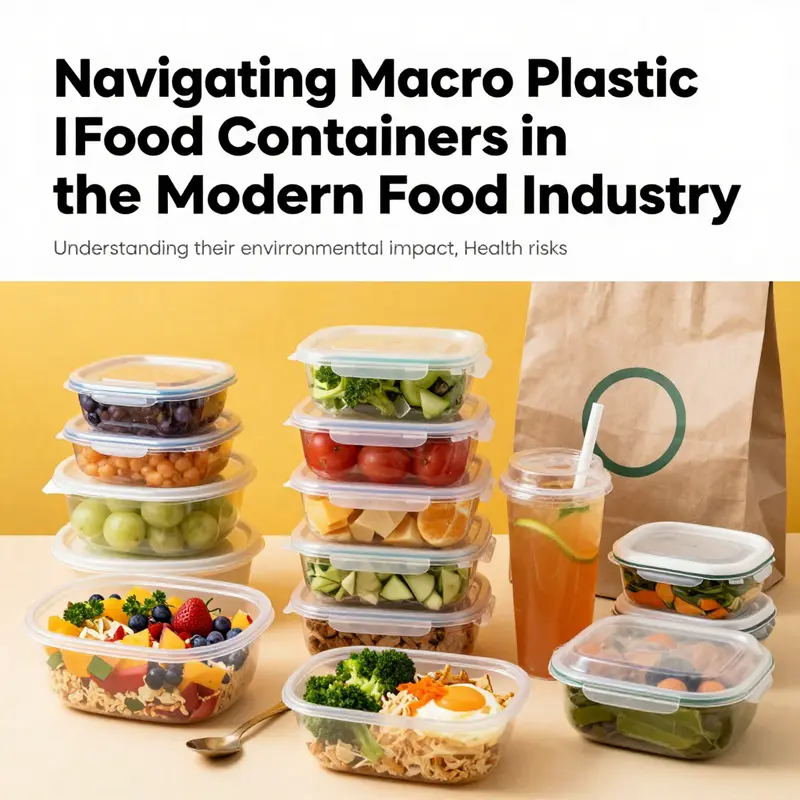
As the food industry grows, the reliance on plastic food containers, particularly macro plastics, raises significant concerns regarding their impact on the environment and human health. Macroplastics, pieces larger than 5 millimeters, are becoming increasingly prevalent in food service settings, from bubble tea shops to catering services. This article delves into the environmental impacts of these containers, exploring how they contribute to pollution and the potential risks they pose to our health through the contamination of food sources. Additionally, we will highlight practical and sustainable alternatives for businesses seeking to reduce their plastic footprint while maintaining food safety standards.
From Tray to Tide: The Lingering Footprint of Macro Plastic Food Containers in the Food System and Beyond
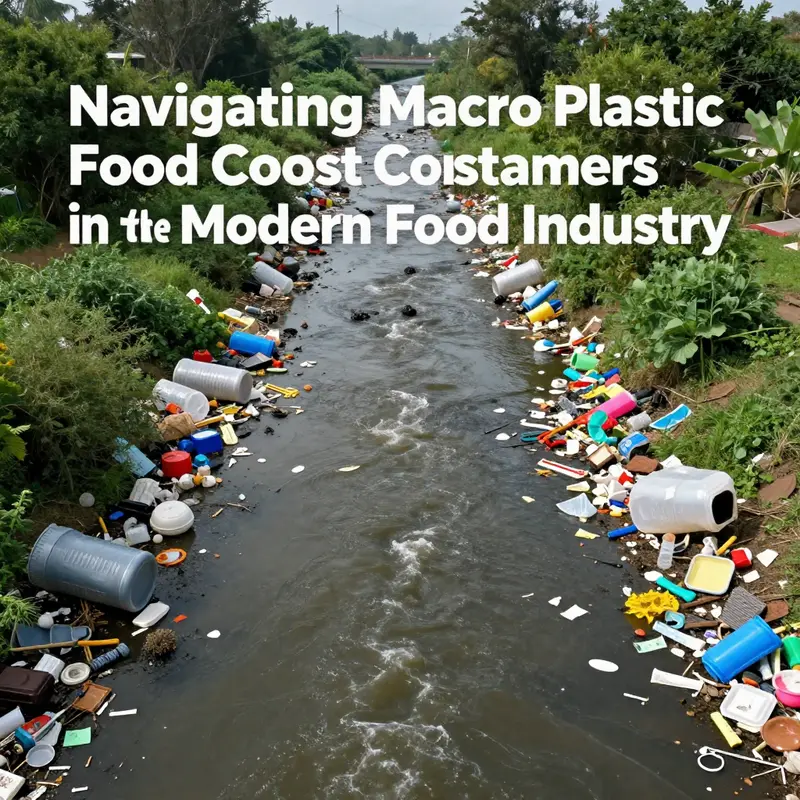
Macro plastic food containers sit at the intersection of daily convenience and long-term ecological consequence. They are the large, visible pieces of our plastics problem, and their footprint travels far beyond the moment of packaging. In the literature on plastic pollution, macroplastics often command less attention than microplastics, yet they are the initial act in a chain that can end with pervasive environmental contamination and subtle, ongoing risks to human health. These are pieces typically larger than 5 millimeters, generated when bigger items break down or when bulky packaging and takeout materials are discarded improperly. The way these objects move through systems—from production lines to households, from landfills to rivers, and eventually into soils and oceans—reveals a set of challenges that are both practical and ethical. Each stage of their life carries potential hazards, and each hazard ripples through ecosystems, economies, and daily life in ways that are easy to overlook when one focuses on the convenience of a prepacked meal or a reusable grocery bin alone.
In practice, macro plastic containers are ubiquitous in modern food storage and service. Materials such as polypropylene (PP) and high-density polyethylene (HDPE) are favored for their durability, chemical resistance, and perceived safety for food contact. The appeal is straightforward: sturdy containers can endure repeated use, resist impacts, and stand up to cold storage, heating, and washing with reasonable reliability. Yet durability is a double-edged sword. When these containers are used beyond their intended lifespan, or when their end of life is mishandled, they contribute to a mountain of waste that persists for centuries. The very properties that make them useful—rigidity, strength, chemical inertness—also slow their breakdown in natural environments, particularly in landfills or polluted landscapes where sunlight, heat, and mechanical stress can fragment them over time. It is precisely this fragmentation process that transforms macroplastics into the smaller, more insidious particles of microplastics, which can infiltrate soils, waterways, and marine food webs. The transition from macro to micro is not always a linear or obvious one; it can happen slowly, with weathering and abrasion turning a once-intact tray into a mosaic of tiny pieces that become accessible to organisms and, ultimately, to humans through consumption of contaminated food and water.
The pathways by which macro plastics influence the human condition are not restricted to direct ingestion of intact pieces. Even when intact containers are used, they can shed microplastics during routine handling. Microwave heating or high-temperature exposure can cause micro-fragments to migrate into food, especially if the containers wear down or have microcracks that release particles under thermal stress. Dishwashing cycles, particularly those employing high temperatures or abrasive cleaning actions, can similarly contribute to particle release. These dynamics complicate the everyday claim that “a plastic container is safe for food contact” and remind us that safety must be understood as a function of duration, use context, and compatibility across a lifecycle. The risk is not confined to a single event of misuse; it is a process that unfolds with time, use patterns, and environmental conditions. In this sense, macro plastics contribute to a continuum of exposure that begins with packaging and ends, indirectly, at the dinner plate.
These realities intersect with broader concerns about human health and environmental justice. Communities located near production facilities, waste processing sites, or leakage points in waterways often experience disproportionate exposure to pollution from macroplastics and their ecosystems. When macroplastics accumulate in soil and sediment, they do not remain inert; they interact with nutrients, microbes, and fauna in ways that can alter soil structure, reduce biodiversity, or affect the quality of crops grown in contaminated lands. In coastal zones, macroplastics released into oceans can be ingested by fish and invertebrates or entangle wildlife, leading to injury or death and to cascading effects on predator-prey dynamics and ecosystem services. The health concerns thus broaden beyond the immediate ingestion of plastics: they include shifts in food availability, changes in contaminant transport, and the potential for chronic exposure to additives and sorbed pollutants. These considerations are not abstract; they affect the safety and reliability of the food chain, especially for people who rely heavily on seafood or locally grown foods that may be influenced by surrounding plastic pollution.
A critical thread running through this narrative is the lifecycle of macro plastic containers. The story begins with fossil-based feedstocks under pressure to meet demand for packaging that is cheap, versatile, and mass-producible. The production phase itself consumes energy, emits greenhouse gases, and depends on non-renewable resources. Once products reach households or commercial kitchens, use patterns determine how long those containers stay in circulation. They may be washed and reused, which is increasingly encouraged as part of a circular economy approach, or they may be discarded after a single use, contributing to landfill mass or litter. The disposal phase is where the environmental stakes rise sharply. If the waste management system lacks robust recycling infrastructure, macro plastics accumulate in landfills or escape into the environment. Even when recycling is technically possible, the process often consumes energy, may degrade material quality, and faces logistical and contamination challenges that reduce its effectiveness. The aggregate effect is a persistent loop: production fuels waste, waste requires energy to manage, and mismanaged waste continues to pollute. In this loop, macro plastics are not just end users of energy and resources; they are drivers of environmental stress and climate dynamics.
The climate dimension of macro plastics is frequently overlooked in conversations focused on packaging safety or recycling quotas. Yet every stage—from feedstock extraction to manufacturing, distribution, use, and end-of-life management—releases greenhouse gases and consumes energy. The lifetime emissions of a single container, multiplied across millions of units, contribute to atmospheric burdens that influence climate patterns and the stability of ecosystems that support food production. The energy footprint is amplified by transport and processing requirements, especially in centralized waste systems where plastic streams travel long distances before processing. Even mechanical recycling, often touted as a solution, carries a price: the recycling process itself demands energy and water, and the recycled material typically has lower performance and is less readily reusable for the same application. This reality pushes us to consider not only whether recycling is possible, but whether design choices, supply chain arrangements, and consumer habits can reduce the reliance on fossil-fuel-based plastics in the first place.
If one looks at the environmental arithmetic in aggregate, macro plastics exert pressure on multiple fronts: they create waste in landscapes and urban spaces, they fragment into microplastics that muddy soil and water, they disrupt ecosystems by altering habitats and weakening wildlife populations, and they contribute to climate stress through their production, use, and end-of-life pathways. The confluence of these pressures means that the environmental impact of macro plastic food containers is not a single line item but a constellation of interlinked effects. This constellation is intensifying as demand for ready-to-use foods and single-serve packaging grows, and as urban waste streams become more complex and often less able to capture value from recyclable materials. The problem is compounded by inadequate recycling infrastructure and by consumer behaviors that favor convenience over longevity. In regions where recycling rates are low and waste management systems underfunded, macro plastics accumulate in landfills and in the natural environment, where they resist natural degradation and continue to fragment over time.
Understanding these pathways emphasises a crucial point: mitigation requires a combination of design, behavior, and policy. On the design front, there is a push toward materials that balance safety with end-of-life considerations. This includes exploring polymers that offer higher recyclability, less environmental persistence, and safer degradation products, as well as moving toward packaging that supports reuse rather than single-use. Balance also matters; a material that is easy to recycle but expensive to produce may not be scalable in ways that meaningfully reduce waste. On the behavioral front, reducing macroplastic generation hinges on consumer habits—planning meals to minimize excess packaging, choosing reusable containers, and properly sorting for recycling to prevent contamination that undermines recycling programs. Policy measures, from extended producer responsibility to standardized labeling and improved consumer information, help align incentives with sustainability outcomes. When policies encourage manufacturers to design for disassembly, recyclability, and reuse, the path for macro plastics becomes clearer and more productive. In places where governance supports robust waste collection, clean separation of streams, and safe incineration or material recovery, the environmental arithmetic tilts toward lower overall impact.
Within this broader frame, there is a clear and practical avenue for reducing macro plastic pollution in the food system: shift toward reusable, durable, and easily recyclable packaging options. The transition resonates with public health goals by reducing the probability of microplastic release during heating, washing, or wear and tear. It also aligns with climate goals by cutting the energy intensity of packaging systems and by lowering the volume of waste that must be managed. The challenge lies not only in technology but in culture and logistics. Businesses must reimagine supply chains to support returnable or highly reusable containers, invest in durable materials that can withstand repeated cycles without compromising food safety, and implement labeling and tracking that makes reuse feasible at scale. Consumers, for their part, can participate by prioritizing items that are designed for reuse, by bringing their own containers when possible, and by supporting products and services that minimize unnecessary packaging waste. The interplay of these forces—design, behavior, and policy—offers a pathway to reduce macroplastic footprints while maintaining the convenience and efficiency that modern food systems promise.
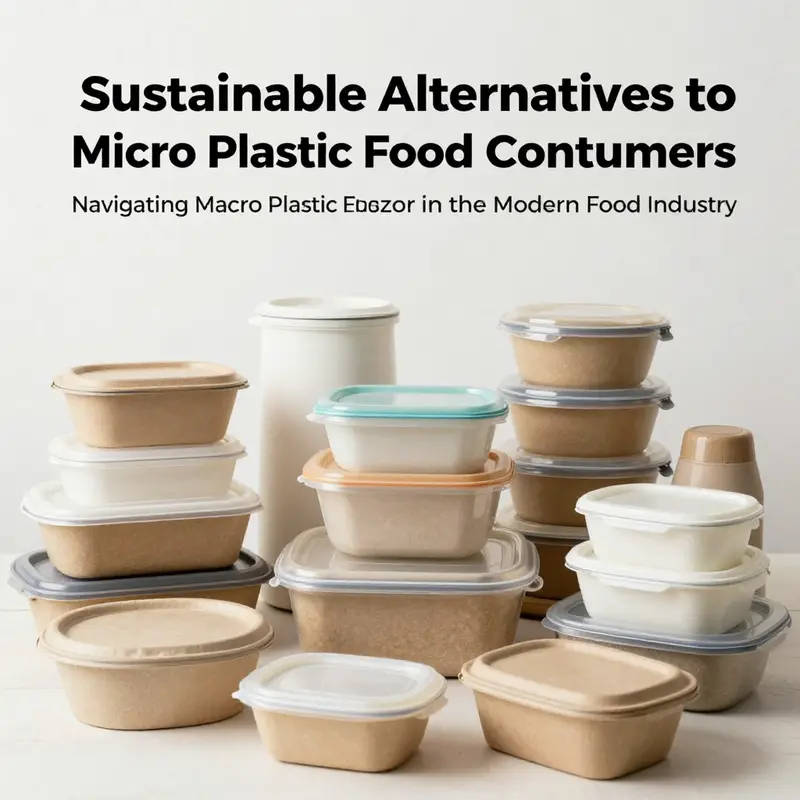
To illustrate a practical alternative in the packaging landscape, consider the potential of kraft paper-based options that can substitute some macro plastic applications. Kraft paper bowls, for example, can serve many of the same functions as plastic trays in take-out and service contexts, while offering compostable or easily recyclable routes. This approach does not imply a one-size-fits-all replacement but rather highlights a design direction that may reduce plastic reliance in certain segments of food packaging. For readers exploring packaging options with an eye toward lower environmental impact, one example that demonstrates the feasibility of such materials is the disposable octagonal box for kraft paper packaging. disposable octagonal box for restaurant food kraft paper packaging This link points to a packaging format that retains functional versatility—stackability, portion control, and presentation—without committing users to plastic containers. It is a reminder that form and function can coevolve with sustainability goals when stakeholders collaborate across the supply chain.
At the same time, the broader literature urges a cautious interpretation of any single solution. Replacing one material with another without attending to lifecycle impacts can simply shift the burden. A transparent, evidence-based approach is needed to compare real-world energy costs, emissions, and end-of-life options for different packaging choices. For instance, even when a kraft-based alternative is more environmentally favorable in one dimension, it may impose new constraints on shelf life, food safety, or supply chain logistics. The point is not to vilify plastics but to encourage a holistic appraisal of packaging choices, with attention to how waste streams are managed, how easily materials can be recovered, and how reuse systems can be scaled without compromising safety or affordability.
The environmental impacts summarized here are supported by broader analyses that emphasize the complex trade-offs inherent in modern packaging systems. Comprehensive reviews of food packaging materials point to the need for improved management, smarter recycling, and the exploration of alternatives that can meaningfully reduce macro- and microplastic pollution while preserving food safety and accessibility. In this context, macroplastics are a signal: they remind us that our packaging choices have consequences that ripple through ecosystems, economies, and health outcomes. To move from problem recognition to practical progress, stakeholders must pursue integrative strategies that connect upstream production decisions with downstream waste management, consumer behavior, and policy design. The goal is not merely to shift waste from landfills to recycling facilities but to redefine packaging normals in ways that harmonize convenience with stewardship. This requires coordinated action across industries, researchers, regulators, and citizens who recognize that the plastic footprint of our meals is not just about what we eat, but about the environment that sustains future meals.
For readers seeking a broader synthesis of environmental impacts from food packaging materials, the literature offers a comprehensive perspective that frames macroplastics within the full lifecycle narrative. This external resource provides a critical overview of the many dimensions of packaging materials’ environmental performance and helps contextualize ongoing efforts to reduce waste and emissions across food systems. Environmental Impact of Food Packaging Materials: A Review
Macro to Micro: The Hidden Health Toll of Everyday Plastic Food Containers
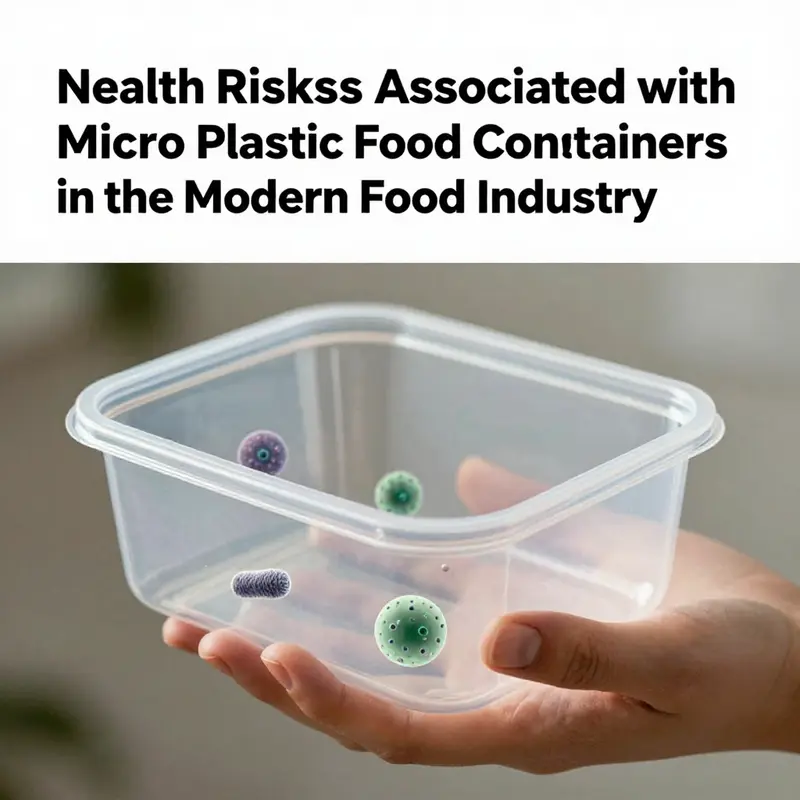
Macro plastics in food packaging are easy to notice yet easy to overlook when assessing risks to human health. Large plastic containers, trays, and bulk-storage boxes dominate kitchens, cafeterias, and takeout workflows. They are designed for durability, convenience, and cost efficiency, but their very durability becomes a problem once use-life ends or when they encounter conditions beyond their intended design. The health concerns tied to macro plastic food containers do not arise primarily from the visible chunks of plastic themselves, but from what those chunks release into food and how they degrade over time. The story begins with a deceptively simple point: the vast majority of everyday containers are made from polymers that can release microplastics and a suite of chemical additives into the foods they contact, especially when subjected to heat, mechanical stress, or prolonged storage. In other words, the macro form is a surface and gateway rather than a static barrier. It is not merely the piece on the shelf; it is the cradle of processes that, over time, generate microplastics and leach substances that can alter how the body functions.
In kitchens and food service settings, polypropylene (PP) and high-density polyethylene (HDPE) remain among the most common materials for storage containers. They are prized for their rigidity, chemical resistance, and affordability. Yet the very properties that make them useful—chemical stability, high melt strength, and low permeability—also allow certain additives to migrate into food under the right conditions. Bisphenols, for example, can migrate from polymer matrices into fatty or acidic foods when containers are heated or kept at warm temperatures for extended periods. The concern is not limited to fatty sauces stored in opaque jars or to soups reheated in plastic bowls. Even seemingly neutral use cases—refrigerated leftovers, meal-prep portions, and bulk takeout containers used for hot beverages or soups—can become routes for exposure when conditions favor leaching. This is where the line between macro and micro becomes relevant. The macro container serves as the starting point for microplastics that can shed from its surface or through its degraded matrix and the ongoing release of additives that travel with the food into the body.
The health risks linked to macro plastic food containers emerge most clearly when considering two intertwined pathways. One is the release of microplastics into food products during routine use, including heating, washing, and prolonged storage. The other is the leaching of chemical additives that are designed to stabilize polymer structure but can, under certain circumstances, migrate into food. A 2024 study published in Environmental Science & Technology highlighted how even takeaway containers, when subjected to typical consumer use such as microwaving or hot liquid contact, can generate microplastics and exhibit cytotoxic effects on human intestinal cells. While this study focused on the acute cellular response in vitro, the results align with a growing body of research showing that microplastics can interact with epithelial tissue, potentially affecting gut barrier function and local immune responses. This is not a claim that microplastics will inevitably cause disease; it is a caution that the gut is a contact interface where ingested particles can interact with immune cells, mucosal surfaces, and the microbiome in ways that warrant careful consideration.
A broader synthesis from 2026 in ScienceDirect confirms an emergent consensus: microplastics have become ubiquitous in the human food chain, entering through environmental exposure and through packaging materials themselves. The robustness or fragility of a macro container interacts with food type and preparation methods to determine exposure risk. For instance, a container used repeatedly for acidic citrus foods or fatty sauces might experience more rapid matrix weakening, which in turn can increase microplastic shedding and chemical migration. The same container, when heated in a microwave or exposed to hot water during dishwashing, can accelerate the release of particulates and chemicals compared with cold storage. In real-world terms, the issue is not limited to a hypothetical hazard but corresponds to actual daily exposure that many people encounter across meals, snacks, and beverages.
The mechanisms behind these exposures are not limited to thermal effects. Repeated use of macro plastic containers, especially beyond their designed lifespan, can facilitate microcracking and surface abrasion. Scratches, scuffs, and minor abrasions increase the surface area of the polymer in contact with foods, raising the likelihood that particulates are dislodged into meals during stirring, shaking, or pouring. Even intact containers may shed microplastics during routine cleaning cycles, particularly if harsh detergents or high-shear washing are involved. Fatty foods and acidic liquids can act as solvents that help mobilize additives embedded in the polymer matrix, a process that can occur over weeks or months of use. In essence, macro plastics act as reservoirs and conduits for substances that, under the right conditions, migrate into the very foods they are meant to protect.
From a health perspective, the concerns center on potential impacts to the digestive system, immune function, metabolic regulation, and even organ systems that respond to chronic, low-level chemical exposure. Bisphenol analogs—such as BPA, BPS, and BPF—have long been scrutinized for their endocrine-disrupting potential. When these compounds migrate into food, they can mimic or interfere with natural hormones, potentially altering metabolic signaling, inflammatory pathways, and hormonal balance. While a single exposure event is unlikely to cause immediate harm for most individuals, the cumulative effect of repeated exposure across meals, combined with the presence of microplastics, could contribute to subtle yet meaningful changes in health over time. The evidence base for long-term outcomes is still developing, but the trajectory is clear: the more widely microplastics and associated chemicals traverse into the human body, the greater the likelihood of subtle disruptions that, collectively, influence metabolism and immune readiness.
An important nuance is that macro plastic containers are not inert bystanders in the food system. They are active participants in an ecosystem that includes environmental contamination, food sourcing, and consumer behavior. When containers are discarded improperly, they contribute to macroplastic waste that persists in the environment, only to fragment over time into microplastics that contaminate soil, water, and ultimately the organisms that people rely on for food. In coastal and agricultural settings, macro plastics in the environment can become a source of microplastics for seafood and crops grown in polluted soils. This dual pathway—direct leaching from containers and indirect exposure via environmental contamination—illustrates why the discussion about macro plastics is inseparable from broader conversations about public health and ecological integrity.
Practically, what does this mean for households and food-service operations? It means adopting a cautious approach to heating foods in plastic, especially when the packaging is not explicitly designed for microwave use. It means recognizing that repeated washes, even with mild detergents, may gradually erode container surfaces and increase the likelihood of particulate release. It also means acknowledging that long-term storage in plastic is not a risk-free default, particularly when the container holds foods high in fat or acidity or when stored near heat sources in kitchen environments. Certification schemes that attest to food safety and low chemical migration offer a framework for decision-making, but they are only part of the solution. Consumers and institutions alike must balance convenience with a precautionary stance that favors safer alternatives and responsible waste practices.
In this context, the search for safer packaging options has gained momentum. Many kitchens and dining operations are exploring reusable, durable, and recyclable container systems that minimize single-use plastic reliance. The emphasis shifts to materials and designs that reduce migration risk while maintaining practicality for storage, transport, and reheating. For households and restaurants alike, the principle is simple: whenever possible, choose containers that align with safe-use guidelines, avoid heating non-microwave-safe plastics, and favor containers whose life-cycle clearly emphasizes recyclability and reuse rather than accumulation. This is not just a matter of avoiding potential toxins; it is about reducing the overall footprint of plastic waste that can degrade into microplastics and contaminate the food system across multiple pathways.
A practical step in the transition toward safer packaging involves integrating packaging options that are easier to reuse and recycle without compromising food safety. For example, certain durable packaging systems made from responsibly sourced kraft paper composites or other recyclable materials provide a viable alternative for many takeout and retail applications. In the real world of food service and consumer habits, this means menus, supply chains, and kitchen workflows can be redesigned to support a shift away from disposable plastic toward packaging that maintains integrity during use but minimizes long-term environmental and health risks. The goal is not to demonize all plastics but to reduce unnecessary exposure by avoiding heat-related migrations and ensuring that any plastic in contact with food meets stricter migration standards and lifecycle transparency.
To illustrate how packaging choices can translate into safer practice, consider the role of alternative packaging formats that maintain functionality without relying on single-use plastics. A practical option is a disposable octagonal box made from kraft paper packaging, which can be used for takeout meals or prepared foods while offering a recognizable, sturdy alternative to conventional plastic containers. Such packaging choices can reduce overall plastic load in some settings and provide a pathway toward more sustainable handling of prepared foods. See an example of this approach here: disposable octagonal box in kraft paper packaging. This is not a cure-all, but it demonstrates how design choices at the point of packaging can shift exposure risk and align with broader goals of waste reduction and safer food contact materials. In parallel, consumer education about safe reheating practices—such as avoiding microwaving traditional takeout containers or hot tins and ensuring foods are transferred to microwave-safe vessels before heating—complements these design strategies and helps diminish real-world exposure.
Ultimately, the health implications of macro plastic containers hinge on context. It is not solely about the macro artifact in the kitchen; it is about the chain of events that begins with design, moves through use and misuse, and culminates in potential exposure. The evidence base from contemporary research points to a need for caution with heat, a push toward safer materials, and a broader commitment to reducing plastic waste so that macro plastics do not continually feed microplastic pollution in the environment. This is a collective challenge that intersects public health, environmental science, and consumer behavior. Stakeholders—from policymakers setting labeling standards and recyclability criteria to manufacturers refining polymer formulations for lower additive migration—play a role in shaping a safer, more transparent system for food packaging.
For readers who want to explore the science behind these concerns in greater depth, the broader body of literature emphasizes two core messages. First, microplastics have entered multiple layers of the food chain, including seafood and crops grown in polluted environments. Second, chemical additives from plastics can migrate into foods under typical handling conditions, with potential implications for metabolic and immune processes. While each study contributes a piece of the puzzle, the overall pattern underscores a precautionary path forward: minimize use of non-essential plastics in contact with hot foods, favor safer and more recyclable materials, and support robust waste-management practices that keep macro plastics from fragmenting into microplastics in the environment. A deeper dive into these concerns can be found in the broader meta-analysis of packaging-related microplastics and human health, which synthesizes contemporary findings across exposure routes and health endpoints. External researchers emphasize the need for standardized testing of migration under realistic-use scenarios, better labeling of safe-use instructions, and stronger protections against improper disposal that fuel both macro and microplastic pollution.
In sum, macro plastic containers are more than just passive wrappers; they are active participants in a cycle that links everyday meals to potential health and ecological consequences. The prudent course blends cautious use, safe reheating practices, durable and recyclable packaging choices, and a shared commitment to reducing plastic waste. While the macro container itself may be large and obvious, its real significance lies in how it interacts with food, heat, time, and the environment. Addressing these interactions requires a holistic approach that recognizes the need for safer materials, smarter design, responsible consumer behavior, and robust waste management. This broader perspective helps explain why the chapter on health risks associated with macro plastic food containers is not merely a cautionary note about household clutter but a doorway into a larger conversation about how modern food systems can be made safer, cleaner, and more sustainable for generations to come.
For a deeper dive into the science behind microplastics from packaging and the health threats they pose, see the external resource linked here: https://www.sciencedirect.com/science/article/pii/S136455792600012X
null
null
Final thoughts
In conclusion, as bubble tea shops, restaurants, food trucks, and catering services navigate the challenges of food safety and sustainability, the issue of macro plastic food containers remains paramount. The environmental impacts they induce and the potential health risks associated with microplastic contamination cannot be overlooked. By opting for sustainable alternatives, businesses can not only enhance their brand image but also contribute positively to the environment and public health. The insights shared in this article aim to guide food service professionals in making informed decisions that support a healthier planet for future generations.