
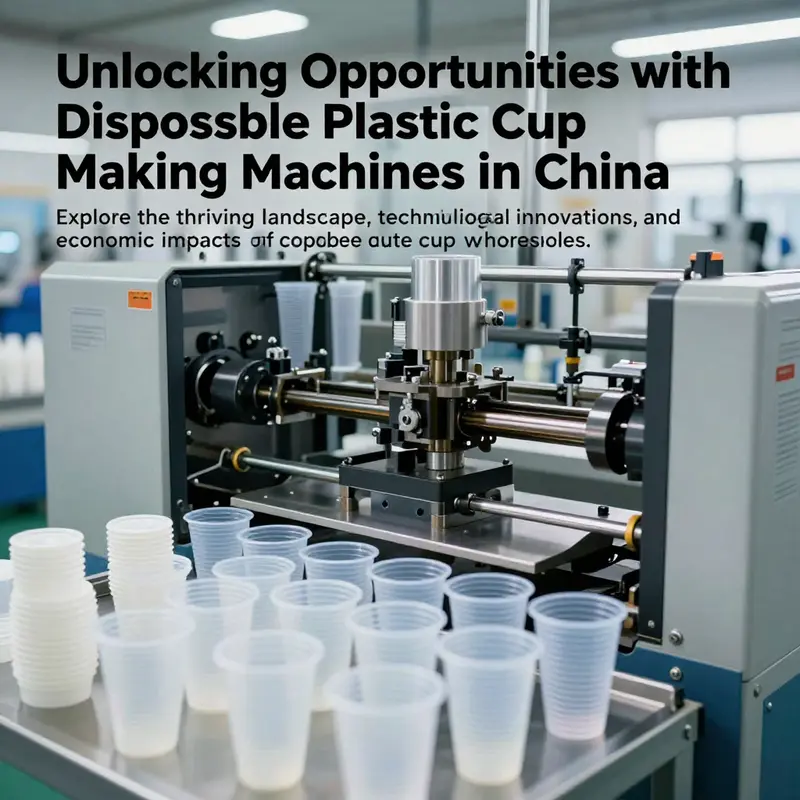
In an ever-growing market for disposable plastic packaging, businesses such as bubble tea shops, restaurants, and catering services are uniquely positioned to benefit from the advancements in manufacturing technologies. Disposable plastic cup making machines are crucial tools that empower these businesses to streamline operations and meet increasing consumer demand. This article delves into the landscape of wholesalers in China, highlighting the significant technological advances within the industry. Furthermore, it examines the economic dynamics at play, revealing both opportunities and challenges that arise as businesses navigate this pivotal market segment. With insights into the latest innovations and a focus on China’s robust manufacturing capabilities, readers will gain an understanding of how to strategically leverage these resources to enhance their service offerings.
Coalescing Supply and Innovation: The Living Landscape of China’s Disposable Plastic Cup Making Machine Wholesalers
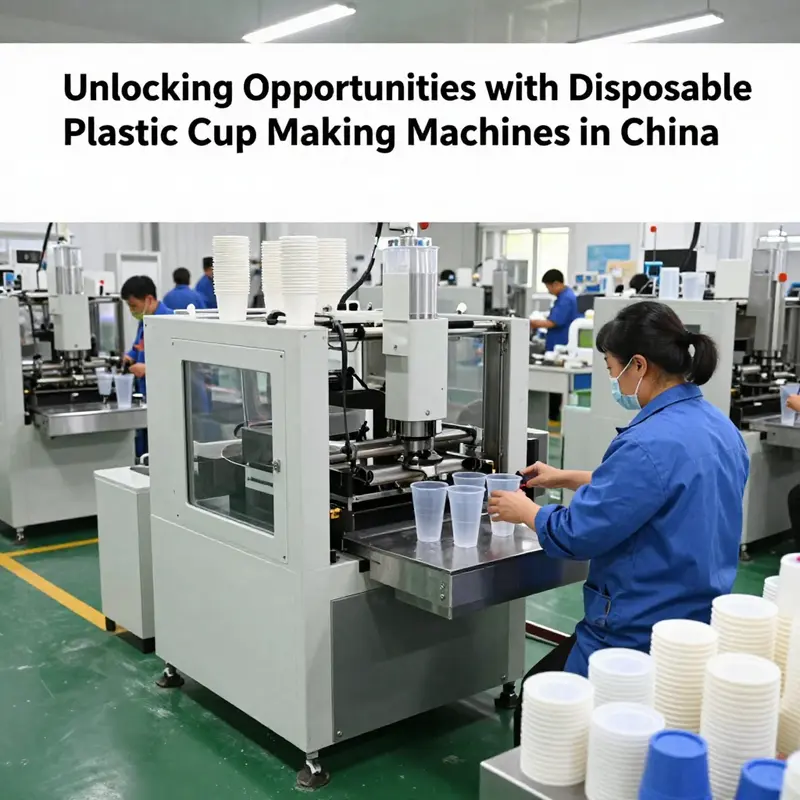
Across the vast expanse of China, the market for disposable plastic cup making machines resembles a well tended mosaic rather than a single factory floor. It is a landscape shaped by centuries of manufacturing evolution, engineered by a dense network of suppliers, machine builders, and service teams that move from raw material processing to final assembly with a seamless efficiency. What at first glance might appear as a simple supply chain for an industrial tool is best understood as a dynamic ecosystem. It is defined by mature clusters, relentless competition, and a shared hunger for automation that pushes productivity upward while easing the burden of energy and labor costs. When one travels through the major production zones, the pattern becomes clear: clusters concentrate capability, while downstream networks deliver the integrated, turnkey solutions that buyers increasingly demand. The result is a marketplace where a buyer can access not just a machine, but a pathway from concept to operation that minimizes downtime and accelerates time to value.
The underpinning logic of this landscape rests on a triad of factors that continue to hold even as new technologies emerge. First, the supply chain infrastructure in China remains deeply anchored in a history of specialized components, precision tooling, and a robust distribution network. The country has developed a highly interconnected system that can move sheet materials, forming dies, cooling systems, control panels, and ancillary equipment with a reliability that keeps production lines running. This infrastructure is not static. It evolves with shifts in energy policy, with rising expectations for energy efficiency, and with the global demand for more sustainable packaging. The second factor is the labor force, which has long been a competitive edge. Skilled technicians, automation programmers, and maintenance experts who understand plastic forming at a granular level ensure that machines do not simply run, but run consistently at high speeds, with tight tolerances and minimal scrap. The third factor is price discipline. Competitive pricing, driven by scale and relentless process optimization, remains a hallmark of wholesale markets here. Buyers from around the world discover that a large part of the value they gain is not only in the equipment itself but in the ability to negotiate total package deals that include engineering support, on site installation, staff training, and long term service contracts. The consequence for a global buyer is a sourcing route that is both direct and comprehensive, capable of supporting rapid ramp ups in manufacturing volumes while maintaining a ledger of total cost of ownership that stands up to scrutiny.
Within this landscape, several manufacturing clusters have emerged as the backbone of hardware for disposable cup production. Provinces such as Zhejiang, Fujian, Shandong, and Henan are frequently cited for their concentration of factories that push beyond basic equipment. They have perfected the art of rapid iteration in automation, integrating IoT references and even artificial intelligence aims to optimize machine performance and energy consumption on the line. Fujian, in particular, has earned a reputation for smart manufacturing frontiers where data driven decisions refine the synchronization between forming, cooling, and inspection stations. The result is a chain that does not simply deliver a machine but delivers a production line that behaves as a single, well diarized system. The broader ecosystem includes suppliers of auxiliary technologies such as high efficiency servo drives, precision vacuum systems, and intelligent PLC architectures that can be tailored to sheet widths and forming areas that different products require. This is not a one size fits all market; it is a continuum of configurations that can be tuned to capacity targets and product specs.
The range of machine offerings mirrors the diversity of product families these lines are designed to create. For instance, automatic forming machines for disposable cups can be found across a spectrum of capabilities. A starting point in the market is a baseline automatic forming setup that can be deployed quickly for moderate volumes and modest complexity. For firms aiming to scale into high volume production, more sophisticated lines push performance boundaries with larger forming areas, higher cycle rates, and more integrated automation. In practice, this translates into a family of machines where some units optimize forming speed and sheet utilization, while others emphasize energy efficiency, waste reduction, and more precise control of the forming process. The technical variance aligns with what buyers need: the ability to craft a broad range of container shapes—from cold drink cups to ice cream cups and even multi compartment packaging—on a common platform or a carefully matched family of platforms. The plausible price spectrum reflects this, with entries around the lower tens of thousands of dollars for basic configurations and the upper echelons approaching six figures for turnkey lines with advanced automation and full integration.
A crucial feature of the wholesale market here is the prevalence of turnkey solutions. Buyers often do not purchase a leaf spring or a vacuum forming press alone; they invest in complete production ecosystems. The turnkey approach bundles engineering support, plant layout optimization, installation services, operator training, and after sales service into a single, coherent package. In practice, this translates into accelerated startup timelines and reduced downtime as the new line comes on line under guided supervision. The service footprint that accompanies these deals is essential. It includes diagnostics, maintenance planning, spare parts provisioning, and remote monitoring options that help sustain performance between on site visits. The ability to offer such a service package is a differentiator in a market characterized by price competition, and it often makes the difference for buyers who are expanding into new product formats or geographic markets.
On the topic of technology, the landscape is increasingly defined by the fusion of automation with analytics. The smarter shops in Fujian and neighboring provinces demonstrate a trend toward IoT enabled monitoring, with sensors that track cycle times, energy use, material thickness consistency, and cycle wastage. These signals feed into centralized dashboards that managers use to optimize throughput and reduce variability. It is not unusual to see machine lines that carry a digital twin like function, enabling engineers to simulate adjustments and anticipate maintenance needs before disruptions arise. In a manner, the Chinese wholesale ecosystem is moving toward a more proactive discipline around machine management and upkeep, which supports the reliability that international buyers require when committing to long lead times and significant capital investments. The transition is gradual but persistent, and it reaffirms that these suppliers are not just selling a machine but offering a high availability asset with a predictable performance envelope.
From the buyers perspective, the decision to engage with a Chinese wholesale partner is underpinned by a combination of price, capability, and the assurance of stable after sales support. The price transparency in these markets has evolved with the ascent of digital platforms that enable buyers to compare specifications, MOQs, and delivery terms. Even as buyers chase lower upfront costs, many are attracted by the possibility of including installation and training in the same deal. The market has recognized that the costs of downtime and misalignment in production can easily eclipse the savings secured on purchase price. Hence, the emphasis on end to end solutions has grown. This does not happen by accident. It emerges from a long standing pattern of collaboration between manufacturers and channel partners who coordinate to deliver robust, scalable lines that can be tuned to evolving customer needs. The ability to adjust line speed, sheet thickness tolerance, and forming parameters with a few adjustments at the PLC level offers a degree of flexibility that is highly valued in packaging markets where consumer preferences shift and where new container formats can be introduced with minimal disruption.
Among the practical realities buyers encounter, the forming area specifications emerge as a recurring topic of inquiry. A typical vacuum forming platform that serves disposable cups might feature forming area magnitudes around 750 by 530 millimeters, with sheet thickness tolerance capable of handling approximately 0.2 to 2.5 millimeters. The speeds can vary from a modest handful of cycles per minute to a brisk thirty times per minute depending on the model and configuration. For more specialized tasks like producing moulded cups with precise bottom shapes or curved sidewalls, the equipment may include additional stations for trimming, cooling, and quality inspection. It is here that the breadth of options becomes most meaningful: buyers can select machines that optimize for material wastage, energy efficiency, or maximum throughput, depending on the strategic importance of those levers for their business case. A different class of equipment, the plastic cup mould machine, typically supports sheet width capacities up to about 760 millimeters and parallels the performance goals of the vacuum forming family, often requiring greater electrical inputs to sustain high cycle rates. The engineering logic behind these choices is straightforward. Higher speed lines deliver more output per hour but demand larger energy footprints and more rigorous maintenance. Cheaper lines might save upfront but create greater risk of stoppages and scrap. The wholesale market thus rewards buyers who align technical specifications with their product families and production rhythms, preserving a balance between capital intensity and long term operating leverage.
To illustrate how these decisions play out in real life, consider the broader packaging ecosystem that surrounds the forming machinery. The least glamorous, but no less essential, components include cooling modules, trimming units, feed systems, and the control logic that governs the entire line. The strongest suppliers are those who can offer seamless integration of these elements into a unified production line, rather than merely supplying a handful of detached components. Such integration reduces the risk of misalignment between stations and accelerates commissioning. It also enhances the visibility of process data across the line, enabling more meaningful optimization through simple human decisions or algorithmic guidance. In practice, buyers who pursue a turnkey approach end up with a guaranteed level of interoperability across modules and a clearly defined path to ongoing upgrades as newer automation features become available.
As with any large scale capital purchase, buyers also weigh the intangible dimensions of working with wholesale partners in China. They consider the strength of the supplier network, the accessibility of engineering and after sales service across time zones, and the reliability of logistics networks that move heavy machinery from factory floors to assembly lines worldwide. The regional clusters in Zhejiang and Fujian, in particular, often provide a densely interconnected service network. A single point of contact can coordinate the on site installation, operator training, and post sale support across multiple sites if a buyer maintains a global footprint. This kind of multi location coordination reduces the complexity of scaling packaging operations in new markets, while allowing the buyer to leverage a common control platform across lines that may be installed in different countries. The result is a pragmatic, scale friendly pathway from procurement to productive output that helps buyers to maintain continuity in supply, even as demand and regulatory requirements shift over time.
In the conversation about sourcing, it is important to acknowledge the role of digital marketplaces as a bridge between global buyers and Chinese wholesalers. Platforms that connect buyers with manufacturers provide a structured way to compare specifications, request quotes, and read references from other buyers. They contribute to the transparency of the market by clarifying MOQs, delivery terms, warranty coverage, and performance expectations. This digital layer complements the tangible on the ground capabilities of suppliers, ensuring that buyers can progress from initial curiosity to a well defined technical and commercial agreement. The net effect is to make China not just a place to buy a machine but a credible hub to negotiate a full production solution that aligns with a buyers product strategy, packaging standards, and sustainability goals. It is this synthesis of physical capability and digital transparency that distinguishes the modern Chinese wholesale market for disposable cup forming equipment from earlier eras of sourcing and from markets that offer fewer integration options.
The sustainability agenda penetrates deeply into the fabric of this market. Suppliers respond to rising expectations for energy efficiency, reduced material waste, and lower lifecycle impact. They pursue energy efficient drives, regenerative cooling strategies, and smarter tooling that minimizes scrap. In many cases the emphasis on sustainability goes beyond the machine level and extends into the facility design and operational workflow. Buyers are increasingly interested in lines that can accommodate recycled content or that support more efficient material usage without compromising performance. This alignment between equipment capability and environmental responsibility is a reflection of a broader shift in packaging manufacturing worldwide. The wholesalers who lead this change often invest in training programs that help operators understand how to maintain energy efficiency, sustainable run practices, and waste minimization as part of daily operations. The goal is to produce cups and related containers that meet customer expectations while also minimizing the environmental footprint of the manufacturing process itself.
For a buyer who is audit minded or who seeks rigorous due diligence, the landscape in China provides both opportunity and risk. The opportunity is clear in the broad array of machine options, the ability to assemble turnkey lines, and the presence of a service oriented culture that supports long term operation. The risk comes from the sheer scale and complexity of the ecosystem. Smart buyers use structured supplier assessments, on site visits, and careful review of reference installations to de risk their investment. They seek detailed machine specifications, proof of performance in similar production contexts, and a comprehensive maintenance plan that includes spare parts availability and remote monitoring when possible. The most successful buyers approach this market with a well reasoned implementation plan, a clear definition of expected productivity, and an emphasis on supplier collaboration that focuses on reliability and continuity as the line evolves over time. In short, the landscape rewards buyers who bring both technical rigor and strategic intent to their sourcing decisions.
To tie together these threads, consider how a typical buyer might navigate the journey from interest to implementation. The journey begins with a market scan, guided by a clear specification of the cup family they intend to produce, the expected volumes, and the environmental constraints of their operation. The next step is a short list of potential suppliers who can meet those specs within a reasonable delivery timeline and offer meaningful after sales support. Once a shortlist is created, buyers increasingly lean on turnkey packages that promise a coordinated set of services alongside the machinery. During this phase, the buyer evaluates not only the machine performance on paper but also the supplier capacity to deliver, install, train, and sustain the line in the years to come. The actual transition from procurement to production often hinges on the strength of the service network, the speed of the commissioning process, and the clarity of the training materials provided to operators. A well designed onboarding program reduces risk, shortens the time to first successful run, and sets the stage for stable, high speed production. In this way, the wholesale market in China functions not as a mere catalog of machines but as a full lifecycle partner that helps buyers scale packaging operations with confidence.
Within this evolving environment, one finds a quiet yet powerful trend: suppliers increasingly emphasize compatibility and modularity. Rather than offering a single line for a specific product this factory cluster often delivers families of lines that can be reconfigured to accommodate new cup sizes or formats with minimal retooling. The flexibility built into these configurations becomes a strategic asset for buyers whose product mix is subject to change due to seasonality or shifting consumer preferences. In practice, this means that a customer can upgrade cameras for inspection, add more cooling steps, or switch to a higher speed servo drive while preserving the core control architecture. The ease of upgrading reduces the perceived risk of a capital investment and accelerates the rate at which a company can pivot in response to market signals. The net effect is a market that rewards forward planning, not just at the plant level but in the design of the machines themselves and in the way suppliers structure their after sales engagements.
In summation, the landscape of disposable plastic cup making machine wholesalers in China unfolds as a tapestry of clusters, capabilities, and collaborative services. It is a market built on the confidence that a machine is not merely a device but a production system that can be integrated into a global supply chain with a degree of predictability and resilience that buyers demand. The allure of this market lies not only in competitive pricing but in the depth of technical know how, the breadth of customizable configurations, and the strength of the service spine that accompanies every major purchase. It is a landscape that invites careful navigation, but its maps are legible to those who bring clear objectives, a willingness to engage in comprehensive due diligence, and a readiness to partner with suppliers who view manufacturing as a holistic, ongoing collaboration rather than a one time exchange. The result is a sourcing journey that can yield a scalable, reliable, and sustainable production capability for disposable cups and related containers, anchored by a network of capable wholesalers who have honed the art of turning complex requirements into practical, on the factory floor, solutions. For readers who want to explore a concrete example of how this market translates into practice, a relevant external reference offers an in depth look at the machine types, capacity ranges, and control architectures that characterize the better end of the spectrum. External resource: https://www.alibaba.com/product-detail/Disposable-Plastic-Cup-Making-Machine-For-PP-Plastic_1600543977829.html?spm=a2700.15597364.0.0.1c7e3b4dNpZmLx. For a related insight into sourcing options within the packaging domain, one can also examine a representative example of the broader packaging offerings at the internal marketplace hub that focuses on disposable paper cups with branding options and lid configurations, which forms part of the extended ecosystem buyers engage when building end to end beverage and food packaging lines.
Internal linking note: buyers often find value in suppliers who can pair machine capability with branding and packaging formats. For those interested in a turnkey approach that includes customization along with packaging collateral, the following internal resource demonstrates how branding and functional design can coexist with packaging formats: disposable-takeaway paper cup with custom logo and lid. This example, while centered on a paper cup product family, illustrates the broader principle that equipment suppliers increasingly align their offerings with downstream packaging needs, enabling a smoother transition from machine setup to market ready products. In sum, the Chinese wholesale landscape for disposable cup forming equipment is not a monolith but a living ecosystem that adapts to the needs of global buyers through a combination of clustered manufacturing excellence, intelligent automation, comprehensive turnkey services, and an active embrace of sustainable production practices. The chapter of this market is continuously written by the practitioners on the ground who blend engineering discipline with commercial pragmatism, creating a sourcing experience that is as reliable as it is flexible and as scalable as it is resilient.
From Stamp to Smart Factory: The Technological Surge Driving China’s Disposable Plastic Cup Machinery
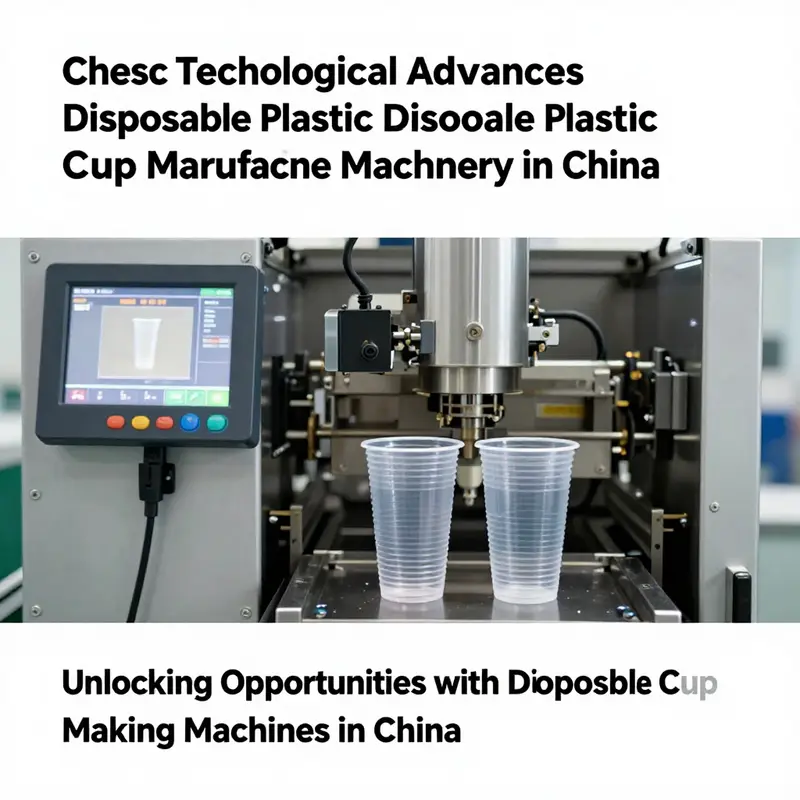
In the evolving landscape of global packaging, China’s disposable plastic cup manufacturing machinery sits at a crossroads where demand, efficiency, and sustainability converge. The chapter that follows traces how a lineage of robust, chip-and-hang architecture in Chinese machine design has evolved beyond pure throughput into a smarter, more adaptable ecosystem. For buyers and operators around the world, the story is less about a single machine and more about an integrated supply chain that marries automation with material versatility, energy stewardship, and data-driven maintenance. As international buyers seek reliable partners to meet rising volumes of single-use cups, bowls, and related food-contact items, the Chinese machine sector offers an index of capability that reflects both deep manufacturing heritage and a forward-looking embrace of smart production principles. The underlying thread is clear: modernization in this field is not just about speed; it is about stability, adaptability, and the ability to pivot in response to shifting market demands, regulatory environments, and consumer expectations for safer and more sustainable packaging options.
The most conspicuous trend shaping today’s equipment landscape is the rapid expansion of fully automated vacuum forming systems. These lines no longer rely on human supervision for every stage of the cycle. Modern configurations integrate real-time control loops that monitor and adjust core parameters such as temperature, pressure, and cycle timing with a precision that translates into consistent cup geometry, wall thickness, and sealing integrity. The consequence is less waste, lower scrap rates, and fewer stoppages caused by drift in sheet temperature or mold settlement. In practical terms, a well-tuned vacuum forming line can both sustain high-speed production and adjust quickly to new product specifications. Operators can switch between cup sizes, wall profiles, and bottom shapes through an intuitive interface, with the machine responding to changes in product geometry almost as if it were a lab-scale process adapted for production. While the exact outputs vary with cup type and material, contemporary systems often achieve impressive throughputs—well over a hundred units per minute under optimized conditions—without compromising tolerances or surface finish. This level of performance reflects a broader engineering principle: automation is most valuable when it is programmable, observable, and controllable across a spectrum of products, not merely when it enforces a single recipe.
At the core of the automation narrative is the pervasive role of programmable logic controllers (PLCs) and human–machine interfaces (HMIs). These elements do more than provide a user-friendly screen; they are the brains of the operation, capable of storing multiple production recipes, performing real-time diagnostics, and communicating with other devices in a factory network. The impact on reliability is meaningful. Predictive alerts can warn operators of a potential drift in heater performance, a misalignment in forming rams, or a gradual change in cycle time caused by tool wear. When such signals are integrated with cloud-based data analytics, plants can transition from reactive maintenance to proactive strategies that minimize downtime and extend equipment life. What this means for buyers is a shift in value: the investment is no longer only in a machine that runs, but in a system that runs predictably, traces performance, and adapts to evolving packaging formats with minimal disruption.
Material versatility remains a focal point of hardware and software development. Traditional machines were engineered with polypropylene (PP) as the default material; however, the market now calls for adaptability across a broader family of thermoplastics. Polystyrene (PS), polyethylene (PE), and even biodegradable options such as polylactic acid (PLA) are becoming part of standard capability portfolios for modern cup-making lines. This breadth is more than a materials curiosity; it directly affects how a line is configured, what tools are used, and how waste is managed on the floor. A loader system designed for PP can often be re-tuned to handle thin-wall PS with modest adjustments, while the hot runner and cooling circuits must be compatible with the thermal and rheological properties of each polymer. The ability to switch materials without major capital retooling translates into a factory that can chase demand more nimbly, whether that demand comes from a surge in hot beverage cups, a shift toward salad or dessert containers, or a regulatory push toward compostable or recyclable packaging. In practice, this flexibility empowers manufacturers to seize opportunities in a market where customers increasingly demand customization without sacrificing scale.
From a sustainability perspective, this material flexibility intersects with energy performance and process efficiency. Materials with different melting points and flow characteristics necessitate smarter heating strategies, insulation, and temperature control. Energy-saving technologies have thus become foundational features rather than optional add-ons. Modern lines deploy optimized heating elements, high-efficiency insulation, and variable frequency drives (VFDs) that adjust power input in step with process demand. The cumulative effect can be substantial: power consumption reductions on the order of a third or more, depending on the starting baseline and the exact materials used. Such gains matter not only for the bottom line of a single plant but also for the aggregate environmental footprint of a national manufacturing sector that exports to diverse regions with varying energy prices and sustainability requirements. In a broader sense, these savings dovetail with national green transformation programs that encourage manufacturers to adopt more efficient equipment and processes as a core competitive differentiator.
Another pillar of the modernization wave is the integration of Internet of Things (IoT) capabilities into forming lines. Modern machines come sleeker with sensors that monitor temperatures, pressures, motor loads, cycle times, and even tool wear. The data flows to centralized dashboards, and through secure cloud channels, plant managers can compare performance across lines and shifts. The predictive maintenance logic uses historical data to forecast when a component will fail or drift out of spec, enabling pre-emptive interventions that prevent unplanned stoppages. Such digital maturity also supports production planning and quality assurance in more holistic ways. For instance, when a particular mold is producing slightly thicker walls in one cup design, operators can throttle the heater and adjust clamping pressure to return to target tolerances without a full equipment shutdown. For procurement and supply chain planning, IoT-enabled equipment offers a clearer picture of line uptime, maintenance cycles, and spare-part consumption, all of which inform budgeting, inventory, and service-level agreements with suppliers.
The factory designs fueling these capabilities are increasingly modular and compact, a shift driven by the needs of small and medium-sized enterprises seeking to partake in the disposable tableware market without bearing the risk and cost of expansive capital expenditures. A typical modular approach favors standardized, scalable blocks that can be assembled in a compact footprint or reconfigured to accommodate incremental capacity. This design philosophy lowers the barrier to entry for regional producers and startups that want to pilot product lines or diversify offerings quickly. It also supports regional clusters where engineering talent, suppliers, and service networks are already in proximity, allowing a quick reallocation of capacity in response to seasonal demand or new customer requirements. In practice, a compact, modular line may still deliver high throughputs when properly integrated with advanced controls, but its larger benefit lies in agility and total cost of ownership. The trend is not simply to make machines smaller; it is to engineer systems that can be scaled up or re-scoped with minimal downtime and a clear path to upgrading functionality as markets evolve.
China’s manufacturing landscape for disposable cup machinery is organized around robust industrial clusters that sustain this rapid innovation. Provinces such as Zhejiang, Fujian, Shandong, and Henan have built dense ecosystems that span the lifecycle of equipment—from design and production to after-sales service and training. These clusters benefit from shared supplier networks, standardized parts, and a cadre of skilled technicians who understand the nuances of thermoforming, tooling, mold maintenance, and automation integration. For global buyers, this geography translates into advantages in lead times, service reach, and a more seamless supply chain. It is not unusual for a plant to rely on a single ecosystem to source raw components, software licenses, and spare parts, pooling expertise across several neighboring suppliers who speak the same technical language and share compatible maintenance practices. Such alignment reduces the friction that sometimes accompanies cross-border equipment procurement, helping buyers avoid issues around compatibility, warranty interpretation, and downtime caused by misaligned components or software updates.
The operational value created by this technology-and-cluster convergence is amplified by a service culture that emphasizes training, installation support, and long-term maintenance partnerships. In a sector where uptime and product quality hinge on precise tool alignment, stable control software, and predictable material behavior, the ability to call on an experienced local team for calibration and preventive maintenance can make a decisive difference in performance. This is especially important for SMEs that may lack in-house process engineering and rely more heavily on supplier knowledge networks to optimize a line’s configuration for a given cup design or material combination. The service dimension—ranging from on-site commissioning to remote monitoring, spare-parts stocking, and training programs—forms a critical part of the value proposition for buyers seeking not just a machine, but a reliable, enduring capability that can adapt as product specifications evolve.
The interplay of automation, energy efficiency, material versatility, and IoT connectivity can be best understood as an integrated system rather than a collection of features. A line that embodies this integration is designed to accept new product formats with minimal downtime, while maintaining a high standard of quality and safety for food-contact items. The shift toward modular, compact platforms makes it easier to introduce line extensions or to transition toward more sustainable materials as consumer demand shifts toward eco-friendly options. In practice, this means a cup-making plant can diversify into related products, such as small bowls or lid components, with shared tooling and a common control architecture. The benefits are professional and strategic: reduced capital risk, faster time-to-market for new offerings, improved energy and waste management, and a clearer path to compliance with evolving packaging regulations in different markets.
The global buyer landscape remains attentive to the total cost of ownership and to the reliability of after-sales support when evaluating suppliers in this domain. Beyond the stated capabilities of a forming line, buyers look for robust documentation, warranty coverage, and credible references that demonstrate long-term performance under real-world conditions. They also weigh the supplier’s capacity to supply spare parts quickly, maintain consistent tooling quality, and provide remote diagnostic services that shorten fault resolution times. In this context, the appeal of a well-established manufacturing ecosystem in China is further reinforced by the density of engineering talent and the maturity of supplier partnerships that can support multi-site, multi-line configurations for large-scale deployments. The net effect is a supply base capable of delivering both the scale and the precision required by global customers while maintaining the flexibility to incorporate new materials and process innovations as the industry evolves.
From a sustainability standpoint, the technology story is increasingly complemented by a broader view of packaging lifecycle impact. The development of lines that can economically process a spectrum of polymers, including PP, PS, PE, and PLA, supports manufacturers who want to optimize for recyclability or compostability in their products. But material transitions also introduce design considerations that must be harmonized with the forming process. Thinner walls, specialized sealing geometries, and tuned cooling cycles all influence whether a cup can be recycled efficiently in a given national system. As such, suppliers emphasize not only the machinery’s performance but also its compatibility with end-of-life strategies and the regulatory frameworks that govern packaging materials in major markets. The industry appears to be moving toward a practical balance: high throughputs and process stability achieved through automation and IoT, coupled with an expanding repertoire of materials that enable more sustainable packaging choices where feasible and economically viable. This balance is the practical essence of modern manufacturing in China’s disposable cup sector, and it is what drives both current growth and future resilience for global buyers.
To anchor the discussion in a concrete procurement context, buyers increasingly expect equipment that can be integrated with their existing digital infrastructure and supplier networks. This means standardized communication protocols, modular software modules, and secure data exchange that protects sensitive process information while enabling cross-site optimization. The best suppliers offer not only the best machines but also the most compelling service ecosystems—comprising installation, training, troubleshooting, and long-term performance monitoring. For international teams evaluating options, the core question is how quickly a new line can be commissioned, how reliably it can maintain product specs across a family of cups and lids, and how easily it can adapt to shifts in market demand, such as a sudden surge in single-serve beverage cups or the introduction of a recyclable alternative that requires different forming parameters. In many ways, the answer to these questions depends on how well a supplier has integrated automation, material science, and digitalization into a single, coherent platform. The Chinese equipment community is steadily building that coherence, and it is this coherence that underpins the sector’s ability to compete on both price and performance in the global market.
As buyers consider their long-term sourcing strategy, the emphasis on sustainability, efficiency, and adaptability will likely intensify. The industry’s trajectory suggests not only stronger automation and material flexibility but also more sophisticated energy-management solutions and digital tooling to maximize uptime and minimize waste. In this sense, the Chinese disposable cup machinery sector is not merely keeping pace with global demand; it is shaping how the world will manufacture and recycle disposable packaging in the years ahead. The integration of modular architectures, IoT-enabled diagnostics, and multi-material capability sets a foundation for a future in which packaging solutions are designed and produced with an eye toward both efficiency and environmental responsibility. The result is a manufacturing ecosystem that can respond to shifting consumer preferences, evolving regulatory frameworks, and new business models in packaging—without sacrificing the reliability and scale that global customers expect.
For readers seeking a practical entry point into this broad trend, one may consider how the supplier ecosystem supports a buyer’s journey from initial design discussions to full-scale deployment and ongoing optimization. The process begins with aligning product specifications with available forming capabilities and material compatibility, then progresses through tooling development, line configuration, and factory integration. Along the way, suppliers can offer modular, space-efficient solutions tailored to SMEs while maintaining the scalability required by larger manufacturers as volumes rise. The ultimate goal is a seamless transition from concept to production, underpinned by data-driven operation, energy-conscious design, and a service network that ensures performance across the machine’s entire lifecycle. In this sense, the current wave of innovation in China’s disposable cup forming machinery embodies more than technological progress; it represents a practical framework for sustainable, scalable, and intelligent packaging manufacturing that can meet evolving global needs while supporting local industry growth and knowledge transfer.
Internal resource: as packaging markets trend toward eco-conscious choices, compatible, sustainable components are increasingly important. See eco-friendly-recyclable-pulp-2-4-cups-coffee-take-away-cup-holder for related packaging innovations that complement automated forming lines and can further enhance a factory’s environmental profile without compromising throughput or quality. eco-friendly-recyclable-pulp-2-4-cups-coffee-take-away-cup-holder
External resource for further reading: a comprehensive overview of automated plastic-forming equipment supply in China, including supplier profiles and technical trends, can be found in the following industry reference: https://www.alibaba.com/product-detail/Disposable-Plastic-Plate-Machine-Suppliers1600849762239.html?spm=a2700.galleryofferlist.pimage.1.1c1a6e1dPwRlYX&fsb=1&productId=1600849762239&albTrackId=1600849762239&src=shopsearchresult&spm=a2700.galleryofferlist.p_image.1.1c1a6e1dPwRlYX
China’s Disposable Cup Machinery Market: Opportunities, Challenges, and Pathways to Scale
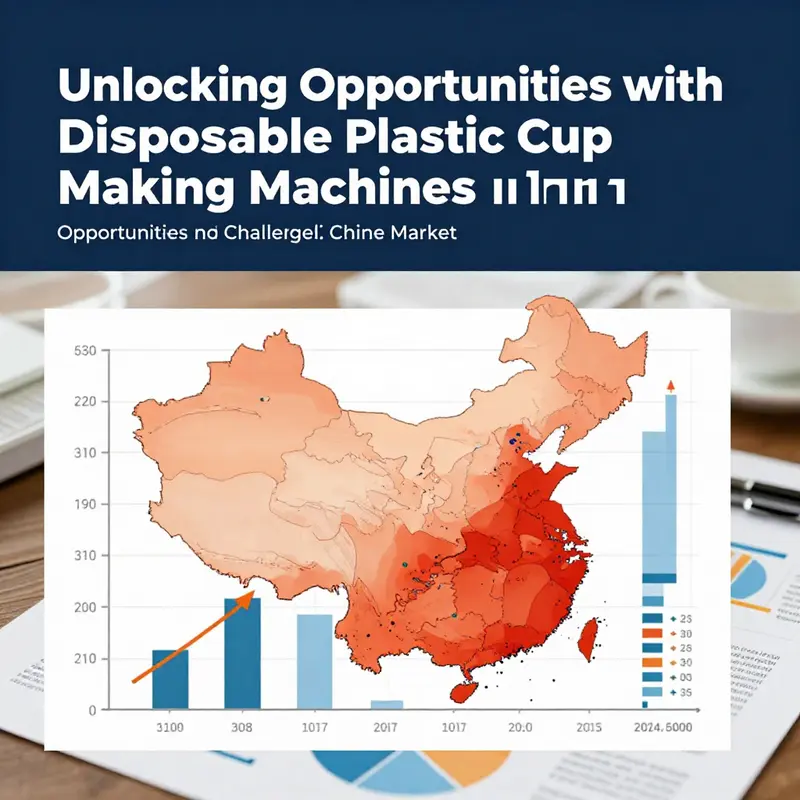
China’s disposable cup forming machinery market sits at the intersection of fast-growing foodservice demand, automation, and evolving sustainability requirements. Urbanization and takeout culture continue to drive volume, while manufacturers face pressure to improve yields, reduce downtime, and manage total cost of ownership. A mature industrial base in provinces such as Zhejiang, Shandong, and Jiangsu supports a broad ecosystem of equipment makers, component suppliers, and service networks, enabling buyers to source integrated lines with strong after-sales support. In this environment, wholesalers and manufacturers compete not only on machine price but also on flexibility, upgradeability, and the ability to deliver end-to-end solutions that include process optimization and training. The economics of cup production hinge on scale efficiencies, resin costs, and the efficiency of downstream packaging components such as lids and seals. Automation features such as PLC control, servo-driven forming cycles, and modular stations drive cycle times, reduce scrap, and enable rapid changeovers between cup sizes. As policy and consumer preferences tilt toward more sustainable packaging, there is growing demand for lines capable of handling bio-based or recyclable resins and for equipment architectures that simplify waste reduction, sorting, and recycling at the end of life. For wholesalers, success increasingly means offering a holistic value proposition: reliable equipment, knowledge transfer, access to spare parts, and a network of local service professionals who can support large-scale deployments across multiple regions. Looking ahead, the market is likely to evolve toward more modular, upgradeable systems, integrated data and maintenance services, and closer alignment with environmental standards. These trends present both risk and opportunity: the most resilient suppliers will be those that couple performance with sustainability expertise and a credible pathway to reducing the environmental footprint of cup production.
Final thoughts
As the demand for disposable plastic cups continues to rise, understanding the dynamics of wholesale suppliers in China becomes essential for businesses looking to optimize their operations. The latest technological advancements in disposable plastic cup making machines can significantly enhance productivity and meet ever-increasing consumer expectations. However, as with any industry, navigating the associated economic challenges will require strategic planning and implementation. For bubble tea shops, catering services, and restaurants, leveraging these insights will not only elevate service delivery but also reinforce operational efficiency. The future holds promising opportunities for those who adapt to change and innovate in this competitive space.