
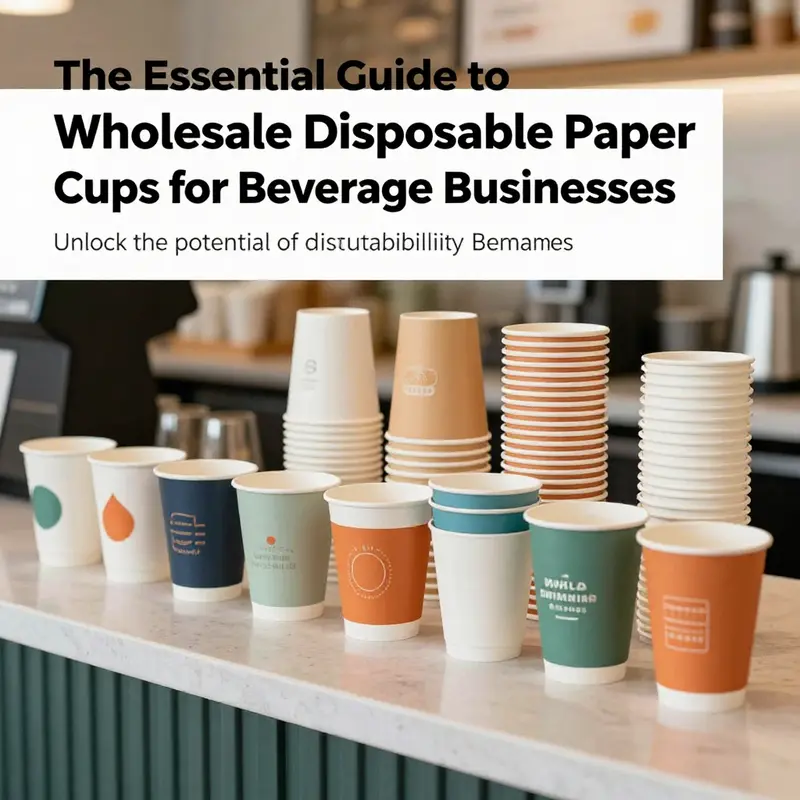
The growing demand for convenient and hygienic solutions in beverage service has propelled the popularity of wholesale disposable paper cups. Tailored for diverse uses—from bubble tea shops to food trucks—these cups are indispensable for efficiency without compromising on quality. This guide explores the market dynamics, key features, and environmental impact of disposable paper cups, helping beverage chains, restaurants, event planners, and corporate procurement teams make informed decisions that align with their operational and sustainability goals.
Rethinking the Cup Economy: Market Dynamics in Wholesale Paper Disposable Cups
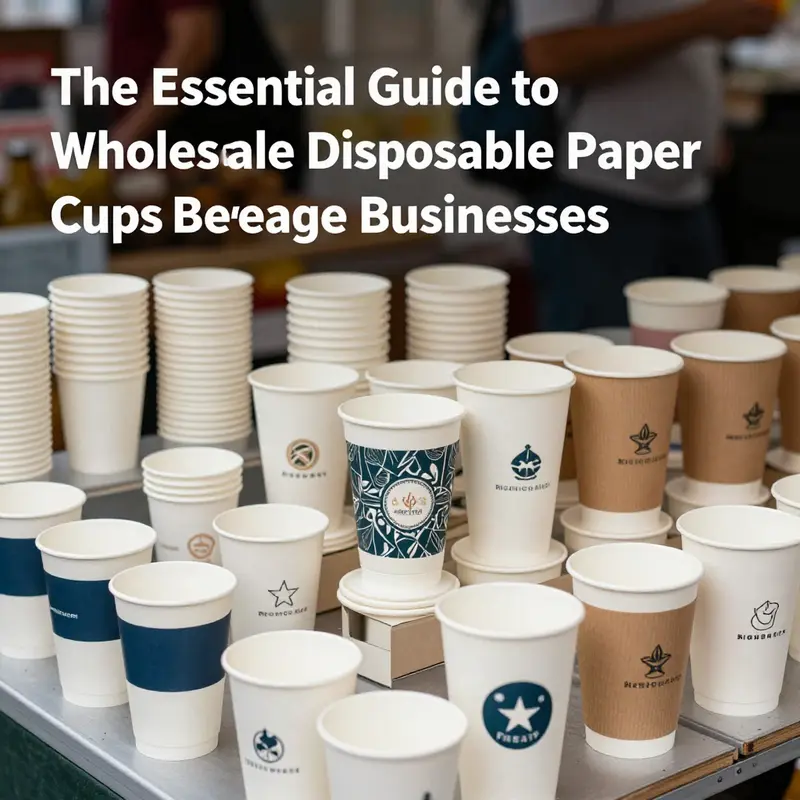
The wholesale landscape for disposable paper cups sits at the intersection of service speed, hygienic assurance, and a growing mandate to reduce environmental impact. It is a market that expands not only with the volume of beverages served and events hosted but with evolving expectations around convenience, branding, and sustainability. In recent years, the sector has shifted from a simple packaging accessory to a strategic component of brand experience and operational efficiency. The market’s scale reflects a broader shift in how societies consume and share beverages away from home. In 2023, the global disposable cups market carried a value of roughly 12.5 billion dollars, and projections point toward a reach of about 22.1 billion by 2033. This trajectory, translating into a compound annual growth rate near 5.9 percent from 2024 onward, underscores not only continued demand but the urgency of aligning supply chains with regulatory standards, waste management realities, and consumer expectations for responsible sourcing. The sheer breadth of applications—from quick-service eateries and coffee chains to corporate events and hospitality settings—drives a diversified product palette. The market must accommodate hot and cold beverages, still and carbonated drinks, as well as soups and other viscous liquids that demand robust moisture resistance and leak control. And as with any commodity that also carries branding potential, there is a premium attached to customization that can distinguish a wholesale offer in a crowded marketplace. The numbers, however, only tell part of the story. The real picture emerges when we look at the drivers shaping demand, the technologies enabling scale, and the ways buyers and suppliers collaborate to deliver value without sacrificing safety or environmental responsibility. In this context, the wholesale paper cup sector is less about a single product and more about a system that supports speed, cleanliness, and brand continuity across countless daily rituals of consumption. The system is anchored by fundamental behavioral shifts: people want foodservice experiences that feel fast, predictable, and responsible; operators want equipment and packaging that can be produced at scale, with consistent quality, and with flexible customization options. The convergence of these needs has spurred a rethinking of both what goes into a cup and how it is produced, distributed, and disposed of, making the market dynamic, complex, and surprisingly resilient across fluctuations in consumer sentiment and regulation. A particularly salient thread in this evolution is the growing emphasis on sustainability as a driver of product development and procurement decisions. Across the globe, consumers and policymakers alike are pushing for packaging solutions that minimize waste and environmental footprint. Compostable and recyclable paper cups are increasingly favored as replacements for traditional plastics, polystyrene, or other non-biodegradable materials. The push toward greener options is not merely a moral stance; it is increasingly a regulatory and economic reality. As urban areas expand and regulatory regimes tighten, the disposal and end-of-life handling of single-use cups becomes a legitimate concern in corporate governance, municipal planning, and consumer protection. In response, manufacturers and wholesalers have invested in materials science and process engineering, seeking to balance performance with compostability or recyclability, while maintaining the necessary heat resistance and structural integrity for hot beverages and soups. The scale of this transition is evident in industry projections, which anticipate a production and consumption footprint measured in millions of tonnes by mid-decade. The 2026 projection of roughly 6.41 million tonnes of disposable cups in circulation highlights the magnitude of the supply chain and the importance of responsible sourcing and end-use management. Regional hubs also matter. North America and Southeast Asia have emerged as focal points for production and distribution, driven by a combination of stringent environmental policies, urban density, and robust manufacturing ecosystems. These regions help drive standardization in safety and performance while enabling local customization for market-specific needs. In North America, for instance, regulatory frameworks push for more transparent labeling, better waste diversion, and a preference for renewable or recycled content where feasible. In Southeast Asia, high urbanization and expanding consumer markets create a compelling case for scalable, cost-efficient manufacturing that can still meet international safety standards. The result is a supply network that often features a mix of domestically produced stock and strategically sourced components, allowing wholesalers to tailor offerings for particular customers, whether a small cafe or a large catering operation. Behind the scenes, technology has become a principal driver of this adaptation. Modern manufacturing lines leverage high-automation equipment and precision processes that elevate both efficiency and quality. European cast extrusion laminating machines, for example, bring consistent film coating and barrier properties to coated paper cups. These systems help ensure liquid resistance and durability, reducing the risk of seepage or deformation during transport and service. On the printing and branding front, flexographic printing machines equipped with fast-drying inks and high-precision capabilities enable vibrant, durable branding even on coated surfaces. The ability to apply logos, colors, and messages at scale gives wholesalers and their customers a competitive edge, letting a brand convey quality and reliability through packaging as well as through the beverage itself. Efficiency in the box and lid cycle is another critical facet of the modern production line. Automated box-making systems, drawing on German engineering heritage, can achieve production speeds exceeding ninety-five units per minute. When combined with computer-controlled paper reel cutting machines, the result is a material utilization rate that can minimize waste by substantial margins—up to 98.3 percent in some configurations. The cost savings from such precision reverberate through the procurement chain, allowing wholesalers to offer lower unit prices without compromising margins or sustainability commitments. This technological backbone also supports customization without sacrificing speed. For instance, retailers who link their marketing campaigns to seasonal flavors or events can deploy tailored designs quickly, meeting demand spikes without creating bottlenecks in production. The result is a more dynamic wholesale market in which small-batch customization can coexist with mass production. In practice, this means a genuinely diverse product ecosystem: single-wall cups for quick, everyday beverages; double-wall cups to reduce heat transfer and protect hands; and ripple-wall cups that balance insulation with tactile comfort. Each variation brings a different performance profile appropriate for particular drinks and service contexts. Lids, sleeves, and bundle options further widen the scope for end-to-end packaging solutions. The ability to offer complete sets—cup, lid, and sleeve—streamlines procurement and reduces service time for operators, which translates into higher table turnover and better customer satisfaction. The customization story extends beyond function to branding and environmental messaging. Brands can signal their commitments by selecting materials with recycled content or certified compostable formulations, and they can imprint logos, colors, and messages that reinforce the relationship between the drink and the company’s values. From a buyer’s perspective, this fusion of form and function translates into tangible decision criteria. Cost remains a central consideration, but it is now balanced against several other factors: the reliability of supply, the consistency of product quality, the speed of customization, and the availability of accompanying documentation such as certifications and quality assurances. The pricing landscape illustrates how these factors converge. Wholesale price points are influenced by size, type, and order volume, with ranges cited in industry analyses from roughly one cent to several cents per unit depending on features and quantities. The economics of scale are particularly impactful for larger orders, where the per-unit cost declines as MOQs are met and production runs optimize raw-material usage. Speaking to the procurement discipline, minimum order quantities commonly begin at tens of thousands of units, with larger projects benefiting from the ability to consolidate orders across categories and regions. Of course, the reliability of supply chains has become a central concern in recent years. The ability to source raw paper, coatings, and barrier films, along with the timely delivery of finished cups and lids, has proven essential for maintaining service levels in busy foodservice environments. Suppliers increasingly emphasize risk management, redundancy in production sites, and transparent communication around lead times, capacity constraints, and scheduling. This reliability is not only about avoiding shortages; it is about maintaining a predictable service experience for operators who rely on consistent packaging to meet customer expectations. The certification landscape reinforces the seriousness with which the industry approaches safety and quality. Internationally recognized attestations—such as SGS and QS—provide independent verification of processes and product safety. In addition, some suppliers pursue authorization schemes for compliant printing, which reassures customers about colorfastness, ink performance, and material compatibility. Buyers interpret these certifications as risk mitigators, removing some of the perceived friction in onboarding new suppliers and accelerating the adoption of novel packaging formats that still meet strict safety standards. A parallel thread concerns waste management and end-of-life outcomes. The move toward compostable and recyclable materials is notable, yet it also demands clear guidance on disposal. Wholesalers who present credible environmental credentials can help clients navigate local recycling streams and composting programs, reinforcing the alignment between packaging choices and municipal waste strategies. In practice, this interplay between product design and societal goals is shaping how customers assess supply partners. The most successful wholesalers are those who can articulate not only the performance and price of a cup but also the lifecycle story—how it is produced, what it contains, and how it will be handled after use. This narrative resonates with an increasingly conscientious consumer base and with corporate buyers who are building sustainability into their procurement policies. The market dynamics also reflect regional policy environments. In North America, environmental regulations and consumer demand converge to push for materials that minimize nondurable waste and maximize recyclability. In Southeast Asia, rapid urban growth and rising consumer purchasing power create opportunities for scalable production while presenting challenges in waste management infrastructure. Glimpses of the future point toward a more integrated packaging ecosystem where suppliers, manufacturers, and customers collaborate on standards and processes that reduce waste and improve efficiency. The continued expansion of digital tooling, data analytics, and predictive maintenance will further optimize production schedules, minimize scrap, and enable more precise forecasting of demand. This is where the wholesale model proves its value: it can adapt to shifting tastes and regulatory conditions without sacrificing the core benefits of speed, hygiene, and portability. For operators, the implications are practical and profound. A well-structured wholesale offering delivers consistent materials, reliability in delivery, and the ability to tailor packaging to specific brands and service contexts. The option to source cups, lids, and corresponding packaging components from a single supplier simplifies procurement, reduces administrative overhead, and enables more robust quality control. For the broader market, these dynamics translate into a more resilient supply chain capable of absorbing shocks and recovering quickly. They also point to opportunities for product differentiation through branding, sustainability claims, and design innovations that align with consumer values without compromising performance. The trajectory ahead suggests a continued emphasis on sustainable solutions that do not compromise convenience. Consumers expect products that are both easy to use and responsible, and businesses increasingly recognize that the packaging surrounding a beverage is part of the service experience. As the industry evolves, wholesalers will play a pivotal role in bridging the gap between high-volume manufacturing efficiencies and the bespoke needs of smaller operators who require flexible minimums, rapid turnaround, and credible environmental narratives. In this light, the future of wholesale disposable paper cups appears as a dynamic ecosystem where material science, manufacturing ingenuity, and procurement strategy converge to create packaging that is safer, smarter, and kinder to the planet. The explicit link between sustainability and scalability is becoming a defining feature of competitive advantage. Firms that invest in durable barrier technologies, versatile printing capabilities, and reliable distribution networks will be best positioned to respond to shifting consumer preferences and regulatory expectations. This is not merely about selling more cups; it is about enabling a system in which every cup supports efficient service, protects the consumer, reinforces a brand, and contributes to a more responsible packaging landscape. To those assessing options in this space, it is worth exploring a practical example that embodies many of these themes: a wholesale takeaway cup with custom branding and a kraft aesthetic, including a compatible lid. The supplier’s offering, designed to support rapid order cycles and coherent color branding, demonstrates how a single product family can serve multiple categories—from coffee kiosks to casual dining takeaways. The combination of a sturdy single-wall or double-wall construction with a secure, environmentally aware sleeve solution exemplifies the balance between practicality and sustainability that buyers seek. For readers seeking a tangible link to this kind of capability, consider a concrete example of an offering that emphasizes customization and seamless procurement: disposable takeaway paper cup with custom logo and lid. This kind of option illustrates how branding, performance, and end-user experience can be harmonized within the wholesale framework, delivering value across the chain from producer to consumer. Ultimately, the market dynamics discussed here illustrate more than industry statistics; they reveal a discipline of packaging that supports daily life in increasingly demanding ways. The growth of the disposable paper cup market is not simply a function of more cups being produced; it is the result of a broader shift toward packaging that supports speed, safety, and sustainability without sacrificing stakeholder value. As technology advances and regional markets mature, wholesalers will increasingly be called upon to balance volume, customization, and environmental stewardship in ways that align with evolving consumer expectations and regulatory landscapes. In that sense, the future of wholesale disposable paper cups is a story of alignment—between how people drink, how brands communicate identity, and how packaging can contribute to a cleaner, more efficient economy. External research corroborates this broader industry arc, offering a macro view of market size, growth trajectories, and regional dynamics that shape, constrain, and enable wholesale strategies across the globe. For a broader market outlook, see the analysis from Grand View Research: https://www.grandviewresearch.com/industry-analysis/disposable-cups-market.
Beyond the Cup: How Wholesale Paper Cups Balance Performance, Branding, and Sustainability
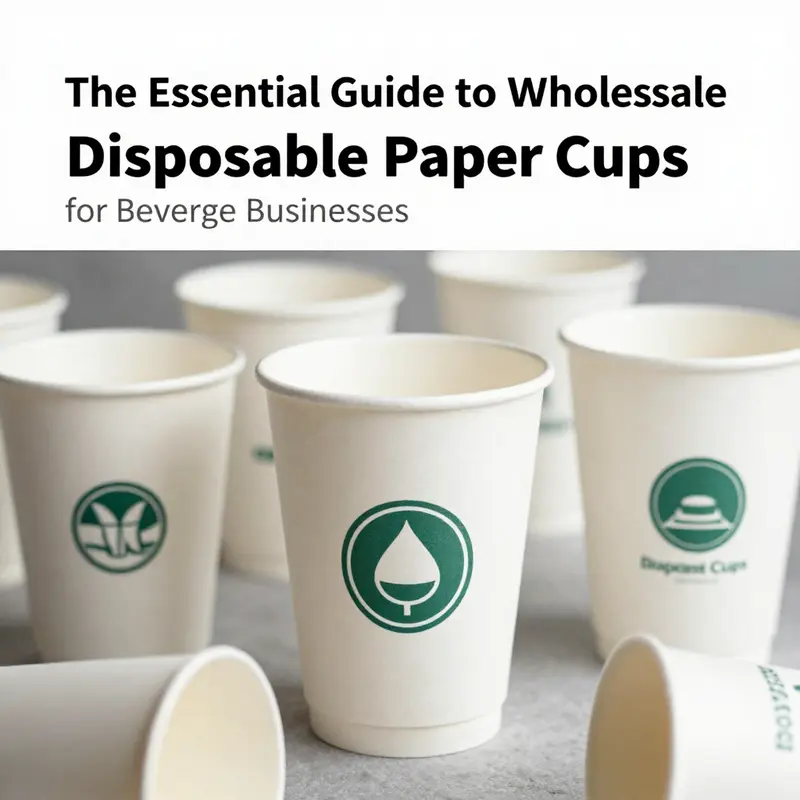
A disposable paper cup is often the quiet workhorse behind a successful beverage service. It travels from a barista’s counter to a conference room, a festival field, or a shopping mall, carrying not only a drink but also a promise of hygiene, reliability, and speed. When viewed through the lens of wholesale procurement, these cups reveal a layered ecosystem where performance and perception meet. They are engineered for convenience and hygiene, yes, but they are also canvases for branding, stories about sustainability, and instruments of operational efficiency. The most compelling wholesale cups do more than hold liquids; they optimize the entire service experience by balancing material science, design, and practical flexibility. In a market that prizes speed without sacrificing safety, the balance of features and customization options becomes the decisive factor that turns a simple cup into a strategic asset for any hospitality program, caterer, or retailer.
To understand why wholesale disposable cups matter, begin with temperature resistance. The range of design approaches is broad, yet one principle stands out: insulation protects both the user and the drink. Double-wall constructions rise to the occasion where hot beverages are involved, such as espresso or tea served at a brisk pace. The inner and outer walls create a barrier that reduces heat transfer to the hand, letting a server or guest hold the cup without a sleeve and without the risk of burns. This insulation also helps retain the beverage temperature for longer periods, supporting a customer experience that remains consistent from service counter to sipping. In contrast, single-wall cups provide a streamlined footprint and lower material cost, and they perform adequately for many cold drinks or lighter hot beverages. The choice between single-wall and double-wall is not merely about temperature; it also signals a business’s sustainability priorities, balancing waste, thickness, and the environmental footprint.
Material quality deserves equal attention. Wholesale cups are typically fabricated from food-grade paperboard or kraft paper, selected for their safety credentials and compatibility with international food safety standards. The interior sheer layer, usually a PE coating, safeguards against leaks and maintains the cup’s integrity when held, filled, or stacked. This combination delivers a product that can withstand everyday handling, from the moment a barista seals a lid to the moment a guest sets the cup down at a table. The material chosen also interacts with the printing and branding process. A smooth, uniform surface supports crisp logo reproduction and color fidelity, ensuring that a brand’s visual identity remains legible and attractive even after brief exposure to steam, condensation, or a busy service rhythm. Yet material quality is not solely about aesthetics. It also translates into predictable performance during distribution and storage. Sturdy evening shifts, crowded events, and adverse weather all test the cup’s resilience. When suppliers combine robust paperboard with reliable liners, they contribute to fewer leaks, less mess, and a more streamlined workflow for kitchen staff and catering coordinators alike.
Environmental safety continues to move from a trend into a core requirement for many buyers. Eco-friendly options are increasingly popular as businesses respond to consumer demand for responsible packaging. A growing portion of wholesale cups is designed with recyclability in mind, or with compostability where feasible, aligning packaging choices with circular economy goals. Compliance with international environmental standards is not just a checkbox; it represents a commitment to responsible waste management, reduced landfill burden, and transparent supply chains. For procurement teams, this means evaluating not only the end-of-life path for the cup but also the sourcing of raw materials, the energy footprint of production, and the potential for recycling or composting signals at the point of use. When paired with responsible lid and sleeve options, these cups contribute to a packaging system that minimizes environmental impact while sustaining the customer experience.
Convenience and portability sit at the heart of the cup’s everyday appeal. Lightweight and stackable, disposable cups occupy minimal space in kitchens, storage rooms, and transport crates. They enable quick turnover in high-traffic settings and support settings that require off-premises service, such as pop-up events or corporate catering. The ability to pre-pack beverages in bulk, ready for on-site distribution, reduces downtime between orders and increases throughput at peak times. This is not simply an issue of operational efficiency; it also informs the consumer’s perception of service speed and reliability. A cup that feels sturdy in the hand and delivers a predictable performance under pressure reinforces trust and satisfaction, reinforcing a brand’s reputation for dependable service.
Certifications offer a formal assurance layer that echoes throughout the supply chain. Reputable wholesale suppliers often carry certifications such as SGS or QS, which signal compliance with safety and quality standards. These endorsements are valuable to buyers who must satisfy their own internal quality controls or adhere to regulatory requirements in different markets. They also provide a useful heuristic for evaluating suppliers in a competitive landscape. When a cup carries recognized certifications, it reduces the procurement team’s risk and simplifies the vendor selection process, particularly for large-volume orders, multi-site deployments, or coffee chains expanding into new regions. In practice, certification translates into a clearer, auditable trail from raw materials to finished product, which in turn supports audits, recalls, or quality improvement initiatives that a responsible business can undertake without destabilizing service.
The versatility of application extends the cup’s value beyond hot and cold beverages. While beverage service remains the core use, many small or espresso-sized variants prove suitable for desserts like pudding or mousse or even savory side dishes in culinary contexts such as tasting menus or catered events. The same cup, with the right lid and sleeve, becomes a disposable vessel that upholds portion control and presentation. In some wholesale programs, this versatility is a key differentiator, enabling a supplier to address diversified needs across the food service ecosystem—from cafes and restaurants to event planners and hotel banquets. The more a product line can flexibly accommodate different serving scenarios, the more predictable the procurement process becomes for buyers who must manage multiple outlets or event types without juggling multiple SKUs.
Customization options elevate the wholesale cup from a commodity to a brand conduit. Printing and branding capabilities are among the most consequential features for buyers who seek to extend their marketing presence into every cup that leaves the operation. Full-color custom printing, often up to nine colors, using food-grade ink, enables logos, slogans, and promotional graphics to travel with the cup from counter to consumer. Offset or flexographic printing methods provide a balance of cost, consistency, and speed—particularly important for orders that must scale up quickly for seasonal campaigns or high-traffic events. OEM services allow buyers to place private labels on cups, integrating packaging, messaging, and even lid choices into a seamless brand experience. The range of sizes—eight, ten, twelve, sixteen, and twenty-two ounces, with custom molds available upon request—further supports brand architecture. A hospitality brand that wants a consistent aesthetic across all outlets can align cup design with napkins, lids, and sleeves, ensuring a cohesive experience for guests.
Lids and accessories play a critical role in both function and branding. Compatible plastic or biodegradable lids adapt the cup to different temperatures and serving contexts, with some options designed to minimize spill risk while delivering a secure, consumer-friendly seal. Sleeves for single-wall cups provide improved grip and enhanced insulation, especially for in-store or on-site service that involves longer wait times or higher beverage temperatures. Packaging and bulk options also influence the overall cost and logistics. Cups are often packed in bags of twenty to fifty units, with larger cartons used for bulk orders—such as a thousand pieces per carton—allowing buyers to optimize warehouse space and minimize handling. The practical implications of packaging extend beyond cost. Efficient packing reduces breakage during transit, supports safer loading and unloading, and helps maintain pristine cup presentation from supplier to final use.
Minimum order quantities and custom sampling are part of the negotiation between buyer and supplier. Flexibility in MOQs can be critical for small businesses testing a concept or a seasonal promotion, while higher MOQs reflect the efficiencies of scale that wholesale sources can offer. Custom print samples, typically available for approval before bulk production, provide a real-world preview of color fidelity and surface finish. It is not unusual for sample costs to apply, reflecting the value of approved proofs that prevent costly reprints and production delays. Buyers who anticipate a high demand window often leverage these samples to fine-tune branding details, confirm color matching, and validate the overall look and feel before committing to a full run.
The sourcing journey for wholesale cups is as much about process as product. Lead times, minimums, and logistical considerations intersect with branding ambitions and environmental commitments. A supplier who can deliver consistently across multiple SKUs and sizes, while maintaining color accuracy and print durability, becomes a strategic partner rather than a transactional vendor. For buyers, the decision matrix includes not only unit price but also the stability of supply, the availability of customization, the efficiency of the ordering process, and the alignment of the product with corporate sustainability goals. In practice, this means evaluating the supplier’s production capabilities, their ability to handle large, multi-site deployments, and their responsiveness to customization requests and proofs. It also means considering the broader packaging ecosystem—the lids, sleeves, and secondary packaging—that must harmonize with the cup to deliver a complete, on-brand user experience.
A practical way to gauge the value of wholesale cups is to consider their role in the end-to-end service chain. The cup’s performance—insulation, leakage resistance, and print durability—directly affects customer satisfaction. When a cup maintains heat without scorching the hand, when it resists leaks even when jostled, and when a logo remains legible through steam and condensation, customers perceive higher quality and reliability. In environments like busy cafes, convention centers, or outdoor events, those micro-details ripple outward, influencing line speed, order accuracy, and repeat business. For catering professionals, a well-executed cup program can simplify inventory management and reduce the risk of miscommunication between kitchen and service staff. The chain reaction is clear: robust materials and thoughtful customization enable smoother operations, stronger branding, and a more polished guest experience across all touchpoints.
To illustrate how these attributes translate into real-world decisions, consider the streamlined needs of a multi-site coffee program planning a seasonal upgrade. They weigh temperature performance, material safety, and branding consistency against price per unit and MOQs. They might decide on a double-wall option for hot beverages at flagship locations while offering single-wall variants for drip coffee or iced drinks in satellite venues. They explore customization commitments—logo placement, color fidelity, and the potential for private labeling—so every cup aligns with the program’s visual identity. They also evaluate packaging synergy, choosing lids and sleeves that reinforce the brand and simplify service workflow for baristas and catering staff. In such scenarios, the cup becomes a piece of the business’s larger strategy: it underpins the customer journey, supports operational efficiency, and communicates the brand story with every sip.
The broader implications of choosing the right wholesale cup extend to sustainability and lifecycle thinking. Buyers who insist on eco-friendly credentials are not merely chasing a trend; they are acknowledging a future in which packaging end-of-life matters as much as initial performance. The availability of recyclable or compostable options, the clarity of disposal guidance for customers, and the transparency of supplier practices all shape a company’s environmental narrative. In practice, this means that sustainability credentials are integrated into the selection criteria alongside print quality, insulation performance, and price. The result is a more resilient packaging ecosystem where the cup stands as a responsible choice that aligns with corporate values and consumer expectations. When environmental considerations are coupled with strong branding and reliable supply, the wholesale cup program delivers a holistic value proposition: it supports the business’s operational goals while reinforcing a commitment to a cleaner, more sustainable future.
In terms of concrete action, buyers can approach wholesale cup sourcing with a structured yet flexible mindset. Start by mapping the anticipated beverage mix and service contexts to determine the required wall design and size range. Then outline the branding ambitions, including print durability, color accuracy, and the potential for a private-label solution. Assess the supply chain by requesting certifications, sample proofs, and a clear timeline for MOQs and lead times. Finally, evaluate the packaging ecosystem—lids, sleeves, and outer cartons—to ensure seamless integration into existing operations. When these factors are aligned, the resulting cup program becomes more than a container; it becomes a strategic instrument for consistent service delivery, brand recognition, and sustainable packaging stewardship across all channels.
For a practical example of wholesale customization and bulk options, see this resource on wholesale take-away cups with lids. Wholesale take-away 8oz-12oz disposable coffee paper cup with lids. This example highlights how a supplier can combine print capability, size versatility, and lid compatibility into a cohesive offering. It also underscores the value of evaluating MOQs, sample processes, and packaging configurations that align with a buyer’s distribution footprint and event calendar. Such references help buyers translate capability into concrete procurement decisions that support both operational efficiency and a compelling brand presence across multiple outlets.
As the field evolves, the discipline of selecting wholesale cups continues to hinge on a balance between technical performance and strategic branding. The most effective cups deliver reliable protection for hot and cold beverages, ensure hygienic usage, and provide ample space for brand messages to appear with clarity. They adapt to varied service models—from quick-service counters to full-service catering—and they scale with demand during peak seasons. They accommodate sustainability goals by offering responsibly sourced materials and end-of-life pathways. They accommodate growth by supporting a range of sizes and customization options, while maintaining cost efficiency through bulk purchasing. In the end, the wholesale disposable paper cup is more than a packaging choice; it is a practical platform for operational excellence and brand storytelling, a small yet significant interface where product design, sustainability, and customer experience converge.
External reference: For a deeper dive into technical specifications, material grades, and certification details, see the official supplier listing that consolidates these aspects for double-wall coffee cups in wholesale contexts: https://www.alibaba.com/product-detail/Wholesale-Disposable-Double-Wall-Coffee-Paper-Cup_1600744255688.html
From Footprint to Framework: Navigating Environmental Impact and Sustainable Pathways in Wholesale Paper Cups
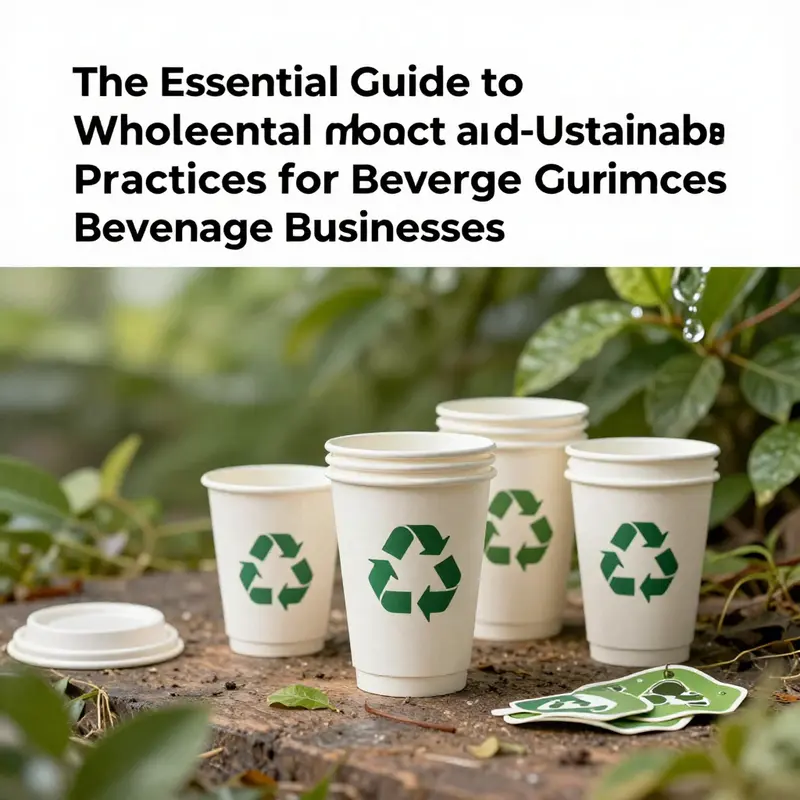
The environmental footprint of wholesale paper cups sits at a crossroads where marketing claims about recyclability and compostability meet the realities of waste infrastructure, consumer behavior, and the incentives that drive mass production. In the wholesale sphere, these cups are more than single-use items. They are part of a complex supply chain that stretches from forest to landfill, with energy, water, and transportation woven through every stage. This chapter does not pretend to have all the answers, but it aims to illuminate central tensions, evolving standards, and practical pathways through which wholesalers, buyers, and manufacturers can pursue outcomes that are cost-efficient, transparent, and more aligned with environmental stewardship. The journey begins with the lifecycle of the cup itself—the materials, the manufacture, the use-phase, and the end-of-life options that determine whether a cup is a symbol of convenience or a contributor to waste challenges.\n\nLike many disposable consumer goods, a paper cup is the product of a system optimized for speed and cost, sometimes at the expense of end-of-life clarity. A large share of cups is lined with polyethylene or other plastics to prevent leakage. This barrier, while essential for performance, complicates recycling because standard municipal streams are not always equipped to separate the plastic lining from the paper fiber. In practice this means that even when a cup is labeled as recyclable, it may not be accepted by local facilities or may be diverted to energy recovery streams rather than material recycling. The EPA has documented that less than 1 percent of single-use cups are successfully recycled in many markets, with the remainder ending up in landfills or incinerated. For wholesale buyers, volume purchases translate into industrial-scale waste, and the way cups are manufactured and disposed of matters far beyond the label on a package. The environmental costs of raw materials, energy, water, and emissions tied to distribution accumulate into a measurable footprint that wholesalers and their customers must reckon with as part of a broader corporate responsibility agenda.\n\nWithin the wholesale framework, the footprint is not merely a function of the cup itself but also of the system that surrounds it. Virgin-fiber sourcing carries ecological and social implications that extend into biodiversity, land use, and local communities. The energy intensity of pulping processes and chemical treatments adds layers of greenhouse gas emissions, water withdrawals, and effluent management that challenge the assumption that paper is inherently better than plastic. Yet there is opportunity here: supply chains can pivot toward materials and practices that reduce environmental impact without sacrificing performance or affordability. Reconsidering the life cycle—how cups are sourced, manufactured, used, and disposed of—opens room for meaningful improvements.\n\nOne notable pathway is the emergence of certified compostable cups made from plant-based materials such as corn-starch or bagasse. These products are designed to meet compostability standards such as ASTM D6400 or EN 13432. The core idea is clear: industrial facilities can break down these cups into compost rather than landfilling them. The reality is nuanced: not all facilities can accept compostable cups, and whether end-of-life outcomes are achieved depends on local infrastructure and whether facilities can receive compostables in the same stream as other organics. This places emphasis on collaboration among manufacturers, wholesalers, and composting networks to ensure the end-of-life system can close the loop. In practice, wholesale buyers should be discerning about material claims, seeking third-party certifications and aligning purchases with facilities that explicitly accept certified compostables where possible. The benefit of certified compostables goes beyond the material itself; it signals a commitment to an end-of-life ecosystem that is more deliberate and better documented than simple marketing claims.\n\nAnother dimension is the design of supply chains that emphasize transparency and lifecycle thinking. Some wholesalers are moving beyond simple substitutions to adopt closed-loop or take-back models that reclaim used cups, divert them from landfill, and repurpose materials into new products. These models are not universal, but their emergence reflects growing recognition that the environmental benefit derives not only from material choice but from how cups are managed after use. When evaluating suppliers, buyers can look for evidence of lifecycle assessments, environmental product declarations, and commitments to end-of-life management. The World Resources Institute emphasizes that the true environmental benefit comes from the system surrounding use and disposal, not only from performance characteristics. A wholesale purchaser who weighs end-of-life pathways is, in effect, choosing a posture toward responsibility that can influence supplier risk, brand integrity, and community trust.\n\nMaterial choice is only part of the equation. The production stage consumes energy and water, often relying on virgin inputs with their own ecological footprints. Wholesale scale magnifies these effects, making efficiency gains across the board essential. Mills can optimize pulping and bleaching to reduce energy use and water discharge, while manufacturers can adopt waste-heat recovery, co-generation, and cleaner production technologies. Transportation adds another major lever: sourcing cups from distant mills imposes higher emissions than shorter, regional networks, or ideally, a localized supply chain that minimizes freight distances. The push toward sustainable procurement is not a single metric play; it aims to balance cost, quality, reliability, and environmental responsibility across demand fluctuations and events.\n\nWholesalers face a delicate balance when it comes to labeling and consumer expectations. There is demand for sustainable options, but it is not always accompanied by understanding of how those options function in real waste streams. Confusion arises when cups advertised as recyclable or compostable face limitations in local infrastructure. Transparency matters: buyers should be able to trace credentials through the supply chain, from raw material sourcing and processing to end-of-life outcomes. Third-party certifications, such as those confirming compostability in industrial facilities or those verifying recycled content, can provide critical assurance to customers and help differentiate responsible suppliers. In the wholesale market, where large orders and long-term contracts shape practice, even modest improvements in transparency can translate into meaningful impact over time, particularly when paired with supplier commitments to share data on energy use, emissions, and waste streams. The World Resources Institute’s analysis underscores the cumulative effect of systemic improvements, arguing that the true environmental dividend comes not from a single switch but from coordinated shifts across materials, manufacturing, and disposal pathways.\n\nTo make these concepts tangible for wholesale buyers, practical decision-making criteria extend beyond price per cup. First, evaluate materials in context with end-of-life options available in your region. A cup marketed as compostable may be beneficial if an industrial facility nearby accepts certified compostables; if not, the benefit may be reduced or eliminated. Second, seek evidence of lifecycle thinking in supplier communications. Do they publish environmental impact data or engage in independent verification? Third, assess whether the supplier offers take-back programs or can participate in closed-loop systems. These arrangements can be transformative, particularly when the organization can reintroduce used cup materials into new products or packaging. Fourth, consider design choices that reduce environmental footprint—options that minimize material use or align with existing recycling or composting streams to reduce contamination and improve recovery rates.\n\nBranding and customization often play a central role in wholesale engagements but need not clash with sustainability. Design choices can influence end-of-life outcomes, especially if customization reduces the need for coatings, inks, or barrier layers that complicate processing after use. When branding is pursued with sustainability in mind, it signals to clients and end-users that environmental considerations are integrated into product development. A careful partner will highlight how branding decisions align with material selection, production efficiencies, and end-of-life pathways, rather than presenting branding as a separate, isolated feature. The goal is to harmonize market-facing aspects of the cup with realities of waste management, so customers can see what happens next and whether the cup can be diverted from landfill in their local context.\n\nWithin this broader landscape, a crucial message for wholesale participants is that sustainability is not static. It evolves with policy signals, material innovations, waste infrastructure shifts, and changing consumer expectations. The EPA and the World Resources Institute provide essential reference points for understanding this evolution. The EPA data reveal the scale of improvements needed to align actual recycling rates with ambitions, while the World Resources Institute emphasizes the systemic nature of the true costs and benefits. For businesses that regularly place large orders for disposable cups, these insights translate into concrete steps: invest in supplier transparency, pilot collaborations with composting or recycling facilities, and design procurement strategies that prioritize lifecycle thinking. In practice, this means setting clear targets for waste reduction, soliciting supplier data, and fostering partnerships that demonstrate measurable progress over time.\n\nAn important element of this progression is acknowledging the limitations of any single solution. Even as certified compostable options proliferate and as closed-loop models appear in niche markets, there remains a need for consumer education and municipal alignment. Contamination of recycling streams, misclassification of compostable products, and the uneven distribution of composting facilities require a coordinated response from manufacturers, wholesalers, and policymakers. The wholesale market, with its scale and reach, can act as a catalyst for such coordination. By prioritizing end-of-life clarity in contracts, offering customers straightforward guidance on disposal pathways, and supporting the development of regional composting and recycling networks, wholesalers can help move the system toward greater resilience and accountability. The practical effect is a more predictable, traceable, and ultimately more responsible supply chain that stands up to scrutiny from regulators, customers, and communities alike.\n\nTo bring this discussion full circle, consider the real-world implications for a typical wholesale buyer who seeks to balance cost, performance, and environmental responsibility. The buyer’s decisions ripple through the supplier network and, in turn, shape the choices that mills, converters, and logistic partners make. A thoughtful approach may begin with a materials assessment weighing the environmental trade-offs of virgin fiber use versus recycled content, followed by an examination of end-of-life options in the buyer’s market. The buyer can then require transparency in supplier reporting and support for take-back programs or partnerships with industrial facilities capable of processing certified compostables. Through iterative improvements—evaluating environmental data, monitoring waste streams, and adjusting procurement practices—the wholesale sector can move toward a scenario where the cup remains a practical and valued tool, while its environmental consequences become increasingly predictable and manageable. In this context, the environmental impact ceases to be a static stigma and becomes a measurable, improvable component of responsible business practice.\n\nIn summary, wholesale paper cups operate within a system whose environmental outcomes depend on more than the cup’s material classification. They depend on process efficiency, supply chain transparency, and the availability of appropriate end-of-life infrastructure. The path forward involves a careful blend of material science, facility capacity, policy cues, and corporate stewardship. The industry is gradually shifting from a narrow emphasis on cost and performance to a broader, more integrated perspective that recognizes the environmental costs embedded in every stage of a cup’s life. The emphasis now is on partnerships that share data openly, invest in sustainable technologies, and align procurement with the realities of disposal options in diverse markets. For buyers and suppliers alike, the overarching objective is not to champion a single sustainability label, but to cultivate a system in which the cup’s end-of-life story is clear, accessible, and capable of being closed in meaningful ways. The result is not only a more responsible product line but a market that rewards transparency, cooperation, and continual improvement.\n\nFinally, for those seeking concrete examples of connecting principles to practice, many suppliers offer materials and formats that harmonize with local waste streams and certified composting networks. These options illustrate how sustainability can be integrated into everyday procurement decisions without sacrificing reliability or cost effectiveness. Additionally, industry analyses and policy reviews remind us that the conversation extends beyond cup materials to the entire ecosystem required to transform a disposable item into a component of a circular economy. When wholesalers anchor their strategies in lifecycle thinking, sustainability becomes embedded in the way business is conducted, from sourcing and production to customer education and end-of-life management. That is the essence of moving from a headline about recyclability to a genuine, verifiable commitment to reduce environmental impact at scale.\n\nTo anchor the discussion in a practical reference point, it can help to engage with broader content available on the supplier landscape, where the approach to eco-friendly packaging is visible through dedicated product lines and sustainability statements. For readers seeking direct connections to material choices and end-of-life considerations, the internal reference below offers a pathway to explore products that align with these themes. eco-friendly printed-logo single-wall paper cup. This link serves as an example of how a supplier might package sustainability claims alongside performance expectations, while inviting critical evaluation of the entire life cycle of the cup.\n\nFinally, for a broader external perspective, organizations such as the World Resources Institute provide rigorous analyses that situate the cup within a larger environmental and social context. The report highlights the importance of focusing on the entire system, including production, use, and end-of-life stages, and argues that substantial environmental gains hinge on coordinated actions across actors and stages rather than isolated material changes alone. Readers are encouraged to consult the report for a more comprehensive understanding of how the wholesale sector can contribute to meaningful improvements in waste, resource use, and emissions across the supply chain: https://www.wri.org/publications/true-cost-disposable-coffee-cups
Final thoughts
The adoption of wholesale disposable paper cups has proven to be a beneficial strategy for enhancing the efficiency, branding, and sustainability of beverage businesses. By understanding the market dynamics, leveraging key features, and committing to environmental responsibility, bubble tea shops, beverage chains, and other food service providers can elevate their operations and meet evolving consumer expectations. Investing in the right disposable solutions is not just a choice for convenience but a commitment to a more sustainable future.