
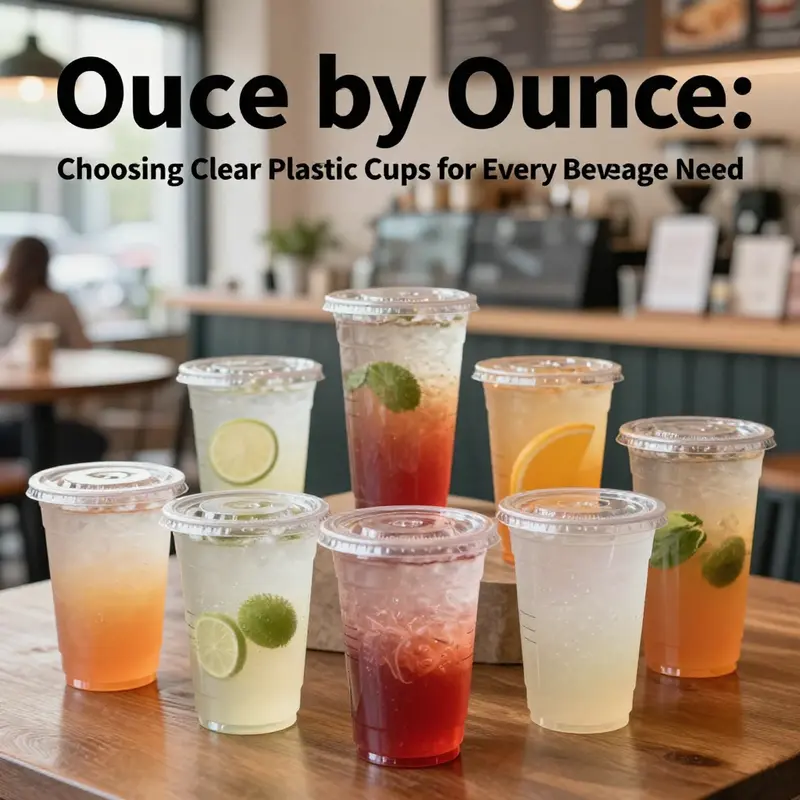
Understanding the various ounce measurements in clear plastic cups is essential for beverage service professionals. Whether you are a bubble tea shop, beverage chain, restaurant, food truck, or event planner, making informed choices can significantly enhance your service quality and customer satisfaction. Cups come in various sizes, commonly ranging from 1 ounce to 21 ounces, each designed for specific applications. This article will delve into the intricacies of different cup sizes, focusing on the most popular options—16-ounce and 21-ounce cups—while also touching upon the use of 1-ounce cups. We will explore common uses for each, the importance of accurate measurements, and a comparative analysis of sizes. By the end, you’ll have a comprehensive understanding to support your beverage service needs effectively.
Ounces in the Clear: Reading Volume and Precision in Clear Plastic Cups
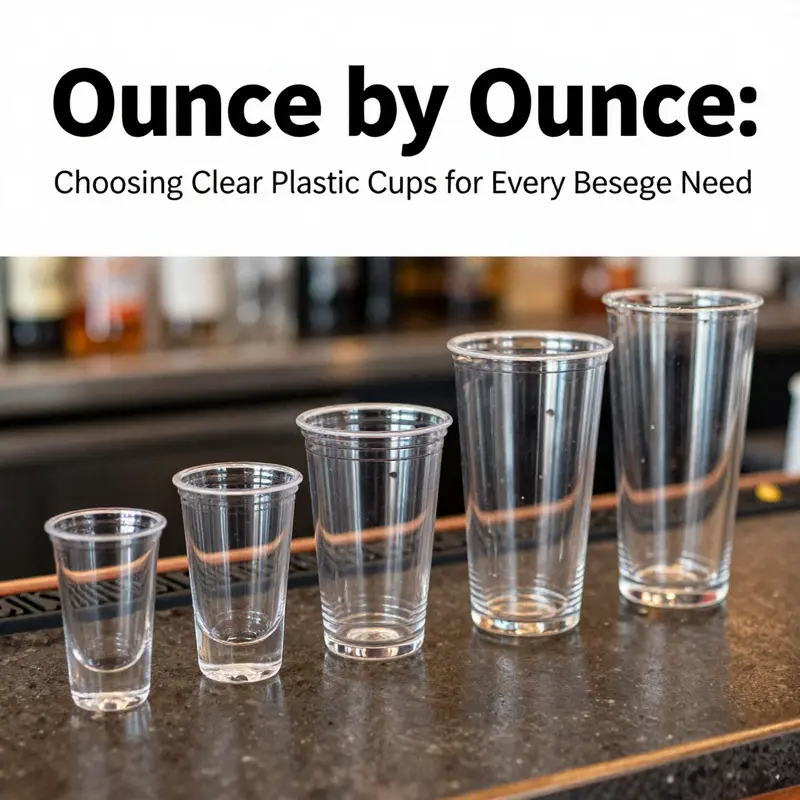
In the world of clear plastic cups, every ounce is more than a number on a sidewall or a label. It is the pulse of service flow, the quiet discipline behind a well-made beverage, and the practical bridge between a recipe and a ready-to-serve cup. These transparent vessels invite the eye to judge volume, but true measurement travels beyond the eye and into the realm of standardized units. To truly read a cup’s capacity, one must distinguish between fluid ounces, which measure volume, and ounces that measure weight. The distinction isn’t merely academic; it shapes how we pour, package, and present drinks across kitchens, cafes, and gatherings. When a barista stacks clear cups for a morning rush, or a host grids a lineup for a party, the language of ounces guides every decision, from how much ice to add to how many servings a certain size can yield. The clarity of the cup is matched by the clarity of the measurement that fills it, and both require careful attention if the outcome is to be predictable, repeatable, and enjoyable.
At the core of this topic lies a simple, sometimes surprising truth: fluid ounces and ounces are not interchangeable. A fluid ounce is a unit of volume, the space liquid occupies within the cup. An ounce, on the other hand, is a unit of weight, a mass measure that depends on the density of the liquid and the material surrounding it. In practical terms this means that measuring 8 fluid ounces of water into a cup does not yield the same mass as filling that same cup with syrup, oil, or cream. The volume inside the cup remains the same when you fill to the same mark, but the weight of the liquid varies with its composition. This distinction matters most when precision is needed—recipes scaled for a party, a standardized beverage program, or a kitchen that relies on consistent pouring for every guest.
The standard US framework makes the story more concrete. A fluid ounce is about 29.57 milliliters, and there are 8 fluid ounces in a cup. Therefore, a conventional 8-ounce clear plastic cup holds roughly 236.6 milliliters of liquid. This is a familiar benchmark for many households and cafes alike, serving as a practical baseline for recipes, drink formulations, and serving sizes. When one writes a recipe that specifies cups and ounces, or when a server is asked to portion beverages by the cup, this baseline becomes a shared language. It is a language that travels with the cup—from street-side coffee carts to hotel banquet halls—because it anchors expectations about how much liquid to expect in a given vessel.
But the world does not stop at the United States. International variations remind us that measurement can be a moving target when cultures intersect at the table. In the United Kingdom, a fluid ounce is slightly smaller, at about 28.41 milliliters. That difference might seem minor, yet it translates into distinct volumes for the same numerical label, especially when moving between menus, recipes, and serving standards across borders. This is a gentle reminder that a cup’s appearance does not guarantee universal measurements. The admiration for a clear, transparent cup should not obscure the fact that volume metrics travel with the system that defines them. A careful host or café operator will account for these nuances, particularly when sourcing beverages or following recipes from different places. The result is a menu, a counter, or a kitchen that remains coherent amid cross-cultural guests and cross-border ingredients.
As the surface of a clear plastic cup looks smooth and simple, the practicalities of measurement grow rich with nuance. For accuracy, many professionals rely on cups that include markings or scale indications in fluid ounces. When such marks are present, they transform the cup from a mere receptacle into a measuring tool, enabling quick checks without pulling out a separate graduated cylinder or kitchen scale. The habit of marking fluid ounces on the cup itself reduces the risk of overpour or underpour, especially in fast-service environments where speed and repeatability matter. Even a small misread—one extra ounce of liquid in a single cup or one short pour in a batch—can compound across a service, affecting cost, customer satisfaction, and the overall balance of a beverage program. In turn, this practical discipline supports both cooks who reproduce complex mixtures and bartenders who craft consistent flavors across dozens of servings.
Understanding the difference between volume and mass also shapes how one approaches beverages that rely on density changes. Consider a cup that is meant to serve a frozen drink. The density of the frozen mixture is not the same as a room-temperature liquid, so the mass that fits inside the same cup can vary as ice blends and liquids interact. In cold machines, where foams, ice, and aeration play a role, a careful staff member reads the cup’s level as a measure of volume, not weight. This is where the education about ounces becomes an operational tool. It guides how many servings are possible from a batch and how to staff a service period with predictable yield. In kitchens that serve both hot and cold drinks, the same cup may carry different densities of liquid, yet the calibrated volume remains the same. The duty of the operator is to interpret the numbers correctly and align expectations with the cup’s actual capacity.
The numbers become more tangible when we translate them into everyday planning. If a recipe calls for 2 cups of a liquid, that equals 16 fluid ounces. If the liquid happens to be water, the weight of those 16 ounces of water will be roughly the same as the volume (for water density at standard conditions). If the liquid is oil, the weight will be lighter for the same volume, illustrating how density interacts with the unit you’re using. In a practical sense, this means that a straightforward, reliable setup for a party or cafe is not simply “fill to the top.” It is a choreography of density, volume, and the geometry of the cup itself. Each size of cup carries its own stage directions: a 16-ounce cup is a larger stage for iced drinks with more room for ice and foam; a 21-ounce tumbler provides a broader canvas for layered beverages and garnishes; a tiny 1-ounce shot glass is a compact vessel for precise portions and sampling. The appeal of clear plastic is in its transparency, which invites a quick visual assessment of how much liquid remains. Yet the actual accuracy comes from selecting the right unit and aligning it with the liquid’s properties.
In practice, this translates into a careful pairing of cup size with serving intent. For a coffee bar, an 8-ounce and a 12-ounce option might dominate the daytime workflow, balancing the need for speed with the desire for a tidy cup that looks generous on a tray. For a party or catering event, a 16-ounce or 21-ounce option can offer generous portions while still fitting within a single-hand carry. A host preparing a tasting flight might use a series of small cups each marked with their fluid ounce measure to help guests compare flavors without overindulging. The clarity of the cup aids the perception of value: a well-marked, honest vessel signals precision and care, while a plain, unmarked cup leaves room for guessing and potential misinterpretation.
This is where design choices and packaging decisions intersect with measurement literacy. Clear plastic cups are not just passive vessels; they are instruments that communicate range, expectation, and control. When designers and operators align cup size, marking, and density considerations, they create a predictable and comfortable experience for guests. This harmonization is not about fetishizing numbers; it is about applying them in a way that makes service smooth and enjoyable. A well-chosen cup helps ensure that what a guest expects—whether a standard 8-ounce serving or a precise 12-ounce fill—matches what arrives in hand. In this sense, the cup becomes a reliable partner in hospitality, a transparent stage on which the drama of serving unfolds.
For readers who want to explore the practical ecosystem around cup sizes more deeply, the conversation often touches on how these measurements translate into real-world packaging choices. When a venue contemplates stocking options for take-out or dine-in service, understanding the scale of common sizes helps in planning inventory, pricing, and logistics. It is worth noting that even within a single family of cups, the actual interior capacity can vary slightly due to the cup’s wall thickness, seam placement, and whether it is a single-wall or double-wall construction. Such small variances are typically accounted for in standard operating procedures, but they reinforce the central point: measurement requires attention to context and purpose.
For further reading on measurement standards, you can consult authoritative references that define the units used in everyday life. The National Institute of Standards and Technology provides a clear foundation for these concepts, reinforcing the idea that fluid ounces measure volume while ounces measure mass, and offering guidance on converting and aligning measures across systems. This external resource anchors the practical guidance above in a broader, standards-based framework that is essential for anyone who wants to serialize or scale beverage production with confidence. For readers curious about the formal definitions and practical implications, the link to the official standards is a reliable compass as they navigate recipes, menus, and service calibrations across contexts.
In closing, the journey through ounces in a clear plastic cup is a reminder that simplicity at first glance hides a precise language. Volume, mass, density, and the geometry of the cup itself come together to shape how much liquid you can pour, how you present it, and how consistently you can reproduce that presentation across multiple servings. The next time you pick up a clear plastic cup, you are not just choosing a vessel; you are selecting a measurement tool that communicates with your guests through the quiet vocabulary of fluid ounces and the steady rhythm of accurate pouring. And as you plan, pour, and share drinks, remember that the most reliable serving experience emerges when the cup and the measurement it carries are aligned with clarity, care, and consistency.
External resource: https://www.nist.gov/pml/weights-and-measures/units-of-measure
Internal note: For a practical example of how cup sizes translate into take-out packaging decisions, explore real-world offerings such as wholesale cups designed for mixed 8-ounce to 12-ounce servings. The specific product page provides a concrete reference point for scale and usability, illustrating how providers manage portions across the most common sizes while keeping a clear line of communication between measurement standards and customer expectation.
The Quiet Workhorse of Serviceware: Unpacking the 16-Ounce Clear Plastic Cup’s Role in Beverages, Parties, and Everyday Life

A clear plastic cup of sixteen ounces sits in the background of many social rituals, quietly doing the hard work of holding liquids while letting the eye appreciate color and clarity. It is a vessel that blends practicality with presentation, a small object with outsized impact on how we experience food and drink in daily life. Its capacity is enough to accommodate a generous iced coffee, a tall glass of fruit juice, or a smoothie that looks almost too good to drink. Yet the same cup also serves for cold teas, sparkling waters, and light cocktails at casual gatherings. When people look for something that travels well—from cafe to office, from social event to kitchen shelf—the sixteen-ounce clear cup often arrives as the most reliable choice. The balance it strikes between size, weight, and visibility makes it a natural fit for settings that value speed and cleanliness, without sacrificing the opportunity to present a beverage with a sense of identity and consistency.
What makes this size so widely adopted goes beyond mere capacity. The clear material showcases the drink’s color, texture, and even the froth on a latte or the ice shards in a chilled juice. In a busy cafe or a crowded party, the simplicity of a transparent cup means customers can instantly assess a drink’s appearance without peering over a lid or squinting at a label. There is a subtle but significant psychological dimension to this transparency: it invites trust. A beverage that looks appealing in a clear vessel signals cleanliness and quality, which in turn can influence how eagerly a customer reaches for the next sip. Moreover, the cup’s flat, stackable geometry makes it easy to store, transport, and reuse in the sense of minimizing clutter for staff during peak hours. This practicality translates into tangible benefits for operators who aim to speed service while preserving a consistent user experience, whether the environment is a quick-service restaurant, a bustling campus, or a catered outdoor event.
The sixteen-ounce cup also demonstrates versatility across hot and cold contexts, a feature that enhances its appeal in different seasons and locales. Although its primary association is with cold drinks, many designs accommodate the warmth of beverages such as coffee or hot chocolate for short periods. This utility rests on a careful balance of material properties: clarity, rigidity, and a resistance to cracking when handled with hot hands, paired with the ability to maintain a stable shape when filled with viscous liquids like smoothie blends. The capacity is generous enough to justify layered beverages—milk with syrup, tea with lemon, or a creamy cold brew—yet compact enough to fit into standard takeaway routines. In practice, baristas, bakers, and beverage programmers can trust that a cup of this size will hold a generous portion while still leaving room for a lid or sleeve, which becomes essential during curbside pickup or outdoor service.
Beyond the counter and the cafe window, the sixteen-ounce clear cup has earned a place in the realm of events and social gatherings. Its transparent nature makes it ideal for celebrations where food and drink are central but where elegance and informality must coexist. In weddings, birthdays, and company gatherings, the cup’s neutrality becomes a canvas. It invites branding without overpowering it, offering space for a logo, a slogan, or a vivid color motif through printed designs on sleeves or the cup itself. Customization, when chosen, tends to enhance the event’s ambiance rather than overshadow it. Guests can enjoy beer, juice, water, or soft drinks with the same level of presentation, and hosts gain an uncomplicated way to keep beverages organized and visually cohesive across a crowded space. This adaptability is not merely aesthetic; it translates into practical benefits for event planners who need a single, reliable container that can bridge multiple stations—from welcome bars to dessert lounges—without creating a clutter of different vessels.
In outdoor and high-traffic environments, the value of the sixteen-ounce clear cup becomes even more apparent. At sports venues, music festivals, fairs, and campus events, staff must move quickly and minimize cleanup while delivering consistent service. A cup that stacks efficiently and resists tipping during a busy moment reduces spill risk, which in turn protects both guests and surfaces. The cup’s light weight and relatively low cost make it feasible to provide for large crowds, enabling efficient circulation and quick replenishment. This practicality goes hand in hand with sanitation considerations; disposability, when managed responsibly, offers a straightforward path to keep lines moving and to simplify post-event cleanup. In such contexts, the cup acts as a dependable conduit for a wide range of beverages, from water to lemonade to cocktails, ensuring that attendees can stay hydrated and refreshed without sacrificing the speed of service.
The role of this cup in food packaging and take-out is another facet worth noting. Some restaurants and catering operations rely on this size for compact portions, fruit cups, layered salads, or dessert cups that combine flavor and convenience in a single package. The capacity supports a modest portion while staying manageable for transport, which matters for delivery and self-serve stations. In keeping with consumer expectations, the cup remains a secure option against leaks when paired with compatible lids and seals. The design approach—clear, stiff walls, smooth rims, and reliable compatibility with lids—helps ensure that the product maintains its form from kitchen to customer hand. This seamless journey from prep to consumption exemplifies how a simple vessel can streamline processes, reduce waste, and improve the overall user experience.
As environmental awareness becomes increasingly central to both consumer choice and corporate responsibility, the 16-ounce clear cup has evolved to embrace more sustainable pathways. A growing segment of options emphasizes plant-based or compostable materials, designed to align with venues and events that seek to minimize ecological impact. The shift toward biodegradable or industrially compostable variants exists alongside the longstanding practice of recycling where facilities permit. In practical terms, this means operators can still leverage the cup’s many strengths—clarity, size, and cost-effectiveness—while offering a more responsible end-of-life option. The balance between performance, accessibility, and sustainability guides decisions about which variant to deploy in different contexts, whether the setting is an eco-conscious festival, a campus dining hall, or a neighborhood cafe piloting a green initiative. This evolving landscape reflects a broader trend in retail and hospitality: everyday items that once existed mainly as convenience now carry expectations for responsible production and disposal.
Design considerations for the sixteen-ounce cup, including its lids and accessories, reinforce the idea that simplicity can be powerful. A straightforward lid system can seal to prevent spills on the move, while a snug sleeve or heat-insulating layer helps protect hands during hot beverages. The visual appeal of the cup—the way light passes through a well-made, clear wall—contributes to the sense of quality a beverage can convey. For operators, the decision to use this size often balances several factors: how quickly drinks cycle through the line, how easily staff can stack and store supplies, and how well the cups align with branding goals. In a market where cost-per-use matters, the sixteen-ounce clear cup often wins by supporting a uniform experience across multiple service channels, from dine-in counter service to drive-through and off-premise events.
Within the broader conversation about supporting materials and branding, many buyers consider the opportunity to pair the cup with customized designs that reflect a brand’s identity. The combination of transparency and printability makes this size a practical vehicle for message and mood. A simple logo, a color motif, or a seasonal graphic can transform a standard cup into a portable brand touchpoint. When a business opts for such customization, it is crucial to ensure that the artwork does not obscure the drink’s appearance or create readability issues. The right balance between design and practicality amplifies the cup’s impact without compromising the user’s ability to evaluate the beverage’s quality at a glance. For brands exploring sustainable presentation options, there is a growing suite of choices that allow printed designs to align with environmental narratives and green packaging goals, helping to tell a cohesive story about taste, responsibility, and style.
For readers seeking a concrete example of eco-conscious options in this category, some suppliers offer eco-friendly printed-logo cold beverage cups as part of their merchandising line. These cups provide a visually appealing platform for branding while embedding sustainability claims into the consumer experience. The result is a thoughtful blend of form and function that supports both service efficiency and a brand’s environmental commitments. If you are curious about how such cups can integrate with a broader green packaging strategy, a deeper look at available designs and materials can illuminate paths toward a more sustainable service model while preserving the clarity and reliability customers expect from a sixteen-ounce cup.
External reference for further reading on plant-based, clear cups and their practical applications: https://www.alibaba.com/product-detail/16oz-PLA-Clear-Plastic-Disposable-Cold-Drink-Cup
Seeing Size, Shaping Service: The 21-Ounce Clear Plastic Cup in Food Service
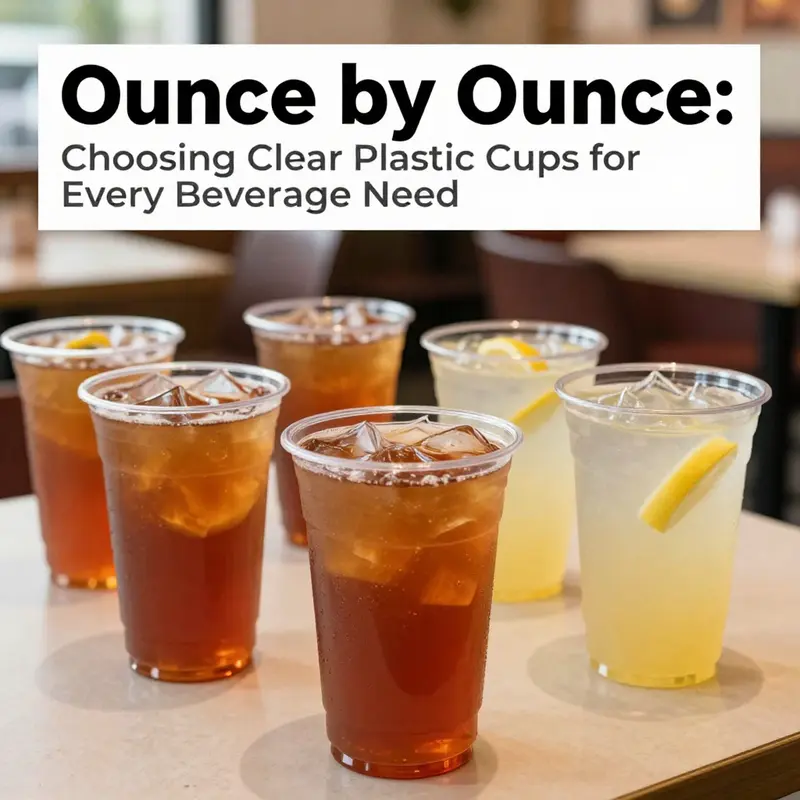
The 21-ounce clear plastic cup sits at a curious crossroads in the world of food service. It is not merely a vessel for hydration; it is a deliberate choice about how much beverage a customer gets, how quickly a line moves, and how a business communicates its approach to quality, value, and practicality. In environments that range from bustling cafes to standing-room events, the ability to fill, present, and transport a drink with confidence rests on a few core decisions. Among them, the 21-ounce capacity has earned a place not by accident, but by balance: large enough to accommodate generous servings and layered presentations, yet light enough to lift, carry, and manage throughout a service cycle. This balance matters because every ounce is also a cue about portion control, waste management, and the physics of service flow. When staff can pour a drink that satisfies without overfilling and without requiring a second cup, the operation runs smoother, the customer experience feels seamless, and the entire workflow becomes easier to manage during peak hours. The choice of a clear cup, moreover, adds a dimension of transparency that goes beyond the cup’s physical shape. In a market where beverages often rely on color, layers, or texture to convey quality, a transparent vessel becomes an extension of the drink’s story. The customer can see the depth of color in a cold brew or the gradient in a fruit-forward refresher. This visual cue—glass-clear, steady, unfussy—lets the beverage itself speak to the observer. It places trust in the performance of the cup and invites the consumer to gauge freshness, layering, and garnish at a glance. This is not merely about aesthetics; it is about the perception of value. A cup that looks full, clean, and well-presented signals care for the guest and a commitment to consistent service. Yet the size is only part of the equation. The material and construction of the cup determine how much of that promise translates into real-world outcomes. For a 21-ounce clear plastic cup, the critical questions extend beyond capacity: Is the cup rigid enough to resist bending when a customer grips it with both hands? Does it maintain its form under the pressure of a tall, ice-heavy drink, or when a busy bar circulator stacks several cups during a rush? Is it safe for direct contact with beverages, and does it hold up in a commercial dishwasher or under steady handling in a catering setting? These considerations matter because durability supports hygiene. A cup that cracks, cracks, or warps during service can compromise cleanliness, increase waste, and disrupt throughput. In response, many producers of clear plastic tumblers design for rigidity and resilience. The material choice—often a food-grade, BPA-free polypropylene—balances safety with performance. This plastic is known for its clarity, while its inherent toughness helps prevent cracking from the kinds of drops and knocks that occur in back-of-house environments. The choice of a recyclable pathway is not an afterthought. The modern consumer is increasingly conscious of a product’s end-of-life story, and the industry has responded by offering materials that can be recycled where local programs allow. In practice, this means a cup that remains clear and shatter-resistant through its useful life and remains compatible with recycling streams after it has fulfilled its purpose. The design benefits extend to storage and handling as well. The 21-ounce cup is frequently engineered with a stackable form that conserves cabinet and freezer space. Stacking not only saves room but also improves speed during restocking, enabling kitchens and event venues to rotate stock quickly with less manual effort. In high-demand periods, this translates to fewer trip-ups—the kind that slow service and add fatigue to a lineup. The practical advantages extend into the realm of cleaning and maintenance too. A cup described as dishwasher-safe, or at least able to withstand repeated washing in a busy operation, helps ensure a faster turn-around between customers and reduces the likelihood of unsanitary buildup in hard-to-reach areas. This is especially valuable in environments where cups are constantly in use, where the risk of contamination grows with each refill, and where the cost of downtime can be substantial. The operational benefits also show up in purchasing and logistics. When a business settles on a 21-ounce clear plastic tumbler, it tends to favor rigidity and a form that resists tipping in vibrant, high-energy settings. A sturdy cup reduces waste by maintaining its integrity even when placed on slick surfaces or knocked lightly by a passing tray. Bulk packaging options, such as packs designed for food service and catering, help keep costs predictable and procurement straightforward. In many cases, establishments source these cups in quantities that align with the rhythms of a weekly cycle, a pattern that supports consistent supply without introducing frequent stockouts. The result is a more reliable service backbone. From a supplier’s perspective, the availability of these cups through broad distribution networks makes scalability feasible. A small cafe can go from a handful of cups to a full day’s demand without the risk of sudden shortages. A caterer can align cup stock with anticipated volumes for events and deliveries, reducing last-minute rushes. This scalability matters because it shapes pricing, staffing, and even menu design. When the vessel itself is dependable, the focus shifts to what fills it and how the drink is presented. The 21-ounce clear plastic cup also carries significance in terms of safety and compliance. In many jurisdictions, food-contact materials must meet specific standards to ensure that beverages stay free from contaminants and that the materials do not interact with the drink in ways that could be harmful. A cup made from a food-grade material helps align with these expectations, especially in busy venues where there is a constant turnover of customers and beverages. The absence of bisphenol A (BPA) in the plastic is a common criterion and is often highlighted as part of safety communication to customers. In addition, the all-clear transparency of the cup can be an important asset when evaluating beverages at a glance. For premium or specialty drinks—whether a layered tea, a bright lemonade, or a smooth, fruit-forward blend—the ability to observe the drink’s composition through the cup’s wall can add to the customer’s impression of quality. This visual access supports trust, which in turn reinforces repeat business. In the larger ecosystem of beverage presentation, the 21-ounce clear plastic cup contributes to a broader narrative about portion, value, and convenience. The same vessel might carry a frothy coffee, a cool tea, a nutrient-dense smoothie, a citrus-forward refresher, or a light cocktail. Each of these categories benefits from a container that is easy to handle, visually honest about itself, and designed to withstand the realities of a busy service environment. The cup’s clarity invites curiosity: it allows glass-like anticipation of color and texture while preserving the flexibility of a disposable format that suits quick turnover and efficient cleanup. In other words, the 21-ounce clear plastic cup embodies a blend of form and function that aligns with contemporary expectations for fast, clean, and visually engaging service. It is a practical instrument in the hands of a well-trained staff and a familiar, reassuring presence for guests who seek a consistent experience. If a reader considers the broader landscape of cup options, the 21-ounce size stands out not merely for its capacity but for the way that capacity is experienced in real-world settings. It is large enough to meet the needs of cold-brew lovers and smoothie enthusiasts, yet compact enough to be managed in crowded service lines. Its translucence supports a storytelling approach that highlights the drink, rather than the container, while its durability underpins the reliability that restaurants, cafes, and caterers strive for. In short, the 21-ounce clear plastic cup has earned its place as a staple in many food service operations because it harmonizes safety, practicality, and presentation in a single, unassuming shape. For readers seeking a concrete sense of how these cups fit into broader procurement and catalog options, consider exploring catalog entries that discuss eco-friendly cup solutions and other disposable beverageware—a reminder that the cup is part of a bigger system designed to keep service moving smoothly. As with any equipment choice, the value emerges from how well the cup supports the flow of work, rather than from its novelty. In the end, the measure matters because it is a promise: a promise of efficient service, clean presentation, and a consistent experience that guests will recognize and, ideally, return for. 21-Ounce Plastic Cups on Walmart offers a concrete sense of how this size sits within real-world product ecosystems and procurement practices, illustrating how a straightforward capacity choice can ripple through inventory, handling, and customer perception. Eco-conscious operators will appreciate that many of these cups are designed with recyclability in mind, even as their primary function remains to serve beverages with clarity and confidence. It is this blend of performance, perception, and practicality that makes the 21-ounce clear plastic cup more than a container. It is a small but meaningful instrument in the choreography of service, where each ounce, each tilt, and each glance toward a perfectly presented drink contributes to a cohesive, reliable guest experience. External resource: https://www.walmart.com/ip/Mintra-Home-Reusable-Kitchen-Drink-Tumblers-21-Ounce-Plastic-Cups-Pack-of-6/49378219
Seeing Volume Clearly: How Fluid Ounce Sizing in Clear Plastic Cups Keeps Beverages Honest
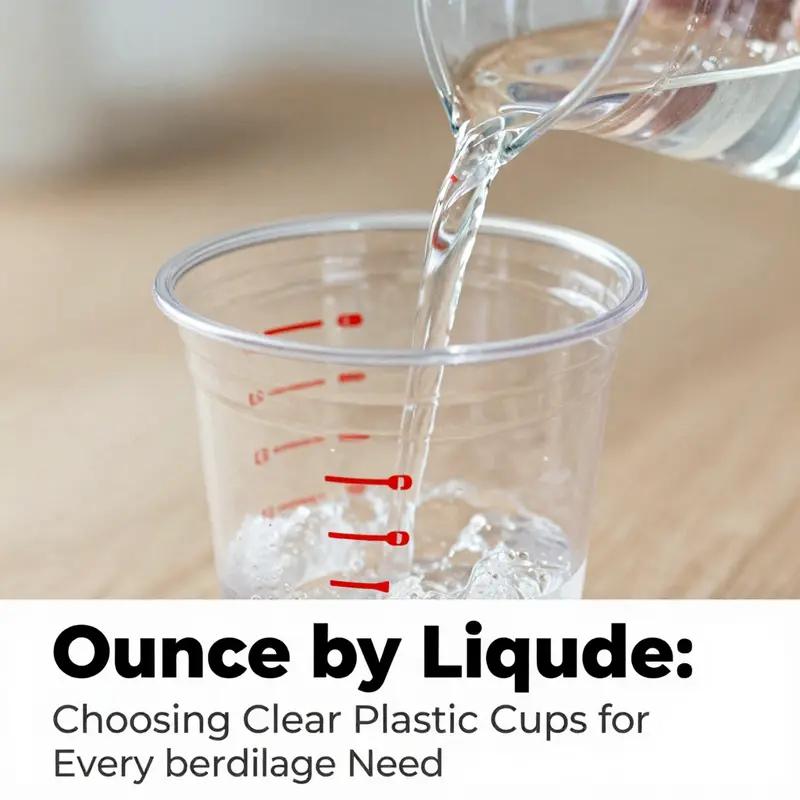
In the everyday act of pouring, a clear plastic cup does more than cradle a drink. It acts as a transparent measure, a small instrument of precision that quietly governs proportions, temperatures, and even expectations. When you glimpse a cup filled to a certain level, you are not just seeing a liquid; you are estimating volume with a kind of practical science. This is where the notion of ounces—specifically fluid ounces—takes on everyday significance. For anyone who recipes, mixes beverages, or even conducts informal experiments at home, fluid ounces offer a standard that keeps outcomes predictable. The transparency of a clear cup makes visual assessment possible in real time, yet it does not replace the need for a shared unit system or an awareness of the subtle differences between what we see and what we measure.
A fluid ounce is a unit designed to quantify volume—the amount of space a liquid occupies. It is distinct from a dry ounce, which measures weight. The difference matters because liquids vary in density. Water, syrup, oil, and alcohol each occupy different volumes per unit of mass, so a cup that looks like it should hold eight ounces of one liquid may not hold the same eight ounces of another. This distinction becomes especially important when a recipe or a beverage formula relies on precise ratios. If you pour eight fluid ounces of water into a cup, you expect a particular volume. If you instead use eight dry ounces by weight, you have a different physical outcome—a consequence of density rather than volume. The clarity of the cup helps reveal the error visually, but the correct approach is to commit to the correct unit at the outset and maintain consistency throughout the process.
The everyday kitchen or cafe workflow often relies on a simple rule of thumb: think in fluid ounces because those are the units that govern liquid volumes. The U.S. customary system, with its fluid ounce, serves as a practical framework for beverage preparation, service portions, and the calibration of equipment like pour spouts and blenders. When a standard clear plastic cup is labeled as holding, say, eight fluid ounces, that label is not merely decorative. It represents a designed capacity that reflects the cup’s geometry, wall thickness, and the tolerances introduced during manufacturing. An eight-ounce cup is expected to offer a consistent volume under typical serving conditions, which means a recipe that specifies eight fluid ounces should, in practice, align with the cup’s labeling. The benefit is twofold: it ensures consistency in taste and texture, and it supports accountability in portion control, whether in a home kitchen, a school cafeteria, or a small coffee bar where reproducibility matters.
This is where the precision story broadens beyond the kitchen into more technical realms. In manufacturing settings, standardizing ounce markings helps reduce batch-to-batch variation. Even tiny discrepancies in the shape or thickness of a cup can alter the actual volume it can hold. Consider the role of tolerances: a manufacturer may specify a maximum and minimum capacity around a target value, acknowledging inevitable variation in the molding process. When a cup is labeled as eight fluid ounces, the production line aims to stay within those bounds, so every cup in a package behaves similarly. This consistency is essential for product quality, for inventory control, and for the trust of customers who rely on predictable portions. The same logic extends into beverage production, where dozens of cups may pass through a single setup in a day. In such environments, accuracy is not an ornament; it is a requirement that undergirds safety, taste, and brand integrity.
Across industries, too, accuracy in ounce sizing informs more than flavor or presentation. In pharmaceutical settings, even minute measurement errors can compromise a process or a protocol. While most consumer cups sit in the realm of food and drink, the underlying principle—so-called volumetric accuracy—echoes through any application where liquids are measured by volume. Clear cups, with their transparent walls, invite visual verification. A technician can observe whether the liquid level aligns with a designated line or not, and any deviation becomes a cue to adjust. This visual feedback is valuable, but it works best when it is paired with standardized units and calibrated equipment. In other words, the cup’s clarity amplifies the need for accuracy rather than replacing it.
Corners of the practical world illuminate why this matters. If a eight-ounce label is trusted, a barista can deliver a consistent drink size, a home cook can adjust a recipe with predictability, and a science student can perform a straightforward comparison of densities. Misunderstanding the distinction between fluid and dry ounces can invite errors that ripple through a procedure. For instance, weighing a liquid to determine its volume might be tempting in a pinch, but it introduces a separate measurement paradigm: mass versus volume. In clear plastics, where the visible meniscus often guides perception, the risk of misreading a level grows if one forgets to account for temperature effects or the meniscus shape created by the cup’s rim and wall. The practical takeaway is simple: rely on fluid ounces for liquids, understand dry ounces measure weight, and treat the cup as a tool that embodies a defined capacity while remaining sensitive to context.
The broader relevance of precise ounce sizing becomes evident when you consider the communicative function of a cup. A clear cup is not a neutral vessel but a visual instrument that communicates a standard to the observer—whether it’s a kitchen helper, a student in a lab, or a customer in a cafe queue. When a recipe calls for eight fluid ounces, that instruction assumes a particular way of measuring. The cup’s design, its material properties, and its manufacturing tolerances all contribute to whether that expectation is met. In practice, this means that a cup in one lot of production may hold eight fluid ounces within a narrow tolerance, while a cup from a different batch may tip slightly above or below, yet still remain within an acceptable range. This is not a flaw; it is the reality of mass-produced containers. The challenge lies in communicating the intended capacity clearly and ensuring that users interpret it correctly. The clarity of the plastic contributes to that communication, because when you can see the liquid level against a marked indication or a familiar fill line, you have a tangible reference that supports accurate measurement.
To translate this into everyday action, consider the steps a careful individual takes when working with liquids in clear cups. First, identify the unit you intend to use—fluid ounces for liquids—before you start measuring. Second, be mindful of temperature, since liquids expand or contract with heat and cold, subtly changing volume. Third, rely on markings or calibrations that are designed into the cup or on a separate measuring tool to confirm the target volume. Fourth, maintain consistency across different liquids by using the same measurement approach rather than switching between volume and weight. Lastly, recognize the value of standardization: it is the quiet backbone of reliable cooking, consistent beverage preparation, and responsible experimentation.
In this spirit, a practical reference to the kind of cup that embodies these ideas—an object where a specific ounce size is a central feature—offers a useful touchstone for readers who want to connect theory to practice. For an example that foregrounds a standard size in a commonly used format, you can explore options such as best-price-8oz-double-plastic-free-single-wall-paper-cup. While the discussion here focuses on clear plastic cups, the underlying principle crosses material boundaries: a cup’s labeled capacity should align with a well-defined unit, enabling consistent results across kitchens, laboratories, and beverage service alike.
As with any measurement framework, relying on a universal standard is only part of the solution. The human element—careful reading, disciplined technique, and an appreciation for context—remains essential. The conversation about ounces in a clear plastic cup is really about the relationship between perception and standardization. The cup makes the volume visible; the units provide the language to interpret it. This combination supports a dependable workflow, where the eye, the cup, and the recipe converge toward a single, reproducible outcome. For those who want to deepen their understanding of how measurement systems operate in real-world settings, there is a wealth of formal guidance that connects practice to theory. For an authoritative foundation on how fluid ounces and related measurements are defined and applied, consult resources like the official NIST guidelines on the use of the metric system, which provide a rigorous context for units, conversions, and standardization across measurement disciplines: https://www.nist.gov/pml/weights-and-measures/nist-guide-to-the-use-of-metric-system.
Sizing the Sip: A Unified View of 1-Ounce to 21-Ounce Clear Plastic Cups and What They Signal About Serving, Portioning, and Convenience
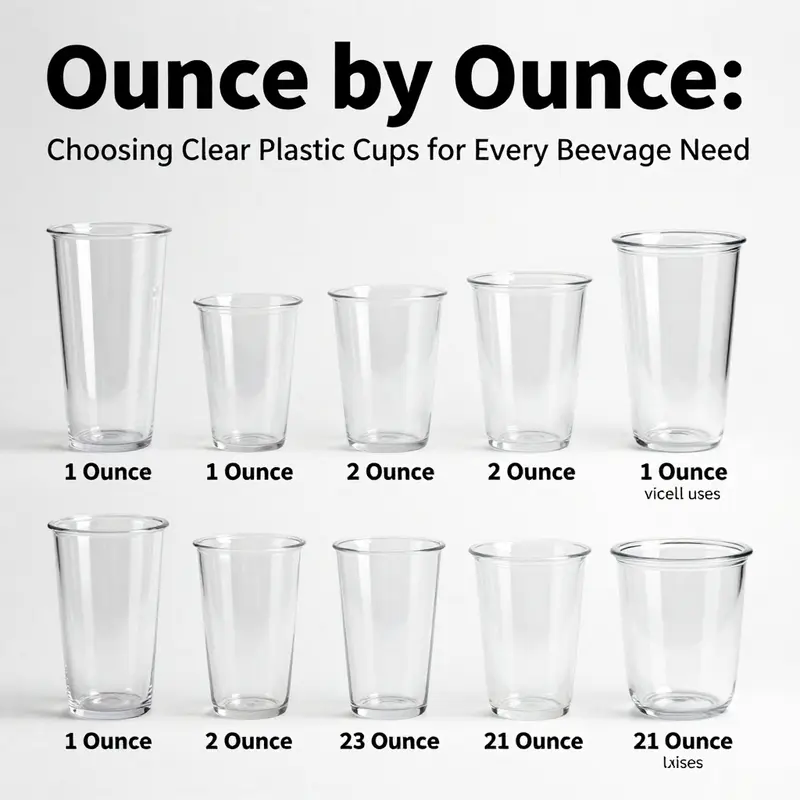
The question of how many ounces fit in a clear plastic cup opens a larger conversation about how people drink, share, and move beverages through social spaces. A single container can function as a tasting vessel, a take-away cup, or a personal workday companion, and the choice of size often signals intent as much as it serves a practical need. In examining the range from a tiny one-ounce format to a substantial 21-ounce tumbler, we see not only measurements but also the rhythm of how beverages travel from source to sip. The arc from miniature samples to larger, all-day containers mirrors the evolution of service contexts—from intimate tastings to everyday routines that hinge on portability, durability, and clarity. Each size is a deliberate answer to a specific moment of use, a tactical decision that shapes efficiency, perception, and even waste considerations.
Consider the smallest tier, the one-ounce cup. In many settings, this size is reserved for a single purpose: a controlled, bite-sized portion meant for evaluation rather than consumption in quantity. It’s a tool for tasting events, where chefs or product developers present minute samples that invite a dialogue about flavor, texture, and balance without committing the palate to a full serving. In commercial kitchens, these miniature cups support portion control, ensuring consistency across dozens or hundreds of samples with minimal waste. The one-ounce form also plays a role in events where guests mingle and sample a range of offerings, allowing organizers to curate exposure without overwhelming capacity. While modest in volume, this cup carries a distinct function in the ecosystem of beverage service, serving as a precise measurement instrument as much as a vessel of taste.
Moving up in size, the sixteen-ounce cup sits at a practical crossroads. Its popularity is tied to beverages that people tend to enjoy in solitary, on-the-go moments as well as during quick social gatherings. The sixteen-ounce format is often favored for iced coffee, cold brews, or other chilled drinks that benefit from a clear view of color and texture. The advantages of this size are twofold: first, its capacity accommodates a satisfying portion without prompting frequent refills; second, the durability and clarity of the container support a clean, appetizing presentation. Consumers appreciate the unobstructed view of the drink, which emphasizes uniformity of appearance and trust in the product’s freshness. For venues, the sixteen-ounce cup becomes a versatile default—large enough to feel generous, compact enough to fit standard cup holders, and resilient enough for day-long use in busy spaces. In practice, this size often represents a balance between experience and practicality, a point where the product communicates value without demanding excessive space or disposal.
Beyond the sixteen-ounce threshold, the twenty-one-ounce tumbler embodies the notion of longevity in a cup. This size is frequently positioned as a durable, multipurpose option that supports a fuller, more relaxed drinking experience. The tumbler format typically includes features that extend its utility: a sturdier profile, sometimes a handle for easier carrying, and better resistance to temperature fluctuations when used in outdoor settings. In many cases, twenty-one-ounce tumblers are marketed as reusable or at least reusable-friendly, highlighting their role in everyday life—whether indoors at a desk, outdoors on a campsite, or by a poolside. The appeal is straightforward: a larger capacity that reduces the frequency of trips to the beverage station, paired with a form that can withstand the rigors of daily errands and casual outings. The design considerations here touch on weight, balance, and ergonomic grip, ensuring that a larger cup remains comfortable to hold and easy to manage while on the move.
There is also a variant of the twenty-one-ounce family that is purpose-built for specific beverage profiles: the dome-lid cup designed to accommodate smoothies, frozen drinks, or other thick beverages. The dome lid creates a secure seal while preserving a generous cup height, often hovering around six and a half inches including the lid. This design accommodates foamed textures or blended ingredients without compromising the drink’s integrity during transport. The height and lid geometry work together to prevent splashes during service and allow for easy stacking and merchandising in crowded environments. This configuration is especially popular in venues that prioritize convenience and portability, where customers value a seamless, spill-resistant experience from counter to car or curbside pickup. The dome-lid variant reflects a broader trend in cup design: packaging that supports a wider range of textures, flavors, and consumption modes while maintaining a clear view of the beverage itself.
The spectrum from one to twenty-one ounces also reveals how size choices map to different service contexts. In high-volume settings, the shorter, wider formats of sixteen-ounce cups can streamline production lines and reduce the cognitive load on staff, creating a predictable workflow from order to delivery. Conversely, the twenty-one-ounce tumbler and its dome-lid counterparts optimize for lifestyle scenarios—outdoor events, travel, and casual, long-form consumption where the drink is part of an experience rather than a quick exchange. The interplay between portion size and function becomes particularly evident when we consider environmental and economic factors. A larger cup that is used for a longer spell of time can discourage refills and reduce the frequency of wasteful disposal, yet it also carries a higher per-piece material cost and may encourage bulk purchasing. The practical decision hinges on weighing convenience against resource use, an equation that businesses and households navigate differently depending on the context and the desired user experience.
In examining these sizes, it’s important to consider the material and manufacturing choices that make them viable across different environments. Clear plastic cups are typically molded from transparent polymers that showcase the beverage while ensuring a clean, neutral backdrop that helps the drink appear fresh. The wall thickness and the rim design influence everything from stackability to splash resistance, while the transparency supports visual assessment of the drink’s color and consistency. Durability is a crucial attribute, especially for cups intended for on-the-go use; a sturdy cup that resists cracking or puncture under typical handling conditions reduces the risk of spills and accidents. The capacity labels themselves are not mere numbers but reflections of a product’s intended life cycle: a one-ounce sample cup emphasizes precision and economy; a sixteen-ounce cup leans into daily practicality; a twenty-one-ounce tumbler nods to durability and multi-use potential; and the dome-lid variant integrates convenience with a consumer preference for sealable, travel-ready beverages. The design choices—how the cup is shaped, how it feels in hand, how it performs when filled with hot or cold liquids—shape not only user satisfaction but also the broader conversation about single-use versus reusable options in modern packaging.
For organizations and individuals planning events, cafes, or home-use routines, choosing a size is an exercise in scenario mapping. Question one centers on the expected pace of consumption: will guests be sampling, sipping, or savoring? If the goal is to offer a quick taste or a small portion, a one-ounce format can facilitate fairness and control while limiting waste. If the aim is a casual drink with enough volume to satisfy thirst during a commute or a break, a sixteen-ounce cup may be the most efficient choice, providing generous capacity without becoming cumbersome. If the use case involves long exposure to warm environments or an extended social moment, the twenty-one-ounce tumbler becomes a logical option, especially when paired with a lid and insulating walls. And for smoothies, shakes, or blended beverages, the dome-lid variant offers a reliable, portable solution that aligns with health-conscious, on-the-go appetites. The decision tree is pragmatic, yet it is also cultural: the size you choose sends a message about hospitality, efficiency, and the anticipated tempo of a gathering.
To illustrate the practical dimension, consider the broader ecosystem in which these cups circulate. A single size rarely stands alone; it sits alongside other containers, lids, sleeves, and packaging that collectively create the user experience. The six-pack or pack-sized presentation of cups influences inventory decisions for venues and households alike. The choice of a given size can also signal expectations about waste management, recycling, and sustainability practices, which increasingly factor into consumer perception and supplier selection. In the end, the range from one ounce to twenty-one ounces is less about a single metric than about a system: a spectrum that supports different moments of beverage interaction, each with its own merits and compromises. This understanding helps readers anticipate how a simple unit—the clear plastic cup—functions as a flexible tool in social life, work routines, and public venues. It also sets the stage for the next chapter, which will trace how these sizes translate into stocking strategies, consumer choices, and design innovations in the broader category of take-away and service packaging.
For readers who want to anchor these ideas with a concrete, real-world reference, a representative option in this category emphasizes the practical value of a 16-ounce, lid-equipped format for everyday use. disposable-16oz-kraft-single-wall-to-go-coffee-cups-with-paper-lid. This example highlights how such a size balances visibility, portability, and ease of service, while also illustrating how packaging design can support a smooth customer experience from counter to carry. As you move through the rest of the article, keep in mind that the precise ounce measurement matters, but it matters most in relation to the context of serving, the expectations of the audience, and the logistics of the space in which the beverage travels.
External resource: https://www.walmart.com/ip/Plastic-Cups-21-Ounce-Tumbler-Pack-of-6
Final thoughts
In conclusion, understanding the various ounce measurements in clear plastic cups is vital for any beverage service provider. Each size—from the small 1-ounce shot glass to the larger 21-ounce cup—serves a distinct purpose, impacting customer experience and operational efficiency. By carefully selecting the right size cups for your offerings, you can optimize service, cater to customer preferences, and enhance the overall beverage experience. With this knowledge, you’re well-equipped to make informed decisions that elevate your beverage service, ensuring satisfaction for both you and your customers.