
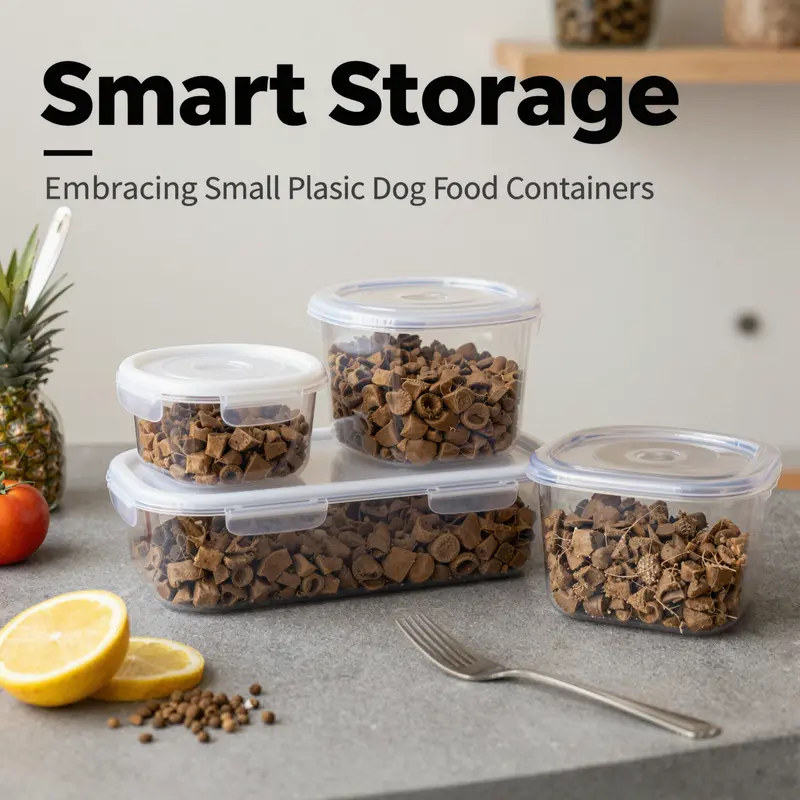
For operators in food-centric industries like bubble tea shops, restaurants, and catering services, efficient storage solutions extend beyond just human food. Just as you seek optimal ways to manage ingredients and supplies, the same principle applies to pet food storage. Small plastic dog food containers provide a practical and reliable option that aligns with your operational needs. These containers not only ensure freshness and quality but also complement your workspace with their thoughtful designs and stackable features. The journey through this article will uncover key design features that make these containers indispensable, explore current market trends and availability, and address the crucial health and safety considerations that impact both businesses and pet owners alike.
Guardians of Freshness: The Subtle Craft Behind Small Plastic Dog Food Containers
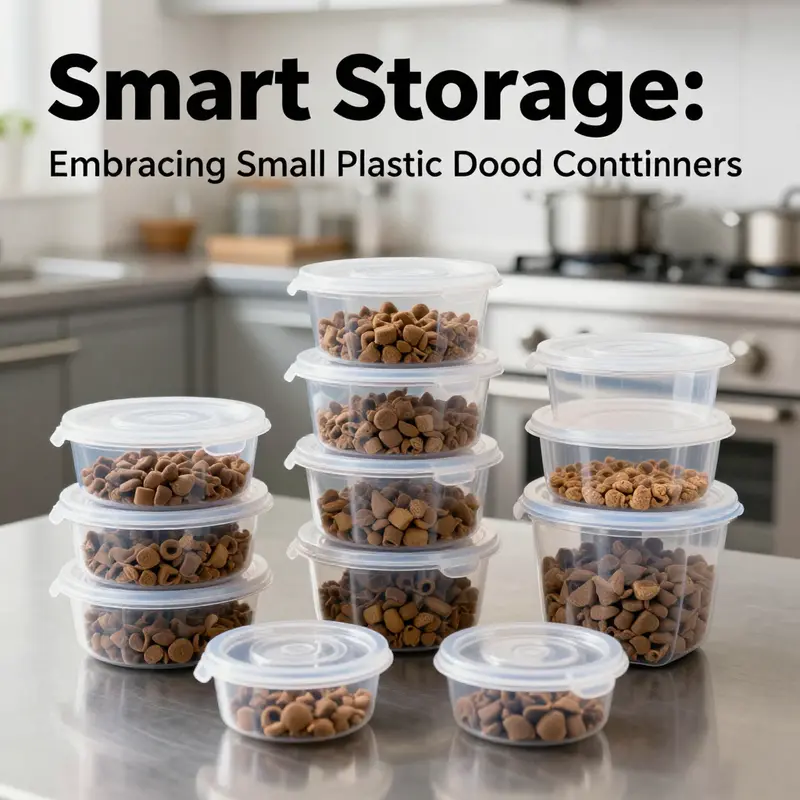
A dog’s daily routine is simple and faithful, but the little rituals that support it often go unseen. Among the tools that quietly sustain a pet’s wellness, the small plastic dog food container sits at the intersection of practicality and care. It is easy to overlook, yet its design determines whether a bowlful of kibble remains a nutritionally sound source of energy or becomes a compromised, staled portion. In the quiet hours of the morning, when a hand reaches for a compact, square container that fits neatly on a kitchen shelf, what happens next depends on a chain of decisions made in plastic and polymer. The container’s role is not merely to hold food; it is a guardian against moisture, air, light, and the everyday hazards of household life. The quality of its seal, the safety of its materials, and the cleverness of its form converge to preserve freshness, aroma, and nutrition for a hungry dog and a conscientious owner alike. That convergence is the essence of the chapter that follows, a narrative about design features that transform a simple storage vessel into a reliable partner in pet care, especially in homes where space is at a premium and every gram of kibble matters.
At the heart of any good small storage solution is its sealing mechanism. The most critical feature is the ability to create a near-airtight environment. This is not about luxury; it is about oxygen and moisture as enemies of dry kibble. When air seeps in, fats can oxidize, vitamins can degrade, and the subtle aroma that entices a dog to eat can fade. A high-quality container addresses this with a dual-locking system that works in concert with a gasket made of silicone. The gasket, selected with a hardness around 40 to 50 Shore A, forms a soft yet resilient seal that compresses evenly against the lid. This silicone layer does more than block air; it also blocks moisture and odours that can drift from a kitchen to a pet bowl. The dual-locking mechanism, which might take the form of a twist-top lid partnered with a tightly fitting ring or a press-and-lock action, serves as a guardian against accidental spills. In everyday use, a one-handed operation becomes a small but meaningful convenience, especially when a dog is waiting with hopeful eyes. The twist or press action is designed to be intuitive, reliable, and resistant to fatigue after repeated use. The goal is an interface that feels almost instinctive: a single confident motion that seals the container and locks in freshness. This sealing paradigm—gasket plus dual-lock—creates an environment where oxidation slows, mold growth is deterred, and the nutritional value of the kibble remains closer to its intended profile for longer.
Material safety underpins every design choice. The small plastic dog food container must be formed from food-grade, BPA-free plastics to ensure safety and longevity. The two materials most commonly recommended are polypropylene and high-density polyethylene. PP is renowned for its clarity, heat resistance (up to around 120°C), and lightness, making it a versatile choice for storage that might occasionally meet heat or dishwasher cycles. HDPE, by contrast, is celebrated for its impact resistance and durability, offering reliable performance in the rough-and-tumble realities of daily life—whether a bag of kibble is knocked off a shelf or packed into a travel tote. Both materials offer a balance of safety, durability, and practicality, and both accentuate a broader design philosophy: form should serve function without sacrificing safety. It is essential to avoid low-quality plastics that may leach substances or degrade over time, especially when containers are exposed to frequent handling or occasional heat during cleaning. In a world of constant consumer choice, the emphasis on food-grade, BPA-free plastics is less a trend and more a safeguard that supports long-term pet health.
Capacity and shape are not merely about numbers; they are about aligning with human habits and the rhythms of pet care. Small containers for daily or short-term feeding typically range from 100 g up to 500 g. This range mirrors the common practice of feeding a single dog for a day or a couple of days depending on the dog’s size and diet, while also accommodating a household with multiple pets or owners who prefer smaller, easily managed portions. The shape—often square or rectangular with compact dimensions such as around 12 cm by 12 cm by 8 cm—maximizes storage efficiency. In kitchen cabinets and pantry shelves that are filled with a variety of items, right-angled corners and flat faces prevent contents from rolling and allow multiple units to sit snugly against one another. This geometry also supports efficient stacking, a small but meaningful advantage for households making best use of limited space. The physical footprint matters not only for space but for handling. A container that feels balanced in hands, with a lid that sits flush and a base that remains stable when set on a countertop, reduces the chance of spills and makes daily use feel effortless rather than chore-like.
The practicalities of use and hygiene are where design begins to pay real dividends. Many small containers incorporate integrated measuring spoons, cleverly located inside the lid. This feature addresses the homeowner’s need for precise portions without hunting for a separate tool. It also reinforces good feeding habits by making portion control straightforward and repeatable. Lid design is equally significant. A push-button top or rotating latch can provide a one-handed operation, which is especially valuable when the other hand may be occupied with a leash or a shopping bag, or when a pet’s anticipation is high. The ease of use translates into consistency—owners are more likely to measure accurately if the mechanism is simple and dependable.
Hygiene is not an afterthought but a core attribute of a well-designed container. The interior should be smooth and free of crevices where food particles could accumulate. A seamless interior simplifies cleaning and reduces the risk of harboring bacteria or mold. Removable components further enhance hygiene because they allow thorough cleaning in a dishwasher or under running water. When lids, gaskets, and the measuring spoon are detachable, owners can ensure that every corner is accessible for cleaning and sanitizing. In practice, this translates to a container that can endure many cleaning cycles without losing its sealing performance or structural integrity. The design therefore encourages thorough hygiene practices by making it easy to maintain, while also safeguarding the contents from contamination that might arise from residual residues in hard-to-reach corners.
A nuanced design touch worth noting is light protection. Exposure to light accelerates the degradation of certain nutrients, particularly fat-soluble vitamins such as vitamins E and A. To combat this, many small containers are opaque or semi-opaque, which reduces light penetration and helps preserve nutritional quality. The choice between transparency and opacity is a balance between wanting to monitor food appearance and wanting to protect nutrients. In practice, the opacity of a container means owners can confidently store kibble in a way that guards sensory and nutritional attributes, without being forced to compromise on aesthetic considerations or the ability to locate a product quickly in a dim cabinet. The overall effect is a practical, no-nonsense approach to long-term storage in whittled-down spaces where every square inch and every extra minute matter.
Beyond these core elements, thoughtful design extends to how the container fits into the larger routines of pet care. Portability matters for households that travel with dogs or who store food in a living space where mobility is a constant. A lightweight, durable container with a secure seal travels well, reduces the risk of spills in transit, and keeps food fresh wherever it is taken. Stackability is another integral feature that supports organization in homes that juggle multiple pets, families, and schedules. When containers share a standardized footprint and lid profile, they can be nested or stacked with ease, enabling a compact, orderly storage system that still looks neat on kitchen shelves. This organization yields practical dividends: it saves time during busy mornings, reduces the likelihood of misplacing feeding supplies, and subtly reinforces a routine that supports a dog’s consistent feeding schedule. In this sense, design becomes a partner to daily life, not merely a gadget to tuck away on a pantry shelf.
The market for small plastic dog food containers reflects these design priorities, offering variants that emphasize portability, durability, and user-friendly operation while remaining mindful of safety. The versatility of features—air-tight seals, robust materials, practical capacities, and hygiene-conscious interiors—speaks to a consumer base that values reliability and ease as much as price. A good container does not tempt owners with fancy frills that complicate use; instead, it emphasizes a disciplined approach to storage that keeps a dog’s meals nutritious and appetizing, even as they pass through the rhythms of work, school, and weekend adventures. The elegance of a well-made container lies in its quiet effectiveness: a simple twist locks in freshness, a smooth interior invites thorough cleaning, and a compact form fits neatly into a kitchen or car trunk without demanding attention or space. In this way, the design features come together to support that everyday promise we owe to pets—the guarantee that nourishment stays ready, safe, and appealing.
The relationship between form and function in small plastic dog food containers also reveals a deeper commitment to sustainability and responsible ownership. While the primary job is to keep kibble fresh, the choice of materials and the durability of construction influence how often a owner replaces or repurchases storage solutions. A container that endures repeated use without cracking, warping, or losing its seal contributes to less waste and fewer trips to the store for replacements. In households that bulk-buy or rotate brands, the ability to reuse a container over many months becomes a tangible environmental benefit, aligning practical storage with a broader ethos of mindful consumption. The careful selection of materials—food-grade plastics that resist chemical leaching, combined with seals designed to endure regular cleaning—ensures that longevity and safety go hand in hand. In this sense, design is not merely about neatness or convenience; it is a statement about stewardship in everyday life.
As this chapter threads together the strands of sealing strength, material safety, capacity rationale, ergonomic handling, hygiene discipline, and light management, its overarching message remains clear: the small plastic dog food container is a finely tuned instrument. It transforms the act of measuring a daily portion into a dependable routine that supports a dog’s health and a owner’s peace of mind. It is a product of deliberate choices, where each element—silicone gaskets, dual-locking lids, durable, BPA-free plastics, and a form that respects both space and practicality—works in concert to deliver reliable performance. The quiet cadence of daily care becomes smoother when tools are designed to disappear into the background, letting the focus stay on the dog, the bowl, and the nourishment that sustains life. This is the essence of thoughtful design in practical pet care: not loud innovations, but reliable, repeatable, and safe experiences that help both the animal and the owner thrive in harmony.
In closing, the value of a well-conceived small plastic dog food container emerges from its everyday implications. It minimizes waste, protects nutrients, simplifies routines, and respects the constraints of modern living. Its sealing prowess keeps out the intrusions of moisture and odors, its materials stand up to the demands of daily use, and its form makes stacking and storage almost effortless. The integrated features—measuring tools, accessible lids, smooth interiors, removable parts, and light resistance—are not merely features on a list. They are the practical expressions of a design philosophy that values safety, efficiency, and the small but meaningful comforts of home life. When owners choose containers that embody these principles, they invest in a straightforward, durable solution that supports a dog’s health while keeping the household organized and calm. The result is a daily routine that feels less like a chore and more like a small, steady act of care, carried out with confidence and ease for years to come.
External resource: For a broader view on how plastics interact with food safety and to understand the rationale behind BPA-free choices, you can consult the following external resource: FDA BPA Guidance.
Small, Sustainable, and Stackable: Navigating Trends in the Market for Plastic Dog Food Containers
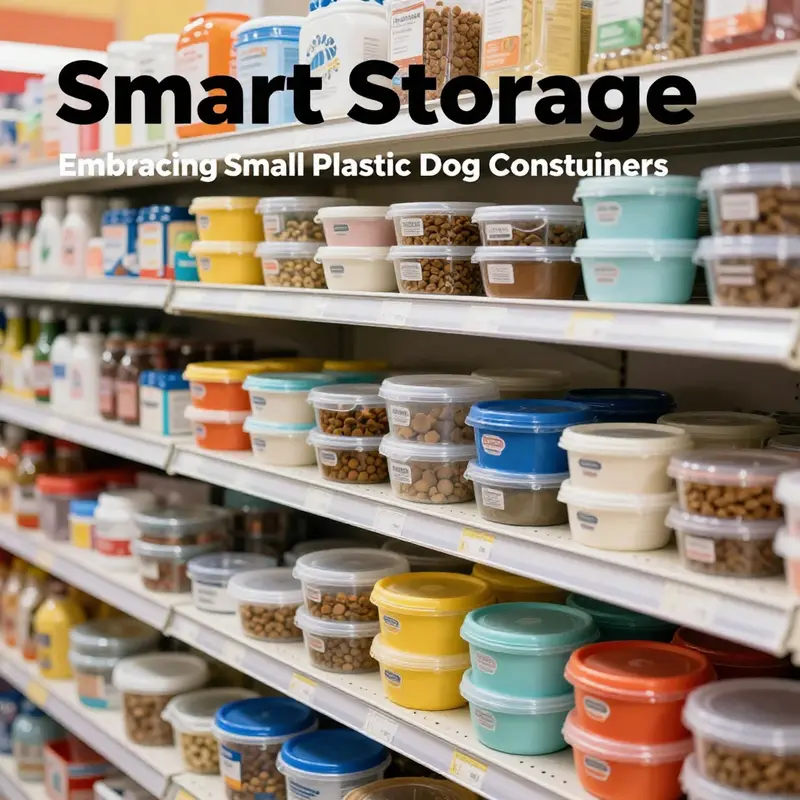
The quiet but steadfast workhorse of the home pantry, the small plastic dog food container, performs a deceptively simple job: it holds dry kibble in a way that protects freshness, minimizes odor, and fits neatly into limited storage space. The beauty of this utility lies in its ability to combine form and function without demanding a sacrifice in convenience. Yet the best containers do more than seal in scent or stay upright on a shelf. They reflect a careful blend of design thinking and material science, guided by real-world use—the way a lid clicks shut when a curious tail brushes past, the way a transparent wall allows a quick read of fill levels, and the way a compact, stackable silhouette makes room for the other daily rituals a pet household requires. Portability is not merely about carrying kibble to a car or on a weekend trip; it is about making it easy to portion meals, to move the supply between counter, car, and crate without spilling a precious crumb. Transparency matters because pet guardians want to know at a glance how much remains and when a new bag should go into the cart. Compactness and stackability are more than space-saving fantasies; they are practical solutions for homes that juggle multiple pets, limited kitchen real estate, and the messy realities of busy routines. In this sense, the design brief is both precise and intimate: create a container that preserves quality, reduces waste, and integrates seamlessly into lived space. And at the heart of this brief sits the airtight seal, the feature that makes or breaks the store shelf promise. An effective seal prevents the exchange of air that accelerates staling, staves off moisture uptake, and suppresses mold growth—the invisible guardians of kibble integrity. When paired with a dependable locking mechanism or a tight gasket, the lid becomes not just a lid but a guardian of texture, aroma, and nutrition. This is especially important for kibble that can crumble or become stale if exposed to even modest moisture or temperature swings. The value proposition of small containers, then, is not simply about keeping kibble dry; it is about preserving the essential sensory and nutritional cues that owners expect when they reach for a meal for their dog. The materials chosen for these containers have evolved in response to safety concerns and practical realities. BPA-free plastics such as polypropylene (PP) and polystyrene (PS) have long dominated the landscape because they offer a balance of light weight, durability, and affordability. They survive the daily wear of opening and closing, resist cracking if knocked over, and tolerate the cold and heat cycles that can occur in kitchen storage or car trunks during travel. Yet even as these materials serve well, the conversation around plastic packaging has broadened to include questions about environmental stewardship and long-term impact. The conversation is not about demonizing plastic; it is about designing better plastic, and, in some cases, choosing alternative materials that better align with the values of sustainability-minded guardians and the regulatory environments that shape product design. In this tension between convenience and responsibility, a new equilibrium is emerging. Consumers increasingly demand transparency about sourcing and end-of-life fate, and they are willing to trade some cost or convenience for packaging that signals responsibility. This shift spans not only the choice of resealable lids and durable bodies but also the broader ecosystem in which these containers exist. As a result, the market is expanding beyond a single material script toward a more diverse palette that includes recyclable plastics like PET or HDPE, biodegradable composites, and even metal or glass options for those who want a longer, more inert shelf life and a finish that many guardians associate with longevity. In this sense, small plastic dog food containers are no longer a single product category, but a point of convergence for design, materials science, and evolving consumer values. The market responds to these blended demands with a spectrum of options designed to fit into a range of moments—from quick daily use to long-term bulk storage—and a spectrum of spaces, from a compact apartment pantry to a garage shelf that holds multiple pet supplies. The arced arc of this evolution follows a practical arc: households bunker more food in bulk to save time and money, then seek to minimize the downstream waste that bulk purchases can generate. The containers must therefore do double duty—hold up under heavier use while also being easier to recycle or repurpose when their initial purpose is fulfilled. Retailers and manufacturers have taken note. The landscape now includes products designed for easier disassembly, clearer labeling about materials, and the possibility of refilling or reusing the containers in the same household. In many markets, major retailers and online platforms are expanding their catalogs to highlight eco-friendly packaging solutions that align with consumer goals for sustainability, safety, and convenience. Labels such as BPA-free, recyclable, or compostable increasingly appear, signaling a commitment to a broader lifecycle story beyond the shelf. This shift is not just a trend; it reflects deeper changes in consumer expectations and regulatory signals that shape what is available at point of sale. The reasons are both practical and aspirational. Practically, households are increasingly mindful of space and waste. The accordion-like growth of pet ownership, including households with multiple dogs or a dog and a cat, means more kibble, more containers, and more opportunities for clutter. Stackable designs reduce the footprint of storage, and modular lids or clips can simplify organization when different foods or portions must be kept separate. Aspirationally, guardians want products that align with a sense of stewardship for the planet. The idea that a well-designed container can reduce plastic waste over time—through longer life, easier recycling, or compatibility with refill systems—appeals to a broad audience. The market’s speed in responding to this demand has been notable. Online platforms have become testing grounds for new packaging concepts because they allow quick iterations and direct feedback from customers who share photos of their organized pantries and their pet’s meals. The result is a virtuous loop: more options for sustainable packaging appear, customers reward those options with purchases and reviews, and retailers escalate the visibility of these eco-conscious choices. The data supports this momentum. A wider market view shows that the global sustainable packaging segment within the pet care industry is growing at a robust pace, driven by both consumer demand and regulatory impetus. In the United States and Europe, several regions have introduced policies that push manufacturers to rethink packaging design, from the amount of plastic used to the end-of-life options available to consumers. These regulatory pressures often translate into practical design features, such as the use of materials that are easier to recycle, clearer labeling about recyclability, and standardized sizes that facilitate sorting in curbside programs. For many guardians, the verification of a product’s safety and sustainability matters as much as the product’s price or convenience. Brand transparency becomes a deciding factor in what ends up on the shelf and, by extension, which containers find a home in a dog’s daily routine. This demand for transparency also pushes suppliers to improve their supply chain traceability. Guardians increasingly want to know where the plastics originate, how much recycled content is used, and what commitments exist for responsible end-of-life management. In practice, this translates into packaging lines that provide more information in the same footprint: clearer symbols, more explicit material descriptions, and a willingness to share third-party certifications that verify safety and recyclability. The consumer’s preference for durable, reusable, or refillable options is shaping new lines that propose alternative endings for the packaging life cycle. For example, some providers are exploring refillable container systems that allow households to reduce packaging waste by purchasing refills rather than a new container each time. The idea is to decouple the packaging from the food purchase, enabling a loop in which the container can be washed, reused, and sent back into circulation for another round of use. Consumers who gravitate toward this model appreciate both its environmental implications and its practical efficiency: fewer shipments of new containers, less packing material to dispose of, and a perceived higher value attached to a product that supports reusability. The success of such approaches depends on a simple yet critical factor: the container’s design must tolerate repeated use, even when the product inside changes. Easy-to-clean surfaces, secure lids that remain gasketed after multiple cycles, and predictable performance across washing cycles all contribute to a more sustainable product experience. The market’s embrace of sustainability does not come at the expense of convenience. On the contrary, many guardians report that durable, well-sealed containers simplify life. A reliable seal reduces the risk of spills during transit or storage, a benefit that becomes especially meaningful when a household is juggling travel, yard work, or the rhythm of multiple mealtimes. In addition to traditional plastic options, the market has broadened to include materials that are inherently more recyclable or longer-lasting. PET and HDPE, for instance, offer higher recyclability rates in many regions and are widely accepted by curbside programs. Metal containers, while heavier, can provide a robust long-term solution for guardians who want to keep kibble for extended periods in controlled environments. Glass jars, with their inert surfaces and non-porous interiors, appeal to guardians seeking a long-term storage option, provided they can manage the breakage risk and weight. The choice among these materials often comes down to a balancing act: weight versus durability, initial cost versus lifetime value, and the ease of recycling in a given locale. The consumer-facing story is complemented by a broader, systemic shift: brands, retailers, and policymakers are collaborating to reduce the environmental footprint of pet care packaging without compromising the trust that guardians place in the safety and quality of their dog’s food. Market signals—such as the evident expansion of categories that emphasize recyclability, the growth of reuse-and-refill concepts, and the emergence of certifications that attest to lower environmental impact—indicate that the market for small containers is not simply growing in size but evolving in nature. The trend toward more sustainable packaging aligns with a larger current in consumer goods where packaging is increasingly seen as part of the product’s value proposition, not merely an afterthought. Even within the niche of small storage solutions, guardians are attentive to the lifecycle story. When a container is reviewed, its recyclability or compostability is considered alongside its performance. If a container does not serve a long-term purpose or cannot be easily recycled in the local waste system, it risks becoming waste rather than a reusable asset. This awareness has political and economic echoes as well. In regions with strict waste management policies, producers may find it advantageous to standardize container sizes to streamline recycling processes, reducing contamination and making sorting simpler for municipal systems. Some guardians respond to these policies with a practical mindset: they purchase the most efficient container for their space and their climate, then choose refillable options that reduce the frequency with which new containers enter the home. The result is a market that values not only the container’s immediate performance but its behavior over time—how it ages, whether it remains airtight after repeated openings, whether its materials resist fading or cracking under sunlight, and whether it contributes to a house that is easier to manage and cleaner in practice. In terms of availability, the landscape is shaped by the channels through which guardians buy. Online marketplaces offer a breadth of options, from compact travel-inspired designs to larger, more durable configurations intended for home storage. Physical retailers contribute tactile feedback—how the lid feels when latched, how easy it is to grip the base, and how the container sits on a shelf with other items. The accessibility of information about materials and safety is improving as well. Clear labeling, third-party certifications, and easy-to-read recycling codes help guardians compare products without wading through dense technical literature. This transparency has a direct effect on consumer trust and, ultimately, on the market’s capacity to foster sustainable choices without sacrificing the daily practicality that families rely on. The broader context for these developments is the ongoing global conversation about packaging sustainability. The pet care sector is increasingly seen as a barometer for how households approach everyday waste. The momentum behind sustainable packaging is not a novelty; it reflects a long-term trend toward products that offer performance, safety, and responsibility in equal measure. Within this framework, small plastic dog food containers occupy a critical junction where decisions about materials, design, and end-of-life options converge. It is here that the industry tests the limits of what is possible in terms of protecting a dog’s nutrition while reducing environmental impact. The numbers behind this shift are telling. Analysts report that the global market for sustainable packaging in pet care is projected to grow at a compound annual growth rate (CAGR) of about 8.3 percent from 2023 to 2030, a signal that consumer preference and regulatory change are driving ongoing investment. This momentum is reinforced by policy developments in the European Union that push manufacturers toward greater transparency, responsibility, and recycling of packaging materials. In the United States, a range of state-level initiatives aimed at reducing single-use plastics has created a more favorable environment for packaging innovations that emphasize longevity and recyclability. For guardians who want to align their purchases with these larger frameworks, the availability of small containers that emphasize end-of-life solutions is increasing. Producers are experimenting with refillable systems that encourage households to purchase refills for a durable container rather than replacing the container with a new one, a model that, if implemented well, can significantly cut down on packaging waste over the product’s lifetime. The shift toward sustainable packaging has also opened up space for brands that emphasize traceability. Consumers are increasingly asking, not only about whether a container is recyclable, but how the materials are sourced, what percentage of recycled content is used, and what the producer does to minimize environmental impact across the supply chain. In addition to the practical and environmental benefits, the market is witnessing an increasing emphasis on design for longevity. Containers are being engineered to resist the wear and tear of daily use, to be easy to clean in home dishwashers or by hand, and to withstand the rigors of travel when a family is on the move. The aim is not merely to create a durable or aesthetically pleasing product, but to build a container that becomes an enduring part of a household routine rather than a disposable accessory. The result is a more mature market where a small plastic dog food container can serve as a substantial element of a thoughtful pet care system. Guardians who are led by these trends may look for features such as modular dimensions that fit inside cabinets or pantry units with vertical space, lids that seal reliably after repeated washing, and bases that resist cracking or warping under temperature changes. They may also look for branding cues in the packaging that communicate sustainability, such as a clear commitment to recycled content or easy recyclability in common municipal programs. It is not only the container itself but the ecosystem around it that matters. Refillable systems, when implemented well, create a circular model in which a guardian can top up food without introducing a new container every time. This underscores a broader shift toward packaging as a shared resource within a household, rather than a single-use object. Such systems can also reduce the overall cost of ownership for pet care storage, even if the initial purchase price of a refillable system is higher. Guardians who adopt these models tend to report a sense of satisfaction about contributing to a more sustainable lifestyle, and they also appreciate the clarity that comes with standardized, durable designs. As the market continues to evolve, it will be essential to keep an eye on how regulation, consumer behavior, and technological advances interact. The 8.3 percent CAGR indicates momentum, but it also signals ongoing change in how products are designed, shipped, and recycled. For readers who want to explore more about the broader context of sustainable pet care packaging, a major external resource provides a reliable benchmark for industry trends and market forecasts: https://www.statista.com/statistics/1257964/global-sustainable-pet-care-packaging-market-size/. In practical terms, the takeaway for guardians is that the best small containers will be those that balance the everyday demands of feeding a dog with a commitment to responsible packaging. A true value proposition in this space is not merely a sealed vessel but a small, well-constructed system that respects a kitchen’s space, manages waste, and communicates transparency about its own life cycle. The modern consumer increasingly expects this, and retailers are increasingly ready to meet it. One clue to how this is playing out in real terms can be found in the adoption of packaging solutions that prioritize environmental considerations without sacrificing function. The market is gradually embracing designs that allow for easy recycling, straightforward disassembly, and clear signaling of end-of-life options. In the end, the small plastic dog food container is not a standalone object. It is part of a daily routine that intersects with kitchen organization, pet health, and environmental stewardship. It stands at the intersection of practicality and principle, a compact vessel that carries nutrition and, increasingly, a promise that the way we store, protect, and dispose of pet food can reflect the values many guardians want to pass on to future generations of pets and households. This vision is not a distant ideal. It is unfolding in real products, on shelves and in online catalogs, where design teams are continually testing new materials, closures, and forms that keep kibble fresh while reducing waste and improving recyclability. As more guardians choose containers that align with these goals, the small plastic dog food container will continue to evolve into a more sustainable, more reliable, and more space-efficient part of the home. External readers seeking a broader market context can consult the linked external resource for detailed industry data and forecasts. For deeper insight into the market dynamics shaping sustainable pet care packaging, see the Statista report on Global Sustainable Pet Care Packaging Market Size: https://www.statista.com/statistics/1257964/global-sustainable-pet-care-packaging-market-size/.
Safe Storage for Spoiled-Free Kibble: Health, Safety, and Small Plastic Dog Food Containers
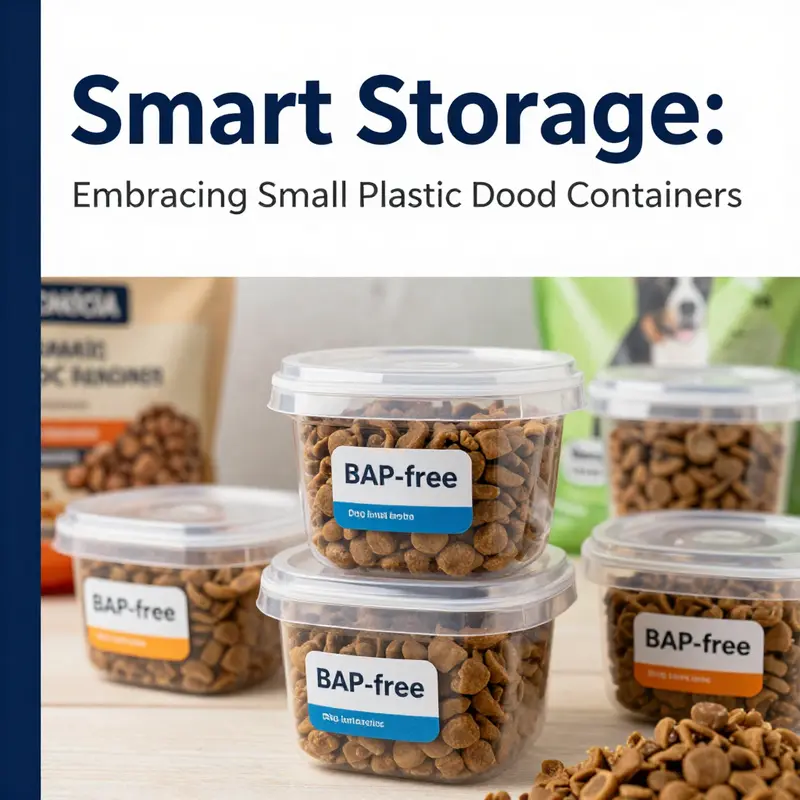
Every pet owner wants the simplest possible way to keep a dog’s daily meals fresh, safe, and easy to manage. Small plastic dog food containers promise portability, compact design, and predictable organization, but behind that convenience lies a cluster of health and safety considerations that can affect a canine companion’s well being. A chapter like this invites readers to move beyond the surface appeal of a neat pantry and into the material realities that determine whether a container protects or compromises what a dog eats. The focus here is not merely about keeping kibble from spilling; it is about how the very materials and construction methods used to create small plastic storage options influence taste, aroma, texture, and, relatedly, long-term health outcomes for dogs and the people who care for them. The goal is practical guidance that helps owners select storage solutions that honor safety as a baseline, even when that means choosing form and function over cheaper, easier options.
At the heart of the issue is the wide spectrum of plastics used to manufacture food-contact containers. Many common plastics are designed to resist chemicals during use, but their safety profiles can vary dramatically depending on the formulation, the purity of the resin, and how the product is manufactured. The most important risk is chemical migration: substances from the plastic can migrate into the dog food, especially when containers are exposed to heat, fatty or acidic ingredients, or prolonged storage. For example, certain additives and monomer residues can migrate at low levels, and in sensitive animals or under particular conditions, even small amounts may cause adverse effects. While many brands label their products as safe for food contact, not all plastics used in consumer packaging meet the same standards or undergo the same level of testing. That is why a careful evaluation of materials matters.
The foundational material most often recommended for food storage is food-grade polypropylene, or PP. PP is valued for its relative chemical inertness, heat resistance, and general stability under normal kitchen conditions. When a container is truly food-grade PP, it is designed to minimize migration of additives and monomers into food, a crucial consideration for pet foods that are ingested over time. Yet not all PP is created equal. Some products may utilize recycled content or lower-grade plastics that, while cheaper, do not guarantee the same resistance to chemical migration or the same stability when subjected to heat or sunlight. This is why the labeling and certification on a container can be as important as its shape or size. A label such as “BPA-free” is a useful signal, but it should be paired with independent testing and clear material declarations to be truly meaningful for a pet’s long-term safety.
The concern about bisphenol A (BPA) has shifted consumer expectations toward BPA-free options. BPA, a constituent used in some polycarbonate plastics, has been linked to endocrine-disrupting effects in animals, and by extension in dogs, when leached into food. Modern containers frequently avoid BPA entirely, but the presence of BPA-free labeling alone does not guarantee safety. It is essential to consider the entire formulation and to look for third-party certifications that verify compliance with safety standards. Independent testing bodies such as SGS or TÜV are examples of organizations that can lend credibility to a product’s safety claims. When a container carries a certification, it provides an additional layer of assurance beyond the manufacturer’s assurances. In practice, this means looking for a combination of material designation (food-grade PP or an equivalent inert material), a BPA-free claim, and third-party verification to support a complete safety profile.
Another dimension of safety concerns the plastics’ physical condition. A container may be technically safe when new, but scratches, cracks, or a degraded interior surface can become invitation points for bacteria and mold. Food residues left behind after feeding sessions can create micro-environments where microbial growth thrives, particularly when temperatures are not ideal or when humidity is high. A smooth, seamless interior is far easier to clean thoroughly than a container with textures, seams, or crevices. This principle extends to lids as well; an airtight seal is critical not only to preserve freshness but to reduce air exchange that can introduce moisture and contaminants. The emphasis on airtight lids, easy-to-clean interiors, and robust sealing mechanisms is a practical safeguard against spoilage, odor development, and microbial proliferation that can undermine a dog’s health over time. A well-made seal helps maintain the kibble’s natural aroma and texture, which is especially important for dogs with sensitive palates or those who are reluctant to eat when scent or flavor has degraded.
In real-world use, owners often face a tension between convenience and safety. Plastic containers are light, inexpensive, and ideal for travel or small living spaces. They also enable portioning so that dogs receive consistent amounts at feeding times. Yet the convenience may tempt shortcuts: leaving kibble in the container for extended periods, storing near heat sources like sunlight through a window, or failing to wash and dry thoroughly after each use. Each habit can undermine the container’s protective role. The repeated cycle of filling, sealing, and opening exposes the interior to moisture, residues, and airborne microbes. Even with an airtight lid, neglecting routine cleaning can introduce odor and reduce the container’s effectiveness as a barrier to contamination. The healthiest practice is a disciplined routine that treats the container as a food-contact surface. Regular washing with a mild, pet-safe detergent, thorough drying, and occasional sanitization with a safe sanitizer can preserve both the container’s integrity and the kibble’s quality.
For households that puzzle over whether plastic storage remains the best option, it is valuable to consider the broader ecosystem of storage materials while staying anchored to pet safety. Stainless steel and glass offer inert alternatives that do not degrade or leach chemicals over time. Stainless steel, in particular, presents a durable option that resists scratching and bacteria more effectively than many plastics. Glass, while heavier, does not impart any chemical residues and is easy to clean to a high standard. These materials can be especially appealing for long-term storage or for dogs with known sensitivities to certain plastic components. For pet owners who value longevity and inertness, the choice between plastic and these alternatives becomes a trade-off between weight, cost, and the risk profile of the dog’s specific health needs. The decision is personal and situational, not universal. A household that camps, travels, or has a compact living area might lean into plastic for its portability, while a home that keeps kibble in a pantry with stable climate control might favor stainless or glass for the long haul.
Beyond material safety, labeling practices deserve careful attention. “Food-grade” alone does not guarantee perfect safety in every context. A container could be labeled as suitable for general food storage, yet still present risks if it is not manufactured under stringent controls, or if it contains recycled components with uncertain chemical histories. A practical approach is to seek containers that clearly state food-grade quality, provide detailed material declarations, and carry independent certifications. Certifications do more than reassure; they reflect a process that includes controlled manufacturing environments, validated testing, and traceable supply chains. When shopping, buyers should read the fine print on the packaging, verify the presence of an inert interior surface, and confirm that the product explicitly states it is tested for food contact safety. In addition to chemical safety, the design should promote hygiene: smooth corners, rounded edges, and minimal crevices to avoid food entrapment that can harbor microbes.
A pet’s health often hinges on straightforward hygiene practices. The best containers are those that respond to that simple premise with clear, actionable cleaning steps. For most plastic containers, hot water and mild detergent are sufficient for routine washing, followed by thorough air drying. Dishwashers can be convenient, but they are not universally safe for all plastics. Some plastics deform or degrade when exposed to high heat, which can compromise the seal and create micro-channels where odors and contaminants accumulate. If a dishwasher is used, it is prudent to check manufacturer guidelines and ensure the container is labeled dishwasher-safe for the intended temperature and cycle. For owners who prefer hand washing, a gentle brush with soft bristles to reach interior corners, paired with a rinse that leaves no soapy residue, is effective. The goal is to avoid harsh abrasives or scouring pads that scratch the surface, creating micro-niches where bacteria can hide. Drying thoroughly is equally essential; residual moisture can foster mold growth, especially in humid climates or in homes with limited air circulation.
Storage decisions extend into how the container is used in daily routines. Portion control can reduce waste and simplify feeding for dogs with appetite fluctuations. When containers are used for bulk purchases, keeping a clearly labeled rotation system, such as a first-in, first-out approach, helps preserve kibble quality. A well-organized system reduces the chance of forgetting to seal after each use, which in turn minimizes exposure to air and potential contaminants. Good practice also includes a sustainable consideration: how to dispose of or recycle the container at the end of its life. Some plastics are widely recyclable, but recycling streams vary by region and by the type of plastic. Understanding local recycling guidelines helps minimize environmental impact while maintaining safety standards for the food-contact products during their use.
In considering the broader landscape of storage choices, many pet owners appreciate a balanced view that weighs convenience against safety. The container’s size should fit readily into pantry shelves or travel bags without encouraging overfilling, which can hamper the seal or make the container harder to close. A compact design that is easy to grip and pour supports a practical feeding routine and reduces the risk of accidental spills that could attract pests or indoors odors. The lid’s locking mechanism, the integrity of the seal, and the presence of any venting features should be evaluated for their role in maintaining freshness and preventing moisture ingress. A robust seal can be the difference between kibble that stays crisp for weeks and kibble that becomes soft or moldy. In this sense, the health and safety of a dog food container are not simply about avoiding toxic substances; they also hinge on how well the container preserves sensory qualities like scent and texture that dogs rely on to accept their meals.
To provide a concrete, practical frame for decision making, consider the following guidance. First, verify material safety by looking for a clearly labeled food-grade plastic, preferably PP, with no BPA and with evidence of third-party testing. Second, inspect the interior for a smooth, seamless surface that can be cleaned easily. Third, test the lid for a truly airtight seal, checking for leaks and ensuring the seal remains robust after repeated opening and closing. Fourth, confirm dishwasher compatibility or identify a cleaning regimen that avoids damage to the interior. Fifth, reflect on long-term storage needs: will you keep kibble in this container for several weeks or months? If the answer is yes, it may be worth prioritizing durability and inertness, or even considering a different material for part of the storage system. Finally, remember that safety is a continuum. A container that excels in one dimension may fall short in another. Striving for a balanced, well-supported choice is the prudent path for responsible pet stewardship.
The governance environment around food-contact materials adds an important layer of assurance for consumers who want to be confident in their purchases. Regulatory bodies emphasize that only certain plastics are approved for contact with food products, and they encourage manufacturers to maintain clear, verifiable standards. These standards often encompass the composition of the resin, the presence of potentially harmful additives, the ability to withstand typical domestic conditions, and the reliability of labeling. For pet owners who want to go beyond marketing claims, looking for explicit material declarations, safety certifications, and independent verification can be one of the most effective ways to protect a dog’s health. The reality is that the best choices are those that combine transparent information with careful handling practices that reduce risk. Keeping a dog’s food in containers that are clearly designed and tested for safety is a straightforward step toward maintaining nutritional integrity and well-being.
In the end, safety in small plastic dog food containers is not a single feature but a constellation of material integrity, manufacturing quality, hygiene-friendly design, and prudent usage. The environment in which a dog lives, a household’s tolerance for weight and travel, and a guardian’s commitment to cleanliness all influence which container makes the most sense. For some households, plastic remains an optimal choice because it offers portability, affordability, and space-efficient storage. For others, the same decision might tilt toward materials that resist degradation or leachables more reliably, even if those alternatives carry higher upfront costs. The overarching principle is straightforward: select a container whose materials, construction, and certification align with the dog’s daily dietary reality and the household’s hygiene practices. When these align, a small plastic container can be more than a convenient accessory; it can be a reliable, health-preserving partner in daily pet care.
For readers who want a broader perspective on storage materials beyond plastic, a useful comparison point can be found in the discussion of kraft paper-based storage options. Kraft paper food storage solutions offer a different set of strengths, including natural material aesthetics and packaging that emphasizes compostable or recyclable end-of-life considerations. While not a direct substitute for every scenario, these options illustrate how packaging choices influence daily routines, waste streams, and environmental considerations. By exploring such alternatives, readers can make informed trade-offs that respect both pet safety and sustainable practices. Kraft paper food storage solutions provide a tangible example of how markets respond to consumer demand for safer, more responsible storage options, even when the primary use case is not dog food.
As a closing reflection, the health and safety of small plastic dog food containers rest on a thoughtful combination of material science, regulatory guidance, and disciplined maintenance. The science points toward food-grade, inert plastics with reliable seals and easy-clean interiors. The regulatory lens reinforces the importance of explicit material declarations and third-party verifications. The daily routine of feeding, cleaning, and storing is where theory meets practice; habits, more than any single feature, determine whether a container protects or compromises a dog’s nutrition and health. By embracing informed choices and consistent upkeep, guardians can ensure that convenience does not come at the cost of safety. And in a world where a dog’s food is a daily priority, that alignment between form and function matters more than a pretty lid or a glossy label. The result is a storage solution that supports a dog’s vitality, a caregiver’s peace of mind, and a kitchen environment that remains clean, orderly, and safe over time.
External reference: for further detail on materials safety and food-contact standards, see the U.S. FDA guidance on Food Contact Substances. https://www.fda.gov/food/food-contact-materials-ingredients/federal-food-contact-materials-standards
Final thoughts
The importance of small plastic dog food containers extends far beyond mere storage. For operators involved in any food-related industry—whether serving bubble tea, managing restaurants, or planning events—adopting these practical solutions promotes not only organizational efficiency but also health safety for pets. With their focus on durable, quality materials, stackability, and market accessibility, these containers are a smart addition to your inventory. By investing in credible storage solutions, you’re not just simplifying your workspace; you’re also ensuring that furry companions receive the quality nutrition they deserve. Make small plastic dog food containers an integral part of your operational framework today.