
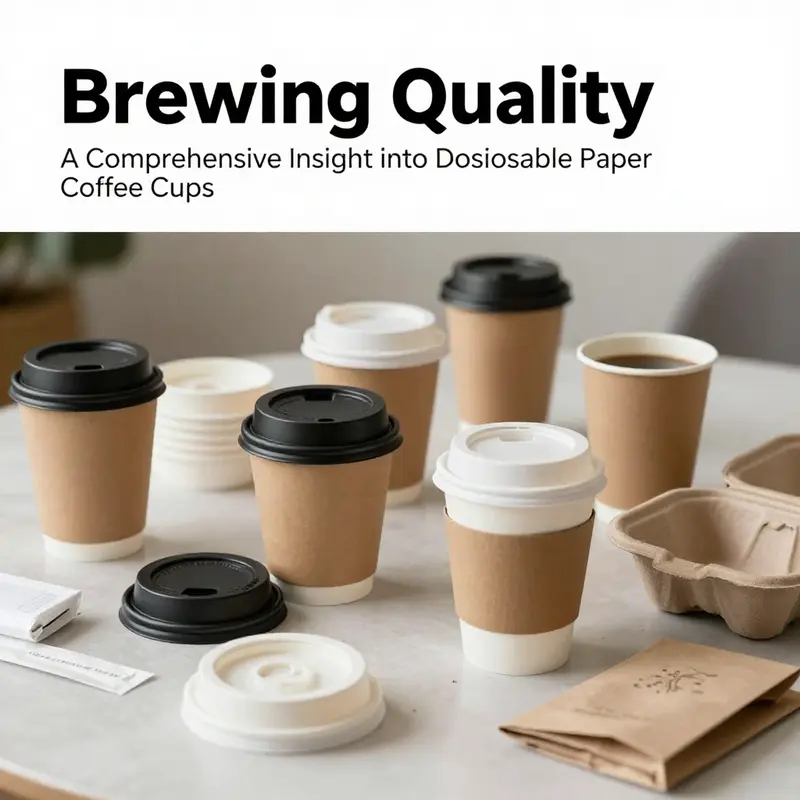
As cup designs evolve to meet the ever-growing needs of businesses in the food and beverage industry, disposable paper coffee cups with lids remain an essential solution. From coffee shops and tea houses to catering services and event planners, these cups serve as a reliable and efficient way to serve beverages on the go. This exploration will cover the entire journey of these cups, including their production processes, economic considerations, the essential supplier networks, and the rising trends in sustainability. Each section unveils the critical elements to help your business make informed choices for effective operations and customer satisfaction.
From Pulp to Sip: The Integrated Production Chain of Lidded Disposable Paper Cups
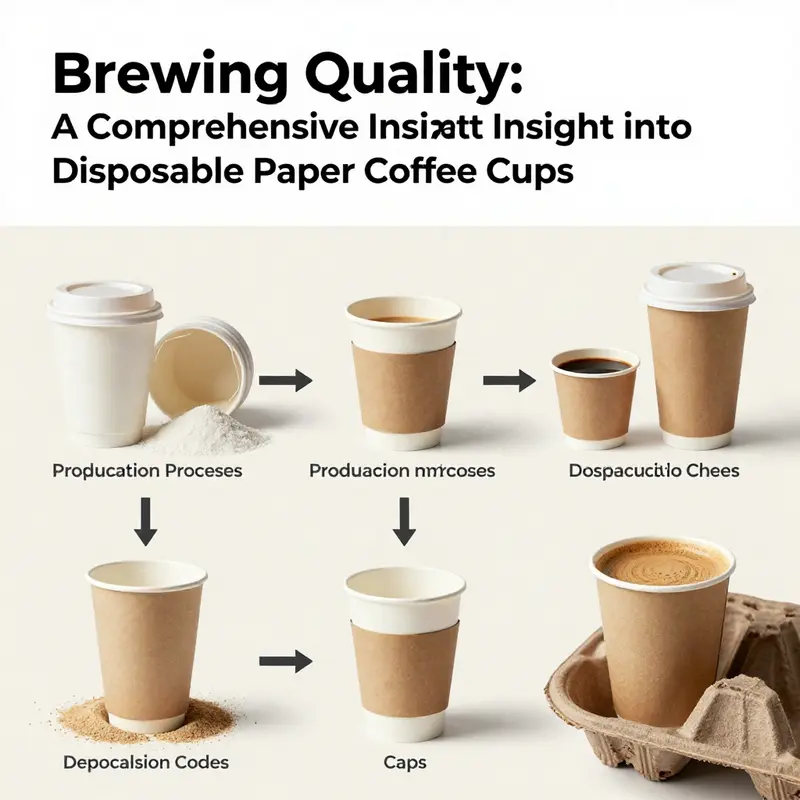
The production floor where disposable paper cups with lids come to life reads less like a factory and more like a tightly choreographed sequence. Every step, from the first touch of raw pulp to the final seal of a lid, is calibrated to balance safety, speed, and sustainability. In the busiest industrial zones of China, particularly the large ecosystems of Guangdong, Hubei, and Zhejiang, this choreography unfolds with a precision born of decades of refinement. The facilities are not merely lines of machines; they are interconnected networks that bring together raw material processing, coating, forming, printing, and lid molding under one roof. The result is a seamless flow that can shift from hundreds of thousands to millions of units in a single month, driven by demand from coffee shops, catering services, and consumer-packaged beverage programs that prize reliability as much as convenience. The common thread is a relentless focus on translating raw fiber into a product that can hold hot or cold beverages, travel without leaks, and arrive ready for branding and reuse or recycling depending on the buyer’s strategy.
Material preparation marks the quiet opening act of this production symphony. The journey begins with food-grade paperboard, typically engineered in the 180–280 gsm range. This weight provides the right balance of rigidity and insulation to keep hot drinks from scalding the fingers while avoiding excessive bulk that would complicate handling and loading into automated lines. The board is then coated—most commonly with polyethylene—to form a barrier against leaks and to preserve thermal integrity. The coating step is more than a surface treatment; it is a carefully controlled layer that governs how the cup behaves under heat, how it resists moisture from steam and condensation, and how it interacts with the sleeve and lid in the final assembly. Coating consistency matters. A thin, uniform film prevents delamination and ensures that printing and branding on the exterior remain legible even after exposure to damp heat in a consumer setting.
As the coated substrate moves along the line, shaping and forming take center stage. High-speed die-cutting machinery punches out cup bodies with exacting tolerances. The curved geometry must be precise enough to stack efficiently, resist deformation during filling, and maintain a smooth interior surface so that liquids do not cling to rough edges. The same line often handles the production of the lids, which are produced through injection molding. Lids can be fashioned from polyethylene or from biodegradable options such as polylactic acid, with the latter increasingly preferred as buyers seek compostable alternatives that align with EU and North American environmental standards like OK Compost and ASTM D6400. The choice of material for lids is not merely about cost; it reflects whether the packaging system will fit into a broader sustainability strategy, including composting infrastructure and consumer acceptance.
In the realm of customization, the line does not stop at shape and size. Branding steps in through flexographic or digital printing on the cup body, enabling logos, color schemes, and messaging that help a beverage program stand out in a crowded market. Printing on a curved surface is a technical challenge, but modern presses manage high-resolution images without sacrificing throughput. The integration of branding into the production sequence is a quiet reminder that these cups are not just containers; they are vehicles for brand storytelling and consumer recognition. The ability to customize at meaningful MOQs—often starting in the thousands—means a business can scale its branding program in step with its growth, thanks to the efficiency of the integrated supply chain.
The production line is designed to minimize reliance on external vendors. In practice, that means the same facility can handle the raw pulp processing, coating, forming, lid molding, and final packaging of cup-and-lid sets. This vertical integration yields tighter lead times and more predictable quality, a critical advantage for buyers who require consistent performance across multiple orders over time. Quality assurance is woven into the process. Food safety compliance, along with checks for restricted substances and other certifications, is routinely embedded in production schedules. The objective is not merely to pass a test but to sustain a standard that keeps the product safe for hot liquids, resists leakage, and maintains integrity during distribution and consumer handling. Each batch carries traceability data, allowing manufacturers to audit and verify performance, which in turn reassures buyers who rely on consistent outcomes across months and quarters.
Supply chain dynamics come into sharper relief when considering the sourcing and procurement landscape. Buyers seeking reliable supply often navigate a network that has grown around these integrated producers. The industry’s scale supports a spectrum of options—from standard, non-custom cups to highly customized sets that feature logos, specific sizes (8 oz, 12 oz, 16 oz, 24 oz, 32 oz), and even eco-friendly configurations. The pricing story reflects volume, customization, and the flexibility of the manufacturing base. Bulk orders can fall into a range that STARTS at a tiny fraction of a dollar per unit, with margins improving as quantities rise. MOQs can be modest for certain printed lines, but the real leverage comes from the combination of speed and customization—where a buyer can obtain branded, ready-to-ship cup-and-lid sets with short lead times.
A crucial aspect of the modern production ecosystem is the transparency and predictability of timelines. For first orders, buyers might expect lead times in the realm of 30–45 days, governed by the complexity of printing, the volume of cups, and the availability of lids in preferred materials. Repeat orders often reduce to a faster cadence, typically 7–15 days, reflecting stabilized production schedules and established logistics. This cadence is supported by a mature export packaging regime that usually employs carton-based packaging and a well-honed logistics framework that navigates customs with relative ease for large, steady streams of goods. The capacity to scale, closely match demand, and keep costs in line with market dynamics is what makes the integrated model so compelling to buyers who manage multiple outlets or seasonal campaigns.
The sustainability dimension is increasingly woven into both the business case and the day-to-day operations. While conventional PE-lined paper cups remain widely used for their cost-performance balance, there is a clear and growing emphasis on biodegradable and compostable alternatives. Lids made from PLA, for instance, speak directly to consumer expectations about end-of-life options. Suppliers are not just chasing new materials; they are helping buyers design packaging systems that fit within regional composting infrastructures and regulatory frameworks. This shift is gradual and carefully managed. It requires validation against environmental standards, certification regimes, and the practical realities of how a consumer environment handles waste. Yet it is precisely this evolution—toward materials and processes that align with circular economy objectives—that is redefining the production narrative for disposable cups with lids.
The origin story of these cups also helps illuminate the global dimension of the market. While the production base is concentrated in specific Chinese provinces, the demand environment is global. Many buyers leverage platforms that connect them to verified suppliers offering bulk, customizable options, with MOQs that can be as low as 5,000 pieces for some configurations. The price spectrum reflects this mix of mass production and customization, and the presence of multiple suppliers within a dense industrial network supports resilience in supply. The most successful buyers, however, combine practical procurement strategies with a long-view approach to design for manufacturability. They seek not only a low per-unit price but also predictable lead times, stable quality, and alignment with sustainability goals that matter to their customers and their own corporate mission.
For buyers navigating this landscape, the production story is more than a tale of machines and materials. It is a blueprint for how to balance function, branding, and responsibility. A robust supply chain emerges when the production floor’s automation harmonizes with a supplier’s ability to adapt to different cup sizes, lid materials, and printing schemes. The result is a catalog of options that can be matched to a brand’s identity and its distribution channels, all while maintaining the safety and performance that consumers expect from a hot- or cold-drink vessel. The integrated model reduces the risk of misalignment between upstream material choices and downstream packaging needs. It fosters a stable platform from which brands can scale without sacrificing the reliability that customers demand every time they pick up a beverage.
As buyers weigh choices, they often look for reliable sourcing that can deliver consistency across markets and campaigns. A one-stop or near-one-stop supplier arrangement—where the core cup body, the coating, the lid, and the branding are produced in tandem—offers practical advantages. This approach often translates into smoother quality control, simplified shipment logistics, and clearer communication across the manufacturing, packaging, and distribution teams. It also reduces the friction that can arise when a product has to be sourced from multiple vendors with slightly divergent specifications. In short, the integrated production chain for lidded disposable cups supports a business model built on repeatability, speed, and a shared commitment to safety and sustainability.
For readers who want a concise window into how these products are sourced and branded at scale, a practical entry point is a supplier page that highlights bulk, customizable cup offerings with lids. Such a resource showcases the breadth of options available—from standard single-wall or double-wall configurations to the breadth of printing capabilities and lid materials. The page underscores the scale of production and the degree to which manufacturers can tailor units to fit unique brand identities while meeting performance standards that protect the integrity of the beverage inside. These capabilities reflect the market’s maturity and the ongoing effort to optimize the intersection of cost, quality, and environmental responsibility.
Internal reference for further exploration: Wholesale take-away 8oz-12oz disposable coffee paper cup with lids. This resource illustrates how buyers can leverage bulk production and customization to align packaging with brand messaging, while maintaining the efficiency that large-scale operations demand.
External reference for broader context: For a real-world view of supplier ecosystems and catalog breadth, see the global marketplace listing of paper cup and packaging suppliers. External resources such as the directory at https://www.alibaba.com/showroom/paper-cups.html provide real-time supplier listings, product specifications, and manufacturing capabilities that complement the detailed production narrative outlined above and help readers gauge market scales and standards across regions. This external reference helps frame the production logic within a broader commercial context while the internal link anchors readers to a concrete example of bulk, branded cup offerings.
Pricing the Pour: Economic Realities and Strategic Choices in Disposable Paper Coffee Cups with Lids
The economics of disposable paper coffee cups with lids sit at the intersection of material science, branding strategy, and regulatory pressure. In a market where the simple act of pouring a drink into a cup has become a commercial decision with visible cost implications, businesses must weigh upfront production expenses against long-term sustainability benefits, supplier reliability, and the ever-shifting demands of consumers and policymakers. The financial calculus begins with the core materials and method behind the cup. A typical cup uses food-grade paperboard that ranges in weight from about 180 to 280 gsm, designed to tolerate both hot and cold beverages. The lining underneath—the barrier that prevents leakage and helps with thermal performance—plays a decisive role in cost. Traditional cups commonly rely on a polyethylene (PE) lining, a choice that keeps costs predictable and delivers strong performance in many settings. Yet the flow of the market is trending toward more environmentally conscious options, and this subtle shift in raw materials has measurable consequences for the bottom line. When a liner shifts to a biodegradable polymer such as PLA (polylactic acid), the upfront cost often rises. This increment, while modest in some configurations, accumulates in larger orders and in custom designs, where the price delta can influence whether a brand opts for standard messaging or full-bleed branding across multiple sizes. The numbers that anchor this discussion are telling: unit costs for conventional, PE-lined cups typically fall in a broad band from about $0.01 to $0.045 per unit, depending on volume, customization, and specifications. In bulk terms, orders above 50,000 pieces tend to cluster around $0.01 to $0.03 per unit. When a business seeks custom printed double-wall cups with logos, the economics tighten even further, often in the realm of $0.013 to $0.015 per piece for MOQs around 50,000. At the higher end, premium or specialty designs—think ripple textures or corrugated walls—can move toward $0.55 per piece when ordered in large quantities. These ranges are not mere numbers; they map the structural choices a company makes when aligning product experience with price points, marketing objectives, and supply chain realities. The decision to push forward with eco-friendly materials is rarely a single-factor choice. It is a bundle of trade-offs: higher material costs, potential adjustments in downstream processes, and the chance to position a brand as an environmental steward in a crowded marketplace. The production ecosystem that underpins this bundle of choices is, in many respects, a factory floor built for scale. Across major manufacturing corridors in the leading supplier region, companies can deliver high-volume output—from hundreds of thousands to millions of units per month—thanks to an integrated, end-to-end production flow. Raw pulp processing, paperboard forming, coating, printing, die-cutting, and even lid molding often occur under one roof or within tightly linked supplier networks. This integration is not merely a matter of convenience; it translates into shorter lead times, tighter quality control, and lower unit costs at scale. For buyers, that means more predictable procurement schedules and fewer disruptions when demand spikes, as often happens with seasonal beverage promotions or corporate campaigns. The practical implication is that even when the per-unit price for an eco-friendly liner is higher, the overall cost-to-serve can remain competitive if the supplier can guarantee reliable delivery, precise tolerances, and accurate customization. Lead times help complete the equation: first orders typically require longer cycles, around 30–45 days, while repeat orders can be fulfilled in about 7–15 days. Free samples are common, easing the risk of early-stage design decisions, with many suppliers offering test runs at a modest cost or for free. Payment terms often include a 30% deposit via T/T, with the balance due before shipment. The logistics of packaging, export, and documentation further shape the cost profile. Export packaging usually adheres to standard carton packing, and the conclusion of a deal may hinge on certification and inspection—CIQ or equivalent—being available on request, with buyers sometimes bearing inspection fees. This is not simply a matter of compliance; it is a factor in total landed cost and in how a purchaser negotiates lead times and quality assurance expectations with suppliers. In the current market, where sustainability is not merely a feel-good attribute but a benchmark that can unlock preference and loyalty, the economic calculus also incorporates the long horizon where green-certified, biodegradable, and recyclable options can yield economic benefits beyond the immediate transaction. The long-term advantages can show up as savings from regulatory compliance, avoidance of penalties related to non-recyclable materials, and alignment with ESG criteria that attract investors and customers alike. Retailers and foodservice operators have learned to view packaging as a component of brand equity. Branded disposable cups with logos and lids do more than contain; they communicate intent, create a touchpoint for recall, and extend the reach of a promotion long after the customer leaves the venue. In practical terms, that means a brand can realize a measurable return on investment through enhanced visibility and recall value, particularly in corporate giveaways, conferences, or retail activations where the cup is used as a walking advertisement. The economics of branding are most favorable when the cup run is large enough to amortize the printing and customization costs over a meaningful volume, yet flexible enough to accommodate incremental orders that support promotional calendars or seasonal campaigns. Here, the manufacturing side benefits from flexographic printing and weight customization, both of which have advanced to deliver high-quality branding at prices that keep small and medium enterprises in the game. Flexographic printing, for instance, supports vibrant, durable graphics on a variety of substrates, enabling a cup to carry a logo, a brand color system, or a message without sacrificing speed or increasing risk of misprints. Weight customization—adjusting the paperboard thickness to balance rigidity and cost—allows brands to tailor the experience. A thicker cup may feel sturdier and insulate better, but it also adds material costs and weight. The consumer experience, however, can justify those costs when a premium feel translates into perceived value and willingness to pay. From a broader perspective, the supply chain landscape amplifies or mitigates these cost pressures. China continues to be the dominant hub for disposable cup production, with pivotal centers in regions that benefit from an integrated ecosystem. The ability to control the entire process—from pulp to lid molding—under one roof yields significant economies of scale and rapid production cycles. For buyers, this translates into shorter lead times, reliable supply, and robust price competition. In a market that prizes speed and consistency, having a single or tightly coordinated supplier network reduces the risk of interruptions and the complexity of coordinating multiple vendors. It also supports a more streamlined approach to customization, which is essential for campaigns that require timely, branded disposables with tight schedule windows. The regulatory environment across key regions also shapes the price trajectory. As governments intensify efforts to curb single-use plastics, manufacturers and buyers alike confront potential fees, bans, or restrictions on non-recyclable or non-compostable packaging. While these pressures add upfront cost, they also drive demand for greener alternatives, shifting the pricing equation in favor of products that align with policy directions and consumer expectations. For brands, the strategic question becomes not merely “What can we afford today?” but “What value does this packaging create over its lifecycle, and how does that value translate into customer engagement and market position?” In practical terms, sustainability investments can lead to a combination of avoided costs and new revenue streams: reduced waste management costs, improved eligibility for green financing, and stronger relationships with retailers who prioritize ESG-aligned packaging. These considerations are highly context dependent, as regulatory landscapes vary by jurisdiction and by the scale of deployment. Yet the trend is clear: the move toward eco-friendly cup solutions, even when more expensive, is increasingly integrated into budgeting for marketing effectiveness and risk management. Brands that pursue this path often find that environmental credentials open doors to partnerships and opportunities that would be less accessible with conventional, less sustainable packaging options. As a final note on the economics, it is worth acknowledging a practical nuance: the cost of the cup is only one line item in a broader beverage service equation. labor, supply chain visibility, energy use in production and logistics, and the end-of-life handling of packaging all contribute to the true cost of ownership. In a mature market, vendors and buyers increasingly view these elements through the lens of total cost of ownership and lifecycle impact. For organizations planning purchases, a deliberate approach—assessing volume projections, branding goals, and regulatory risk—helps ensure that the chosen cup variant supports both competitive pricing and brand integrity over time. For those exploring bulk options and simplified procurement, wholesale take-away 8oz–12oz disposable coffee cups with lids provides a practical entry point to align scale with customization, while maintaining a focus on cost efficiency and dependable lead times. In addition to the internal considerations, it is prudent to look outward at the broader knowledge base and technical resources that illuminate the performance and lifecycle of these cups. A detailed technical guide on the specifications, performance, and common uses of disposable iced coffee cups with lids offers a structured reference for evaluating material choices, insulation properties, and print fidelity under real-world conditions. While those insights underscore the technical side of packaging, the current economic narrative remains anchored in the day-to-day realities of negotiation, volume planning, and the strategic aim of delivering a consistent consumer experience at a price that supports sustainable growth. The path forward for any business considering disposable cups with lids is to balance cost discipline with a willingness to invest in branding, quality, and end-of-life solutions that reflect consumer expectations and regulatory direction. Keeping this balance in view helps ensure that the cup remains a vehicle for value—both tangible and perceptual—across the lifecycle of the product, from production to consumption and beyond. For readers seeking further technical context beyond pricing and supply chain dynamics, a comprehensive external resource provides deeper insight into cup performance, materials, and usage scenarios: https://www.benjaminross.com/disposable-iced-coffee-cups-with-lids-specifications-performance-and-common-uses
From Thread to Thimble: The Global Web of Sourcing for Disposable Paper Cups with Lids
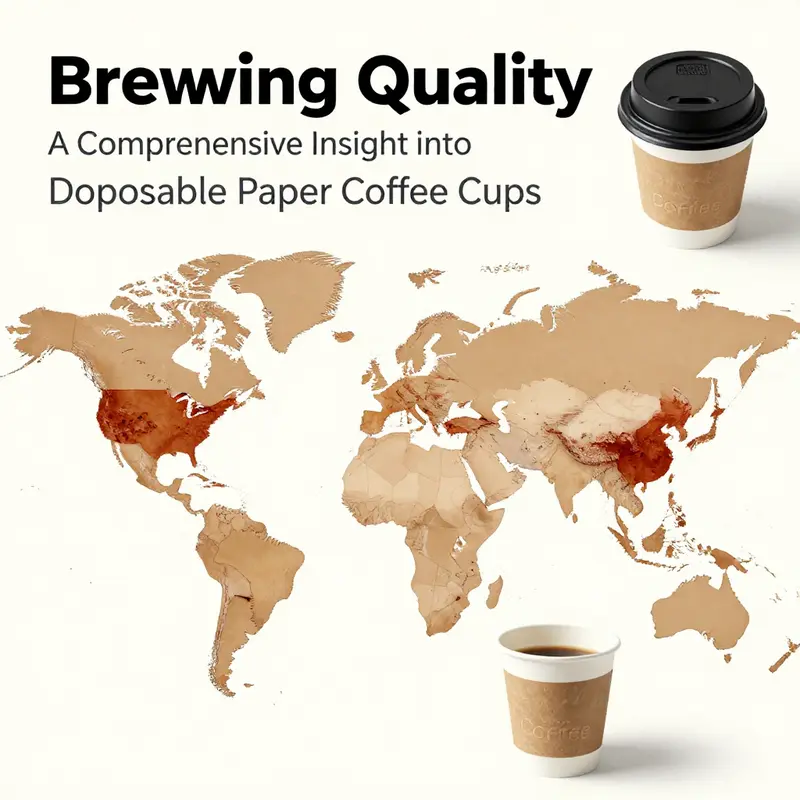
The path from forest to café counter for disposable paper cups with lids is not a straight line but a braided network of capabilities, compliance codes, and coordination that stretches across continents and time zones. In this choreography, supplier networks matter as much as the cup’s design. The choices manufacturers and buyers make about who handles pulp, coating, printing, forming, and lid molding ripple through every part of the process, shaping quality, price, and performance. The global landscape remains grounded in a sturdy core: China continues to sit at the center of production scale, cost efficiency, and the mature ecosystem that drives end-to-end capabilities. In practice, this means that the world’s favorite single-use cup is the product of a tightly integrated system housed in key hubs—provinces known for their specialized clusters, where pulp processing, paperboard conversion, coating, printing, and even lid production come together under a single roof or within a tightly linked series of facilities. The scale of this network is measured not only in millions of units per month but in the speed at which orders can be turned into finished, boxed shipments. The advantages are practical and economic. A single supplier network that can coordinate multiple steps—printing, forming, and lid molding—invites shorter lead times, tighter quality control, and streamlined logistics. When a buyer orders a large run, the confidence that every unit will meet shared standards is reinforced by the supply chain’s ability to run through the same quality checks across multiple processes, rather than relying on piecemeal handoffs between discrete suppliers. The result is a more predictable path from order to delivery, with lower risk of misalignment in dimensions, coatings, or fit. In this world, the choice of manufacturing hub matters less for the end user than the ability to deliver consistent performance at scale, and vertically integrated manufacturers often offer the greatest assurance for repeat, high-volume orders. The economics of scale in these integrated centers translate into compelling price stability and the ability to pass savings along to customers who buy in bulk. This is not to say the market is static. The supply chain is evolving as environmental and regulatory pressures intensify and as消费者 demand for sustainable packaging rises. The shift is not simply about swapping PE linings for greener options; it is about embedding sustainability deep into the supplier network’s DNA. The raw materials—the paperboard itself, the interior lining, and the outer finishes—are embedded in a chain that now has to demonstrate environmental responsibility at every step. The typical cup begins as a food-grade paperboard, often in the range of 180 to 280 gsm. The board needs to be strong enough to resist puncture, rigid enough to maintain structural integrity when stacked and handled, and receptive to coatings and printing without compromising barrier properties. The traditional polyethylene (PE) lining has long served as a reliable barrier to prevent leakage and to preserve warmth. Yet as regulators tighten environmental standards and consumers become more discerning about what happens after the cup is discarded, the industry increasingly explores plant-based or compostable alternatives. Polylactic acid (PLA) coatings, for example, represent a response to demand for compostability and reduced fossil-fuel dependence. PLA-coated cups align with recognized standards such as the EU’s EN 13432 and ASTM D6400 in North America, which set benchmarks for biodegradability and compostability. While PLA offers environmental appeal, it also introduces new considerations for supply chain compatibility, cost, and end-of-life infrastructure. Buyers must confirm that PLA coatings perform under real-world conditions, maintain leak resistance, and decompose in appropriate composting streams. This is where the diligence of supplier selection becomes critical. Third-party certifications matter because the label “eco-friendly” is no guarantee of real performance. To navigate this terrain, procurement teams increasingly rely on verification frameworks like OK Compost or TÜV Austria’s OK Biobased. These certifications provide independent confirmation that products meet international composting standards and that the materials used in cups and lids are genuinely compatible with approved composting streams. The value of these verifications extends beyond marketing; they reduce the risk of non-compliance in markets with strict disposal requirements and can simplify regulatory acceptance in new regions. The consequence for buyers is a more deliberate supplier vetting process. Rather than chasing the lowest unit price, organizations prioritize a supplier with demonstrated capabilities across multiple dimensions: consistent quality across lots, reliable delivery schedules, robust production capacity, and a willingness to share documentation and audit results. In practice, this means establishing expectations for each phase of the supply chain. The end-to-end potential of a vertically integrated network can deliver meaningful advantages. When a single supplier or a tightly coordinated group can co-manage coating, forming, printing, and lid molding, there is less room for misalignment between processes. Fewer handoffs reduce the risk of defects and shorten the feedback loops necessary to correct issues before they escalate. This is especially valuable for companies that place large, recurring orders, where the ability to maintain tight control over production variables translates into steadier performance, fewer rejected batches, and faster re-airs if design changes are needed. The sourcing landscape has also grown more sophisticated in how buyers identify and engage suppliers. Digital platforms and verified supplier directories have become a common starting point for assessing capabilities, MOQs, and price ranges. In this context, buyers can access a spectrum of producers—from global mass producers to specialized eco-conscious manufacturers—capable of delivering everything from standard eight- or twelve-ounce cups to larger, custom configurations with logos and branding. For many buyers, the decision framework centers on a balance between cost and capability. Price remains a critical consideration, with unit costs typically ranging from as low as a penny to under five cents, depending on quantity, customization, and specifications. Bulk orders of 50,000 pieces or more often land in the lower end of that range, while more customized offerings—such as double-wall designs or printed branding—tend to sit toward the middle, with MOQs often around 50,000 to 100,000 units. The economics can shift quickly if a buyer requires premium finishes, specialized shapes, or unique coating compounds. Even then, the per-unit costs can still be economically favorable when viewed through the lens of total cost of ownership, which includes packaging, logistics, and the potential for reduced waste through improved batch consistency. Logistics is another dimension where supplier networks demonstrate resilience. The standard export packaging by carton remains the conventional method, chosen for its efficiency and protection during transit. Lead times are highly variable and depend on the buyer’s location, the supplier’s current production load, and whether the order requires customization. For first orders, timelines are typically longer, commonly 30 to 45 days, reflecting procurement cycles, initial validation, and onboarding of new suppliers. Repeat orders tend to move faster, with lead times of 7 to 15 days as the supplier ramps up and a stable forecast stream is established. The ability to meet these timelines hinges on the integrity of the supplier’s operational processes and the capacity to scale. Buyers increasingly look for partners who can demonstrate consistent batch-to-batch quality, with stable dimensions, coating performance, and sealing efficacy. This is where the broader supplier network’s value shines: a well-coordinated ecosystem can absorb fluctuations in raw material supply, adjust production schedules with agility, and keep shipments on track. Sustainability, however, introduces a new axis of complexity. The market is responding to circular economy principles by exploring alternative materials and end-of-life pathways. Biodegradable and compostable variants still require careful alignment with composting facilities, municipal programs, and consumer behavior. Across regions, regulators and waste management programs push for packaging that can be collected, sorted, and processed with minimal environmental impact. To satisfy these demands, buyers and suppliers invest in transparent documentation and rigorous audits. Certifications like OK Compost or OK Biobased provide credible validation that products meet the required standards. It is not enough to claim a material is “eco-friendly”; buyers must examine the chain of custody, the exact material composition, and the conditions under which the product will decompose. In this sense, the most resilient supplier networks are not simply those that can deliver a cheap cup; they are those that can demonstrate credible sustainability across the product’s life cycle. This is where supplier selection becomes a strategic function. The end-to-end integration of print, coat, form, and lid molding within a single network enables a tighter quality loop and faster iteration. For customers ordering large volumes, the reassurance that the same supplier can handle the entire process reduces the risk of miscommunication and quality drift between different vendors. Platforms that provide access to verified suppliers with clear MOQs and transparent pricing structures can accelerate decision-making, while still requiring due diligence. The combination of scale, integrated capability, and sustainability credentials positions the leading supplier networks to serve both traditional markets and newer segments that demand eco-conscious packaging. The future steady-state of disposable cups with lids will likely see continued evolution in coatings, barrier technologies, and end-of-life solutions. Demand for greener alternatives will intensify, but the balance between performance, cost, and environmental impact will hinge on the ability of networks to deliver credible, verifiable sustainability without compromising reliability or price competitiveness. One practical takeaway for procurement teams is to view supplier networks as strategic partners rather than transactional vendors. Build relationships that allow for auditing, documentation exchange, and mutual learning about best practices in print, coating, forming, and logistics. Emphasize collaborative product development—coatings that improve leakage resistance while enabling compostability, or lid designs that optimize seal integrity and recyclability without inflating costs. In a world where packaging is increasingly scrutinized for its environmental footprint, the strength of a supplier network lies in its capacity to demonstrate responsible practices across every stage of production. A network that can combine sustainable material choices with robust quality control, dependable delivery, and transparent certifications will be better positioned to weather regulatory shifts, satisfy consumer expectations, and support the long-term success of customers who rely on disposable cups with lids for high-volume, time-sensitive operations. To illustrate a concrete example of how these dynamics play out in practice, consider the pathway from a bulk order to a finished shipment: a buyer identifies a supplier capable of handling the full spectrum of needs—Pulp processing and board conversion, PE or PLA coating, interior printing, and lid molding—within a single integrated facility or a tightly coordinated cluster. The supplier demonstrates a consistent capability to produce cups in the required sizes, from small eight-ounce to larger thirty-two-ounce configurations, with the option for branding and custom prints. The buyer requests documentation confirming the product’s compliance with relevant compostability standards and verifies certifications like OK Compost or OK Biobased. Samples are provided, and the buyer evaluates leakage resistance, labeling clarity, and print fidelity. Payment terms shift from a modest deposit to a balance on shipment as trust and performance are established. The first order proceeds with careful monitoring, and the supplier’s production system is tuned to the buyer’s forecast, ensuring stable lead times even as demand fluctuates. Subsequent orders benefit from the smooth cadence of a well-tuned supply chain, with reduced risk of delays and fewer last-minute changes. This integrated approach, supported by transparent documentation and credible certifications, underpins a sustainable and scalable avenue for meeting the growing appetite for eco-conscious food packaging. For readers seeking a practical glimpse of how these issues translate into market opportunities, a related resource provides a gateway to verified suppliers offering sustainable paper coffee cups with lids, illustrating how the ecosystem translates into tangible options for buyers exploring eco-friendly innovations. Internal link: eco-friendly custom paper coffee cups with lids to illustrate the practical availability of sustainable options within a supplier network.
External resource for further context on standards and certification pathways can be found at: https://www.alibaba.com/trade/search?fsb=y&IndexArea=product_en&CatId=&SearchText=sustainable+paper+coffee+cups+with+lids
null
null
Final thoughts
Understanding the journey of disposable paper coffee cups with lids is essential for businesses in the beverage sector. Their production processes, economic implications, global supplier networks, and sustainability trends are critical for anyone looking to maintain a competitive edge. By staying informed, businesses can make smarter decisions, create value for their customers, and contribute positively to the environment. Whether it’s enhancing customer experience or reducing ecological footprints, the right disposable cups can make all the difference.