
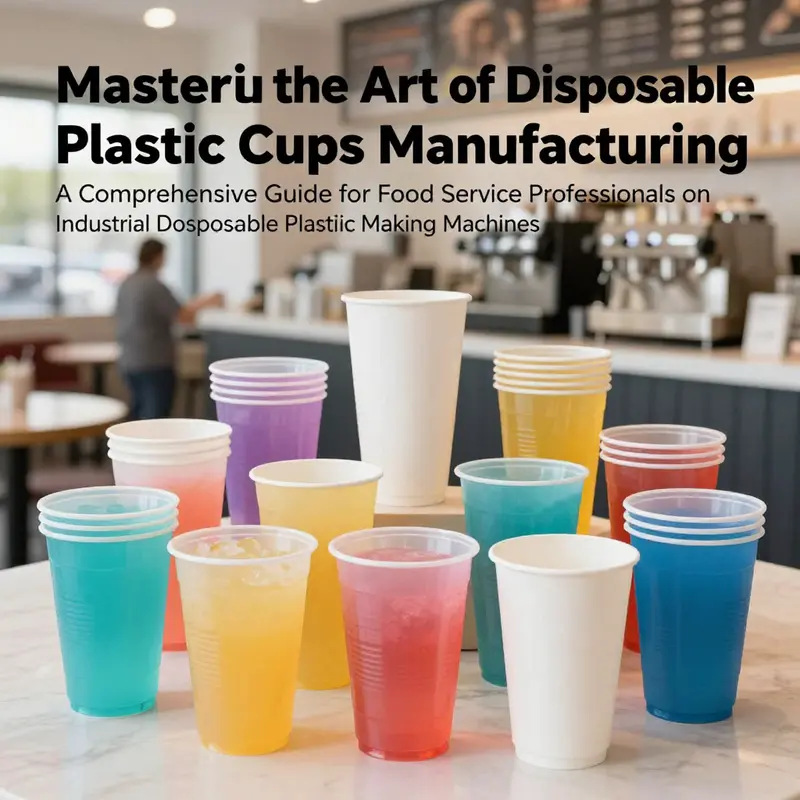
As businesses in the food and beverage industry seek to meet the increasing demand for disposable tableware, understanding the capabilities of industrial disposable plastic cup making machines becomes essential. These machines not only streamline production processes but also offer innovative solutions for creating diverse products suited to various customer needs. This article dives into the core technology and functionalities of these machines, explores their key features and components, and discusses market availability and pricing to provide industry professionals with the insights necessary to elevate their service offerings.
Thermoforming at Scale: The Engine Driving Industrial Disposable Plastic Cup Production
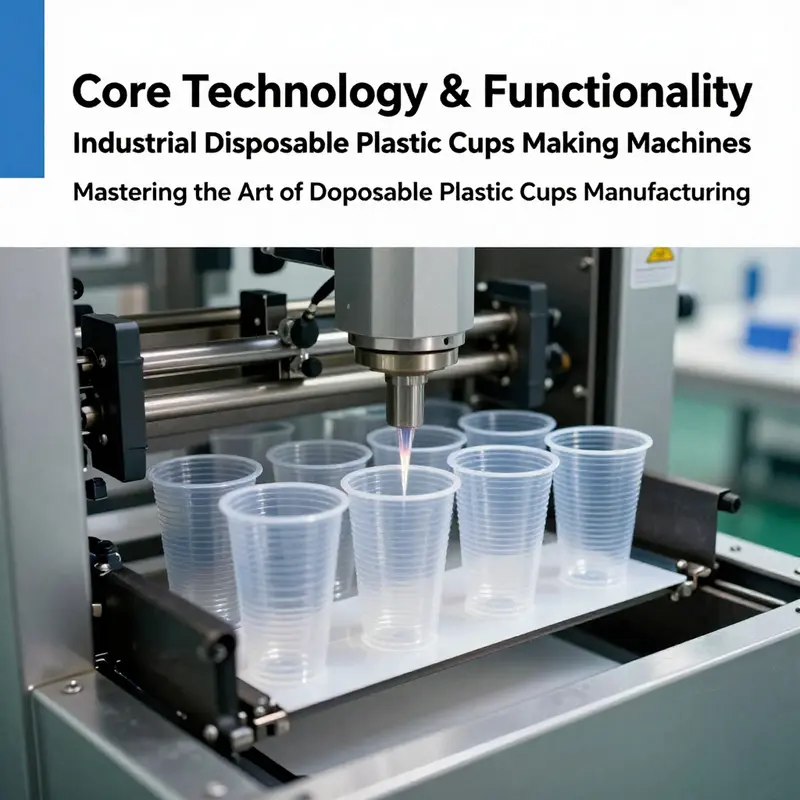
When a production line begins its daily rhythm, the undeniable heartbeat is the thermoforming process—the high-speed, image-perfect engine that converts flat plastic sheets into the familiar cups, bowls, and containers that populate kitchens, cafés, and takeaway counters around the world. In an industrial setting, a disposable plastic cup making machine embodies a sequence of tightly choreographed steps, where heat, pressure, precision, and timing come together to produce thin-walled yet strong containers at scale. At its core, the technology rests on thermoforming, a method that uses either vacuum suction or positive air pressure to shape a pliable plastic sheet into molds. The common feedstock—materials such as HIPS (high-impact polystyrene), PVC, PET, PS, and PP—are selected not just for their physical properties but for their relative ease of forming, optical clarity, and compatibility with downstream processes like printing or labeling. The sheet is heated in stages within carefully calibrated heating chambers until its surface reaches a precise forming temperature. This temperature is a function of the material’s thickness, its heat transfer characteristics, and the speed at which the cycle must run. Once pliable, the material is formed over a mold, with vacuum drawing the sheet into the shape or with controlled air pressure pushing it into cavities. Some configurations use a plug assist unit—a column or shaping element that pre-forms the sheet to the cavity profile before full sealing—improving dimensional accuracy and enabling more complex geometries. The formed cup then passes through trimming stations that remove excess material and refine the rim, followed by cooling to stabilize dimensions before the piece is lifted from the mold and guided toward ejection and collection. The result is a consistent, repeatable product whose wall thickness, diameter, and base dimensions align with stringent tolerances.
In practice, this sequence is not a one-off operation but a synchronized ensemble powered by advanced automation. Modern machines employ programmable logic controllers (PLCs) that orchestrate each stage with unwavering reliability. Feeding systems deliver fresh sheets from racks, heating modules regulate temperature profiles with a precision that ensures uniform forming across the entire sheet width, and forming stations apply vacuum or pressure with real-time feedback. The control loops are reinforced by high-precision servo motors—typically in the range of several kilowatts—that drive the material web, the platen movements, and the ejector arms with accuracy within a fraction of a millimeter. In contemporary designs, tolerances are held to about ±0.1 millimeters, a level of precision that minimizes waste and reduces post-forming adjustments. This precision is not merely about geometry; it translates into consistent stacking, reliable downstream packaging, and predictable performance in end-use environments such as cold storage, hot beverages, or food service.
The cycle itself—the cadence of heating, forming, trimming, and ejecting—can run at impressive speeds. Where older, rudimentary lines might struggle with throughput, modern machines demonstrate production rates on the order of 30 cycles per minute for certain cup geometries, with even higher potential when engineering optimizations or multi-station configurations are employed. Real-world performance gains are often reported as a competitive edge over conventional models, sometimes achieving efficiency improvements in the neighborhood of twenty percent through smarter servo tuning, optimized heat distribution, and more capable mold geometries. The throughput is not simply a function of speed; it emerges from the harmony of material handling, energy management, and the precision of the forming act itself. When a line operates near peak efficiency, it does more than produce cups; it sustains a predictable supply stream for large food-service networks and for finishing processes like labeling, branding, or inner lining application.
A defining element of industrial cup-making machines is their adaptability across materials. The same thermoforming principle can accommodate a spectrum of thermoplastics, from rigid, impact-resistant HIPS to clear PET and translucent PS, and even to more specialized polymers such as PP for hot-fill applications. The choice of material directly influences not only the forming temperature and cycle time but also the downstream steps, such as sealing, printing, or coating for moisture resistance. This multi-material capability is essential in a market that prizes flexibility—manufacturers want to respond quickly to shifting consumer preferences, regulatory requirements, or sustainability goals. In practice, an automated line can be configured for a particular family of products, with exchangeable molds and adjustable thickness settings that maintain the same overall machine architecture while changing the end form. This level of modularity reduces downtime and expands the machine’s usable life by enabling product diversification without a complete hardware overhaul.
Automation is the backbone of quality assurance on these lines. PLC-based control systems deliver deterministic operation, while integrated sensors monitor critical parameters such as mold temperature, sheet alignment, and vacuum or pressure levels. Laser sensors and other non-contact measurement tools continuously verify position and size, catching deviations before they propagate into waste. When deviations are detected, the system can automatically pause, recalibrate, and re-center, aligning the mold with the sheet and preserving cycle integrity. In some designs, more advanced feedback loops leverage predictive analytics to forecast wear on components such as heating elements or ejector pins, enabling maintenance teams to schedule interventions before a failure interrupts production. The objective is not only to maintain high throughput but to minimize downtime and ensure a uniform product every cycle.
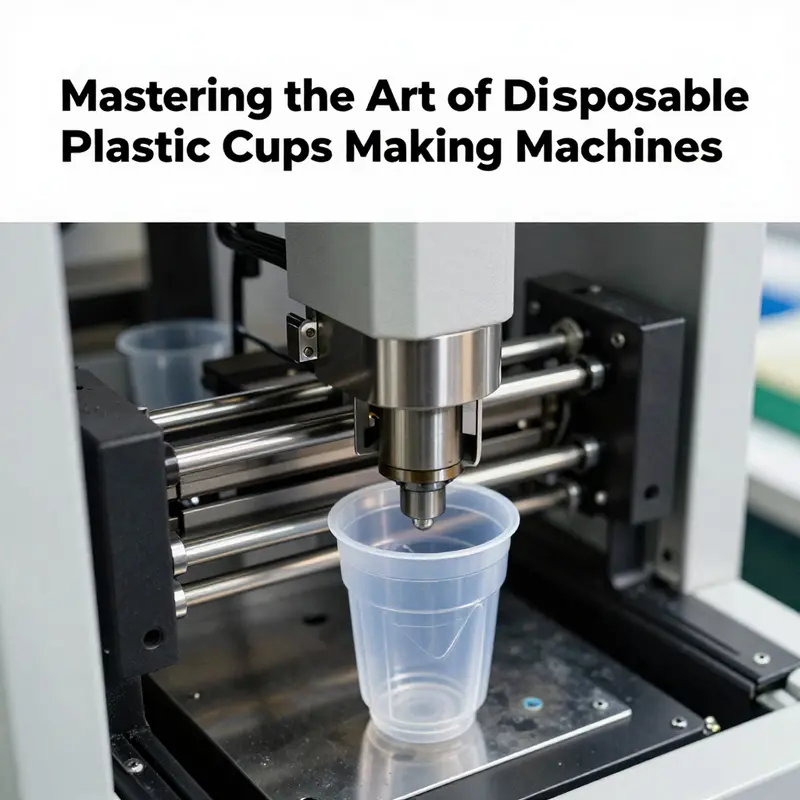
From a design perspective, the forming station is the heart of the process. The interplay between mold geometry, sheet thickness, and the pressure regime defines the final shape and surface finish of the cup. Fine-tuning the vacuum profile, the timing of venting, and the pressure ramp helps achieve uniform wall thickness and smooth rims. The trim station that follows is more than a cosmetic step; it is a critical quality control node. It ensures that the parting line is clean, the rim is uniform, and any flash is removed before the cup enters cooling and stacking. The outlet for finished pieces passes through a stacker or collection rack, a simple yet essential evolution in automation that eliminates manual handling and supports ongoing line efficiency. While the core thermoforming actions occur in the primary forming press, the peripheral equipment—sheet feeders, heat zones, transfer arms, trimming devices, and ejectors—forms a closed-loop ecosystem that keeps the process stable across long production runs.
Material handling and sustainability considerations increasingly influence machine design. Many operators favor systems that can handle biodegradable or compostable plastics, or at least provide a pathway to future materials with lower environmental footprints. This is reflected in the machine’s flexibility to accommodate different resin types, the ability to operate at lower energy intensities through smarter heating profiles, and the potential to integrate recycling and scrap-collection streams into the line. In practice, a well-engineered system minimizes scrap by maintaining tight control over warpage and thinning chatters at the rim, which can otherwise lead to rework or product rejection. The machines also adopt energy-efficient components, such as variable-frequency drives on motor assemblies and optimized heat recovery in the forming and trimming stages, to reduce overall electricity consumption. The environmental stance is not only about material selection but about process stewardship—how a line uses energy, how it manages waste, and how it supports sustainable manufacturing goals without sacrificing performance.
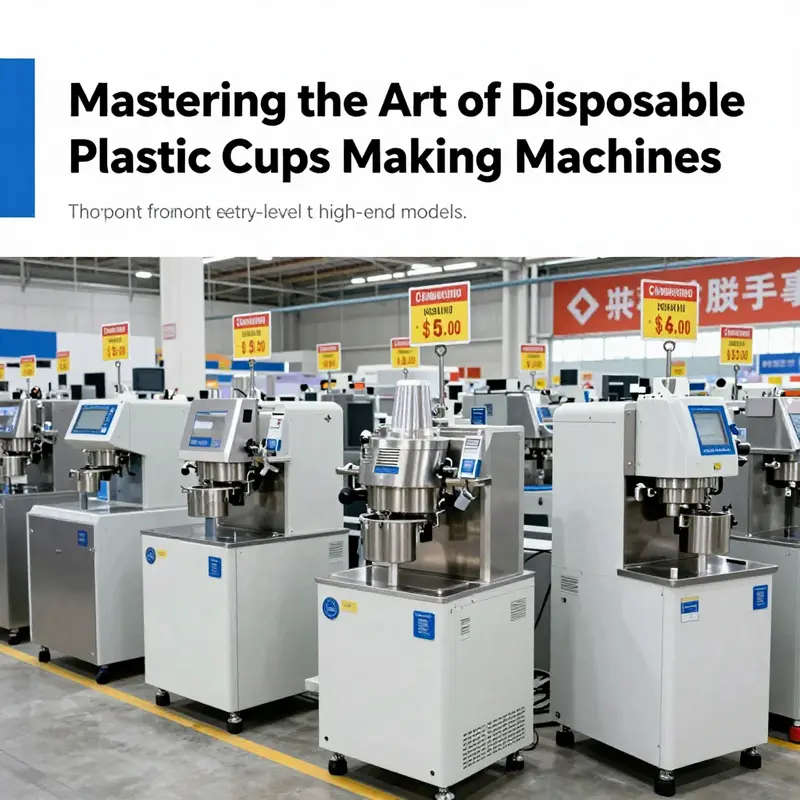
The geographic and industrial context of these lines also matters. The market has coalesced around a few regional clusters where engineering talent, supply chains, and after-sales support align. In particular, hubs in coastal and southern regions have cultivated a dense ecosystem of suppliers and integrators who understand the nuances of thermoforming machinery, including screw and platen design, cooling water management, and precision alignment mechanisms. This ecosystem offers a breadth of options, from compact, entry-level configurations to high-end, large-scale production lines capable of long, continuous operation with tight quality gates. The availability of such equipment on global marketplaces means that a growing manufacturer can access scalable technology aligned with their growth trajectory, whether they are starting with modest volumes or planning for a substantial, multi-shift operation.
As the technology evolves, the line between plastic cup making and broader packaging machinery becomes more fluid. The same logic that underpins a robust cup-making cell—fast cycle times, reliable forming, precise trimming, and controlled ejection—also informs the design of adjacent packaging systems. The modularity of the tooling and automation software enables manufacturers to reconfigure lines for alternate geometries or to respond to changing branding requirements. In practice, this means that a plant can pivot toward different cup sizes, adapt to seasonal demand fluctuations, or introduce new decorative elements without a costly plant overhaul. Such adaptability is essential in a market where consumer preferences swing between convenience, sustainability, and premium presentation.
The envisioned future for these machines is not merely incremental improvements in speed or reliability. It is a more intimate collaboration between material science, machine intelligence, and process engineering. Advances in heater design and energy delivery promise even more uniform heat distribution, further reducing cycle times without compromising part quality. Additive improvements in mold technology and surface coatings can enhance release properties and preserve surface aesthetics, important for post-molding decoration or branding. On the control side, richer diagnostic dashboards and remote monitoring capabilities will enable operators to oversee multiple lines from a centralized control room, aligning maintenance, inventory, and production planning in real time. The result is a more predictable, more resilient manufacturing footprint—one that can meet the rising demand for affordable, single-use containers while integrating the best practices of lean manufacturing and sustainability.
To illustrate the breadth of possibility in this space, consider how a packaging ecosystem can subtly evolve to support cross-material versatility. While the core of any disposable cup line remains thermoforming with vacuum or pressure, the broader manufacturing approach increasingly emphasizes modularity and interoperability. This philosophy mirrors the adaptability found in related packaging products that share design principles, where the same line layout can accommodate different product families with minimal changeover. For example, the use of interchangeable molds and rapid-change tooling enables a plant to switch from a standard cup geometry to a variant used for a different application, all while preserving cycle time and quality. In this context, even packaging formats outside cups—such as octagonal or other geometries—benefit from the same underlying automation discipline. disposable octagonal box packaging demonstrates how modularity can extend beyond a single product family, reinforcing the idea that modern lines can manage diverse shapes through well-designed tooling and software control. This cross-pollination, far from diluting focus, strengthens the entire supply chain by enabling faster response to customer needs without sacrificing the efficiency that thermoforming brings to mass production.
The competitive landscape for these machines reflects both the scale of opportunity and the complexity of delivering consistent results. Vendors emphasize the integration of multi-material capabilities, high automation levels, and intelligent process control. Offerings range from compact machines for smaller, entry-level producers to expansive production lines that can support multi-shift operations with automated material handling, stamping, and off-line sample testing. In all cases, the objective remains the same: to translate raw sheet stock into precisely formed, accurately trimmed cups that meet stringent requirements for wall thickness, rim integrity, and dimensional stability. For buyers, the decision hinges on how well a line balances speed, flexibility, energy use, and total cost of ownership, including maintenance, spare parts availability, and technician support. Ultimately, the best options enable manufacturers to scale responsibly, maintain product uniformity, and adapt with ease to market and regulatory shifts—without sacrificing yield or quality at the end of a long run.
For readers seeking deeper technical specifications or supplier information, the official product page on a leading marketplace offers a reference point that aligns with these descriptions of capability, including the integration of servo-driven feeding, precise temperature control, and efficient trimming. While every installation is unique, the principles of thermoforming with vacuum and pressure, combined with PLC-driven automation and high-precision servos, remain constant across successful lines. The alignment of the machine’s capabilities with material properties, cycle times, and post-mold handling defines the real performance envelope—one that today’s manufacturers continue to push, day after day, to keep shelves stocked with affordable, reliable, and sometimes even more sustainable, single-use containers.
External resource: For more technical context and product-level specifications, see the official product overview here: https://www.alibaba.com/product-detail/LITAI-Disposable-Plastic-Cup-Making-Machine_1600689912671.html
null
null
null
null
Final thoughts
In conclusion, industrial disposable plastic cup making machines are pivotal for businesses aiming to optimize their production of cups and containers. By investing in advanced technologies, food and beverage establishments can not only enhance efficiency and product quality but also align with sustainability goals through the production of eco-friendly containers. Understanding the core functionalities, key features, and pricing structures equips businesses to make informed decisions that propel growth and meet consumer expectations. Embracing these technologies positions food service professionals to thrive in an evolving market.